
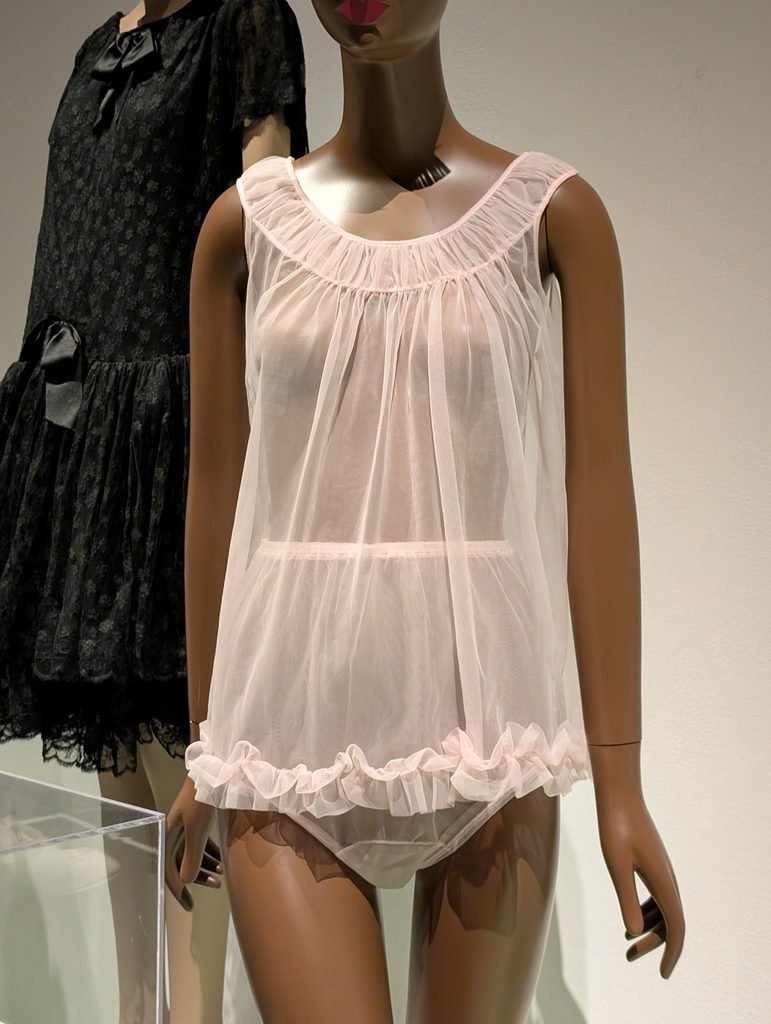
Additionally, the Doll Dressing exhibition at The Museum at FIT examines the Baby Doll silhouette. While the baby doll dress may look light, playful, and innocent, its design history is far more nuanced and complex than it first appears.
From Antique Bébé Dolls to Sleepwear Culture
Historically, the name originates from the clothing worn by French dolls known as bébés. Furthermore, these dolls were popular in the late nineteenth century and modeled after young girls aged roughly two to twelve. Their short, loose, frilled dresses initially inspired children’s wear before designers adapted the same silhouette for adult women.
In 1958, Cristóbal Balenciaga brought formal sophistication to the baby doll dress. Yet, his lace iterations served as high-fashion cocktail dresses, even as the press compared them to children’s wear or nightgowns. The silhouette proved so successful that Balenciaga continued to reinterpret it until his retirement in 1968.
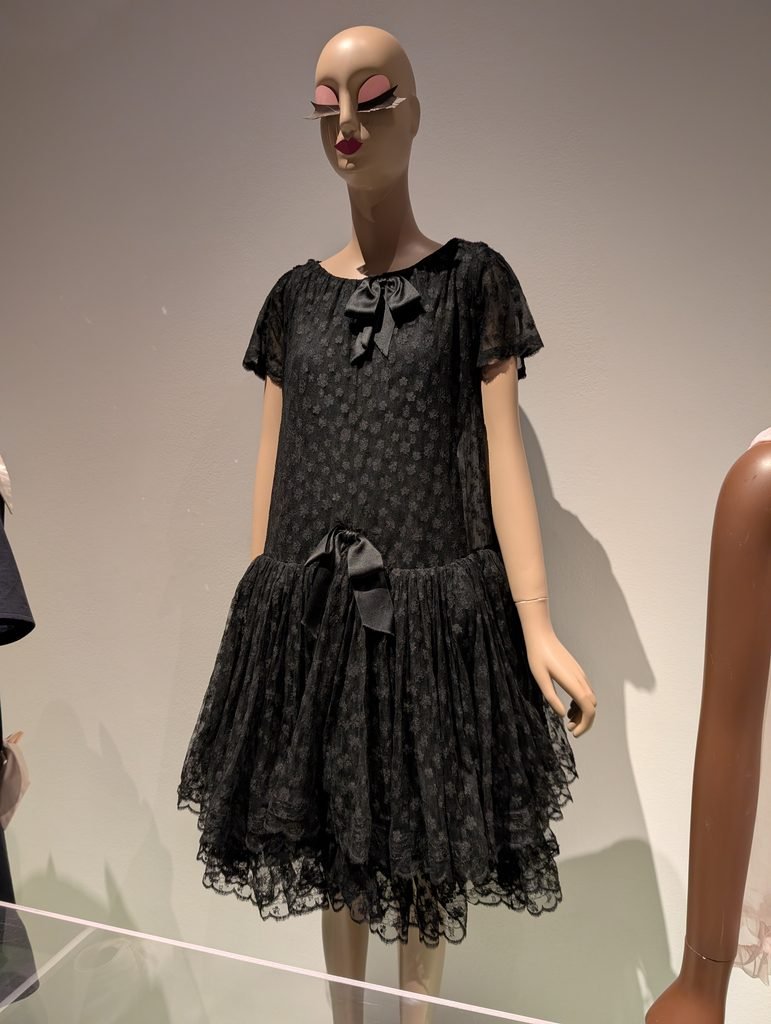
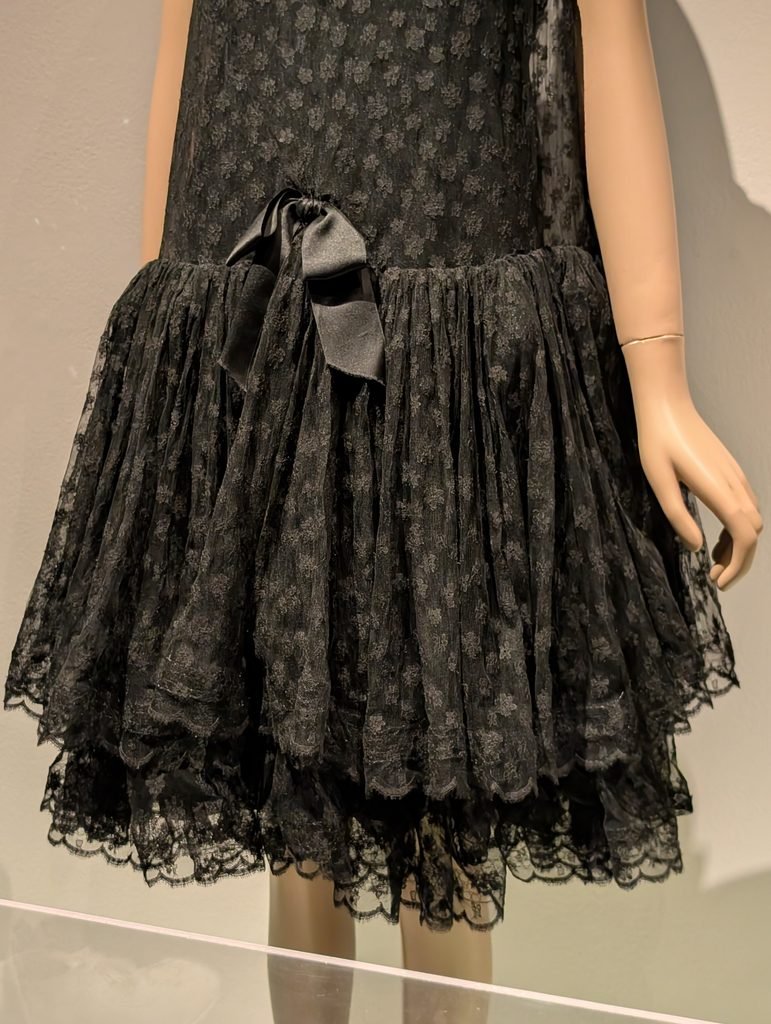
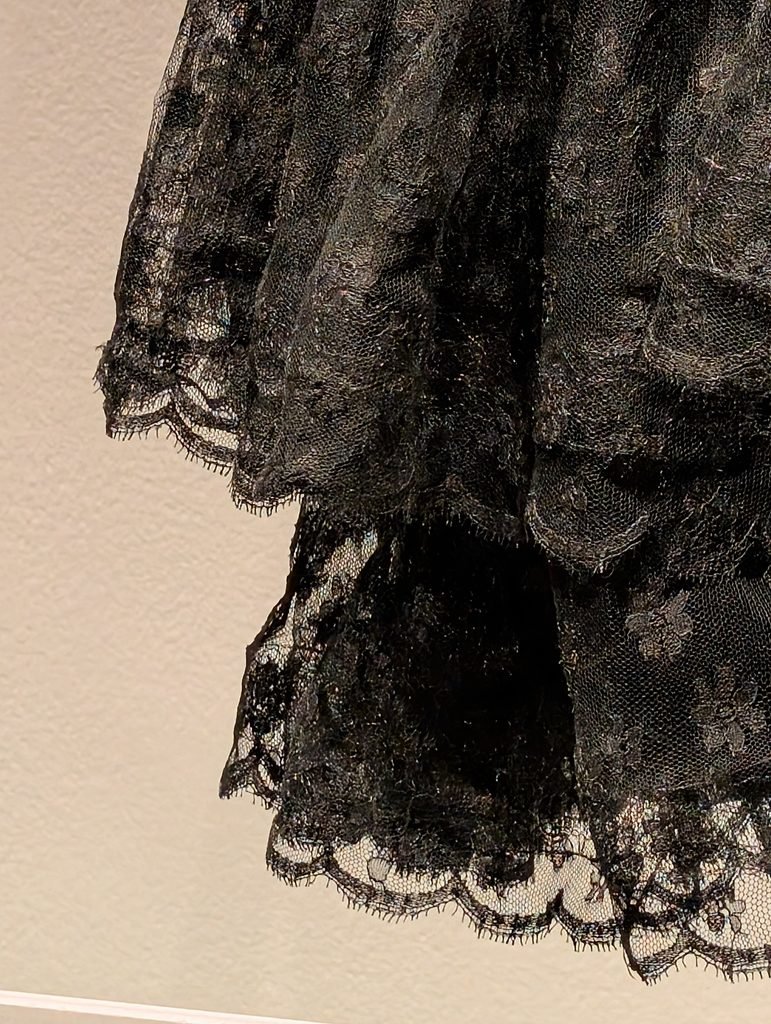
Black lace baby doll dress, circa 1964, gift of Mrs. Ephraim London, Mrs. Rowland Mindlin & Mrs. Walter Eytan In Memory of Mrs. M. Lincoln Schuster
Hence, the style entered pop culture through Elia Kazan’s 1956 film Baby Doll, showing Baker in a nightgown. As a result, the look was copied by garment makers and spread across North America.
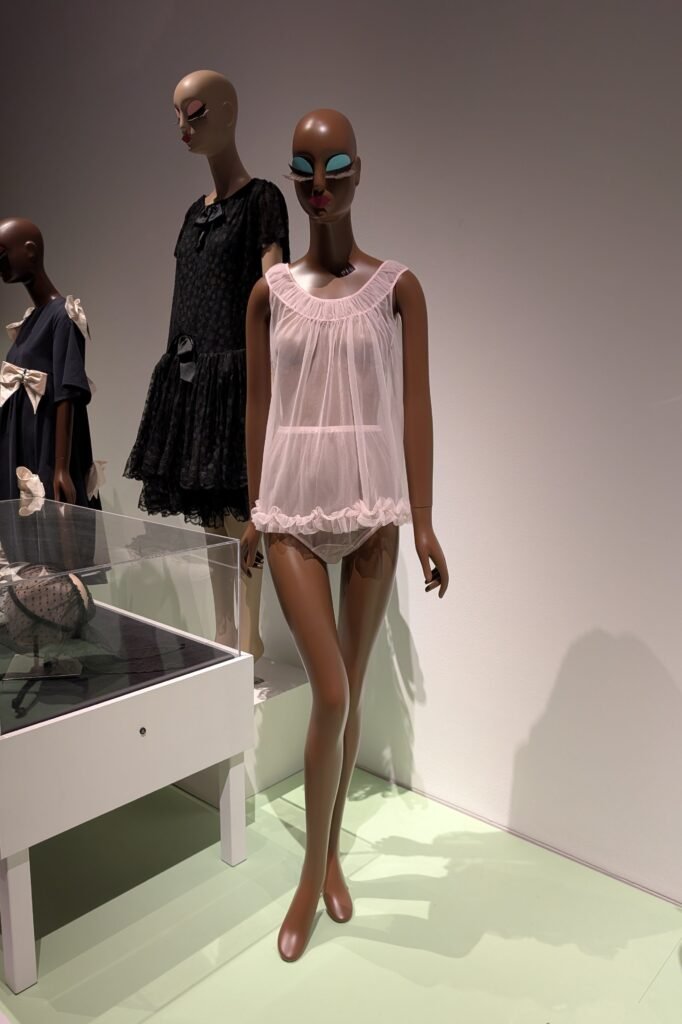
From Sweetness to Subversion
While the baby doll silhouette easily conveys sweetness and nostalgia, designers have repeatedly used it as a tool for irony and subversion.
- Schiaparelli’s Doll Hats: Elsa Schiaparelli popularized tiny “doll hats” in the late 1930s. These miniature boaters, bonnets, and top hats looked as if they were borrowed from a Victorian doll’s wardrobe, perched jauntily atop elaborate hairstyles.
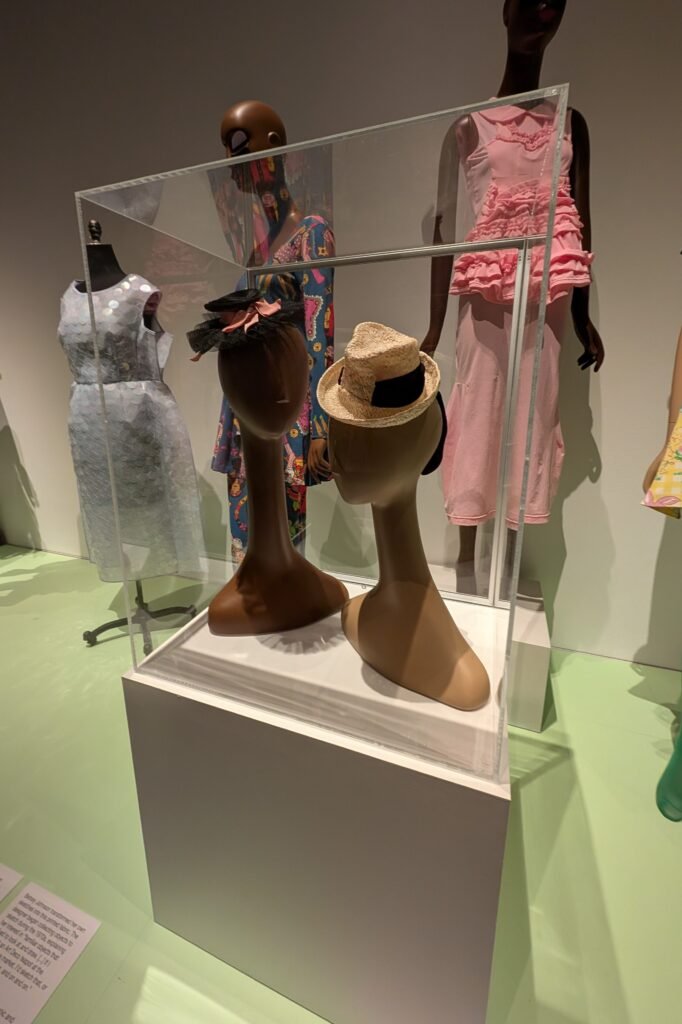
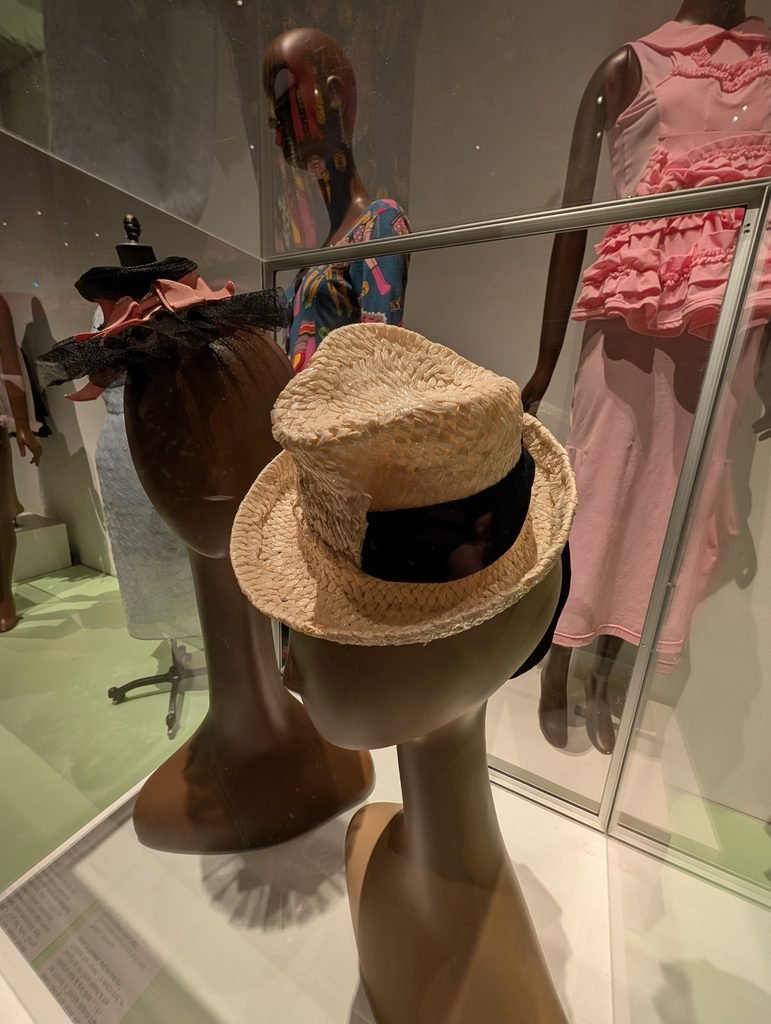
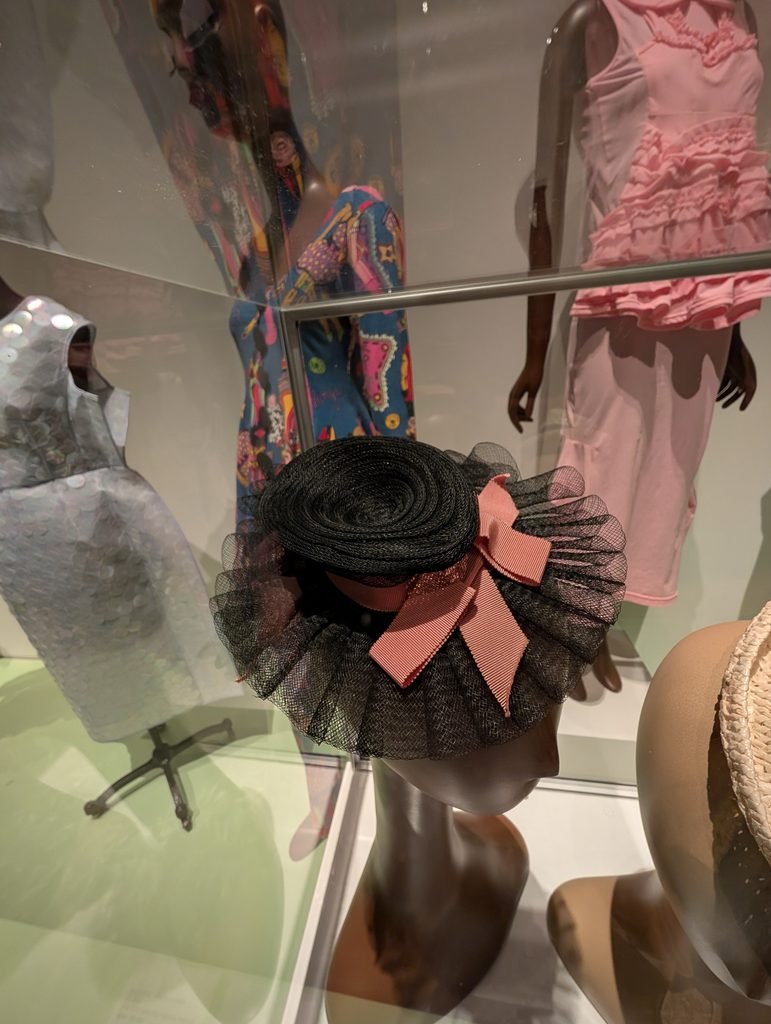
Black horsehair “doll” hat, circa 1942, museum purchase
White synthetic straw “doll” hạt, circa 1938
- Comme des Garçons Deconstruction: Rei Kawakubo’s pink nylon dress from the Fall 2007 Curiosity collection plays with decorative ruffles. What appears to be a simple ruffle is actually a miniature frock sewn onto the garment — a subtle reference to Kawakubo’s romantic, playful 1970s archives.
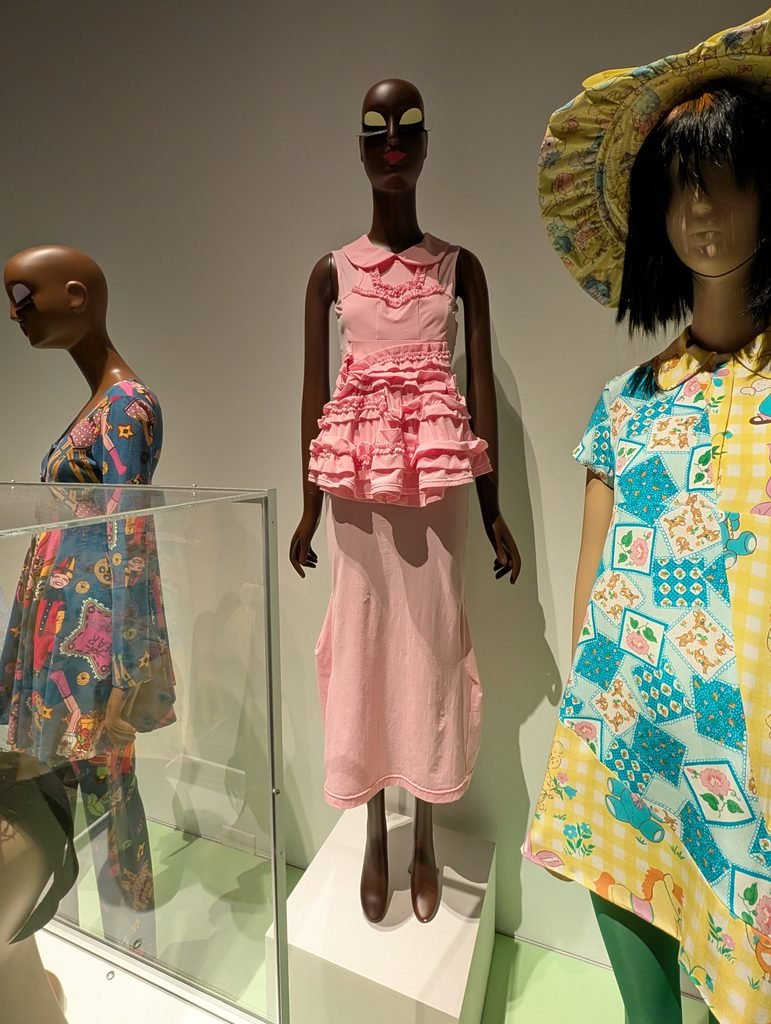
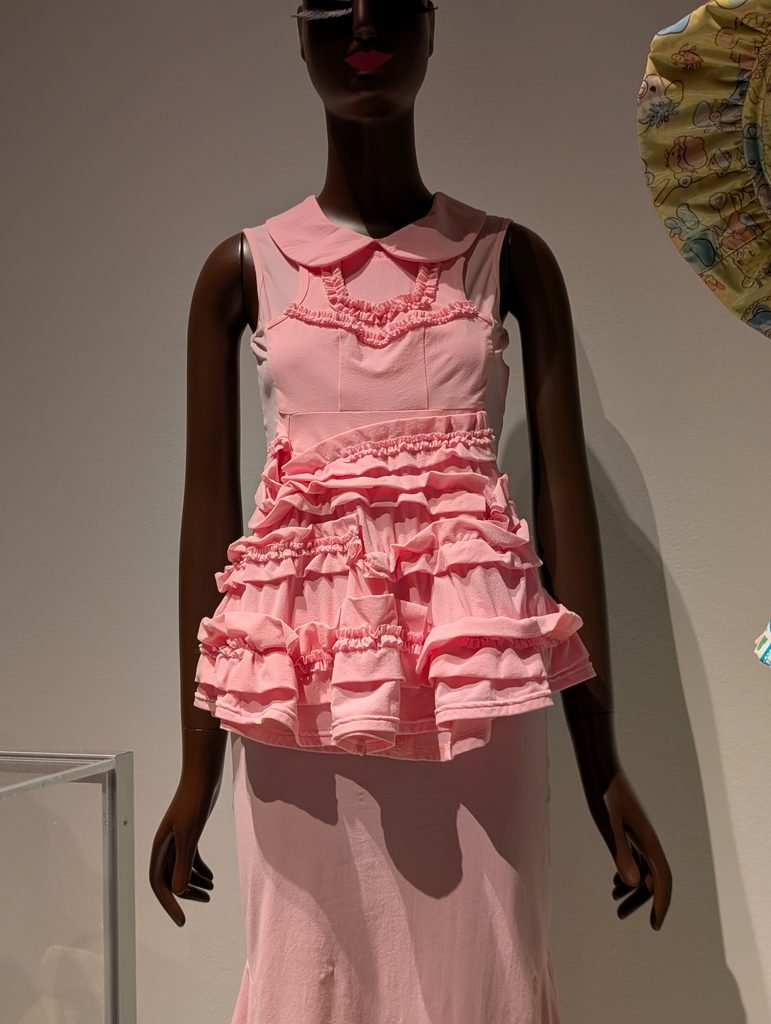
Pink nylon dress, fall 2007
Curiosity collection
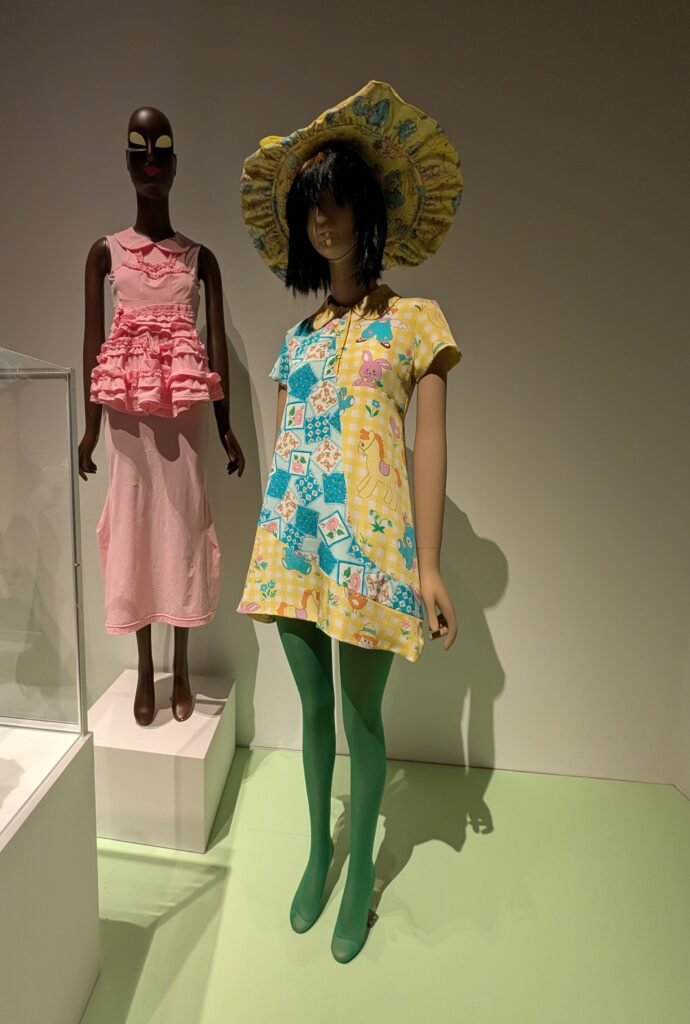
- Jeremy Scott’s Psychedelic Nostalgia: In Moschino’s Fall 2015 Dolly Pattern collection, Jeremy Scott drew inspiration from well-loved, worn dolls. His silk dresses utilized nursery prints in loud, psychedelic colors, transforming childhood nostalgia into high-fashion camp.
- Marc Jacobs’ Paper Dolls: Marc Jacobs’ Fall 2024 collection featured pale blue dresses with oversized sequins, creating a flat, paper-doll effect (paper doll). Runway models wore satin masks and heavy eyelashes reminiscent of antique “sleepy-eye” dolls.
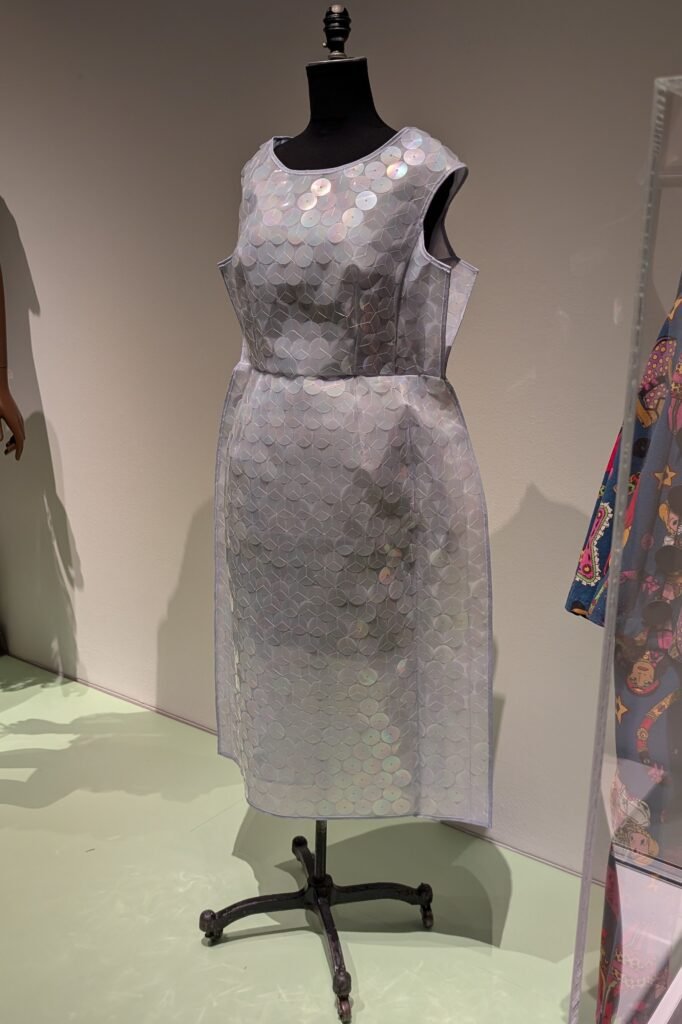
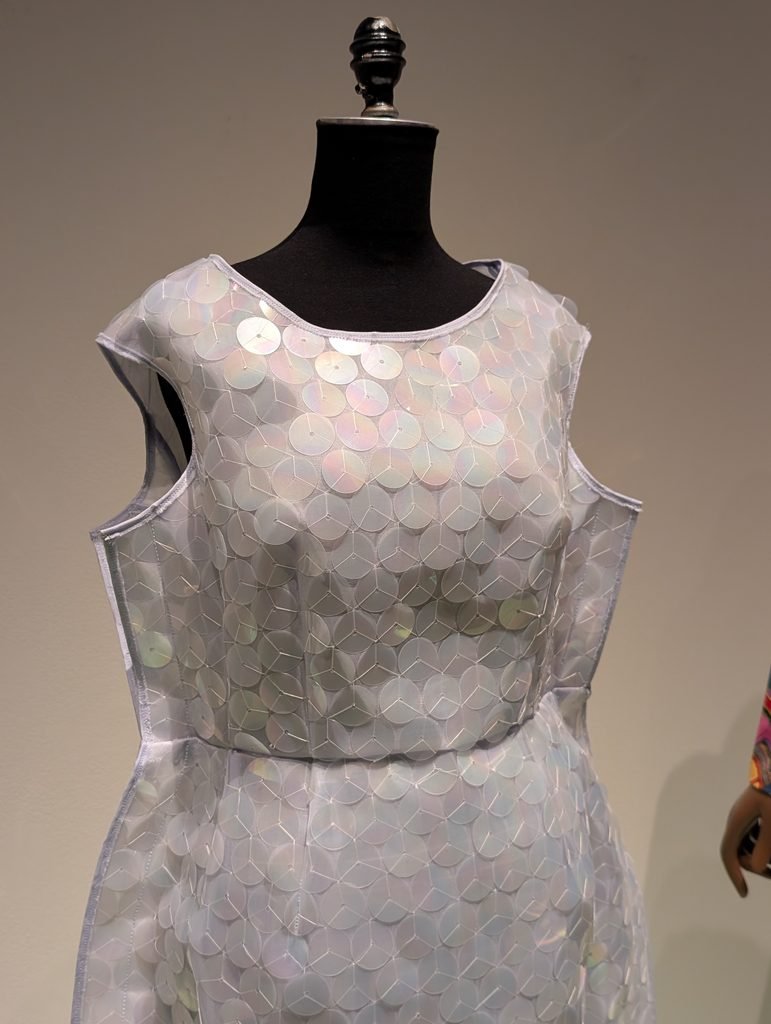
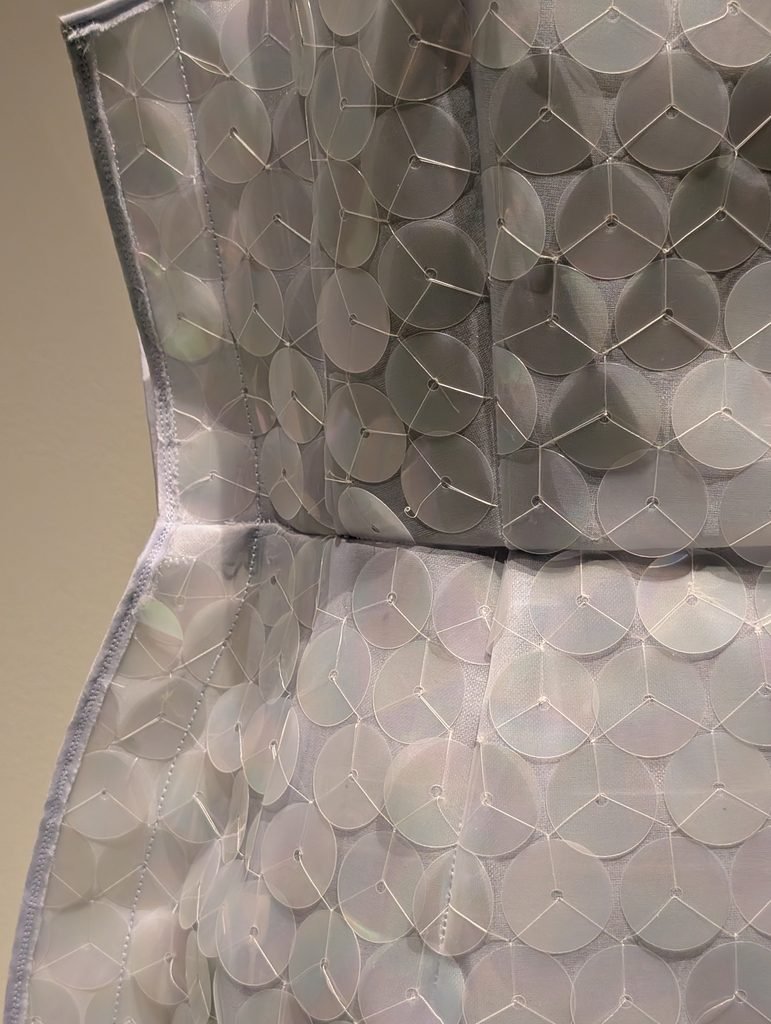
Pale blue dress with oversize sequins, fall 2024
Reimagining the Silhouette: From Patrick Kelly to Anna K
The exhibition reveals how the baby doll carries vast cultural weight depending on the designer’s perspective.
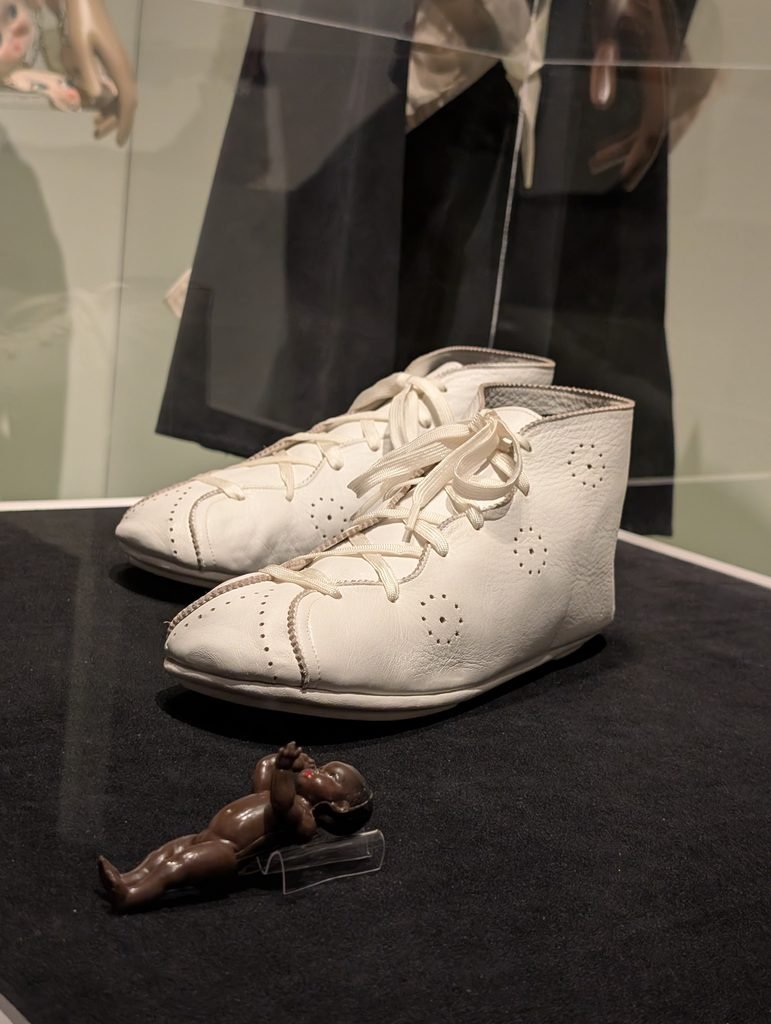
- Accessories by John Frederics & Comme des Garçons: Milliners at John Frederics transformed the baby bonnet into adult millinery using black lace, while Rei Kawakubo created white leather “baby booties” for Spring 1998 paired with safety-pinned ensembles.
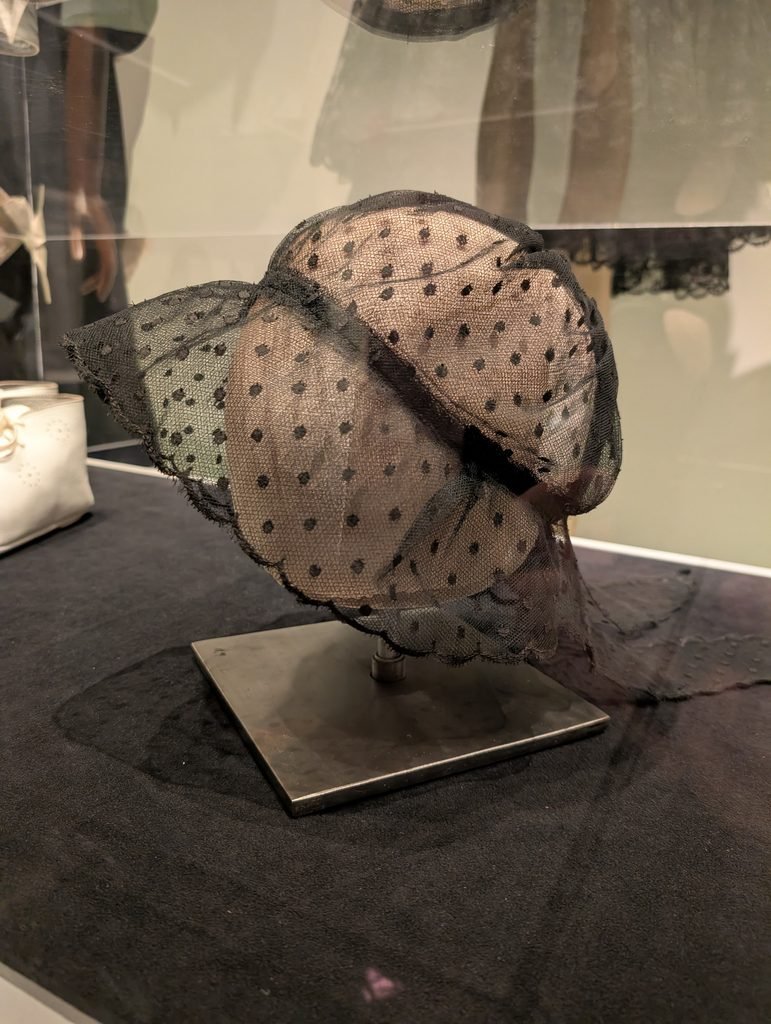
Black silk net “baby bonnet,” 1960s MFIT, 2009.78.11, gift of the Estate of Hope Dewar Hendler (Alumna)
Comme des Garçons (Rei Kawakubo)
White leather “baby shoes,” spring 1998 MFIT, 98.60.3, gift of Comme des Garçons
- Patrick Kelly’s Social Statement: Designer Patrick Kelly turned discarded dolls into fashion jewelry. His brown plastic baby doll pin (c. 1987–1990) carried historical weight: prior to the 1960s, Black dolls were rarely mass-produced with quality. Kelly’s jewelry confronted racial imagery while transforming an overlooked item into desirable fashion.
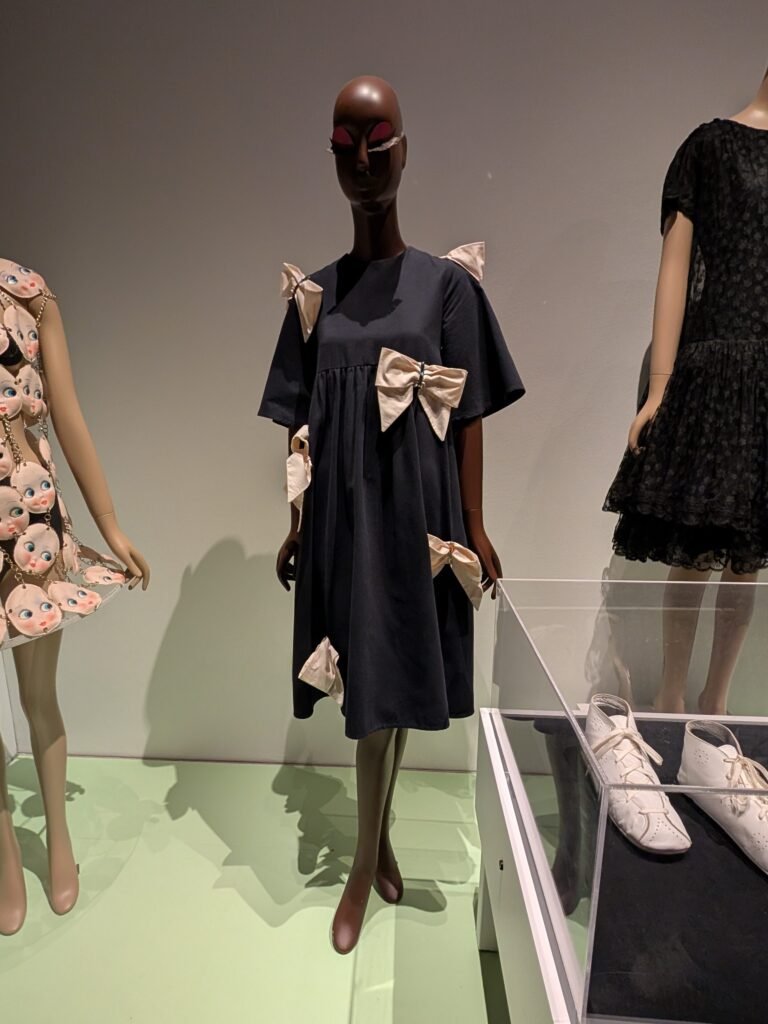
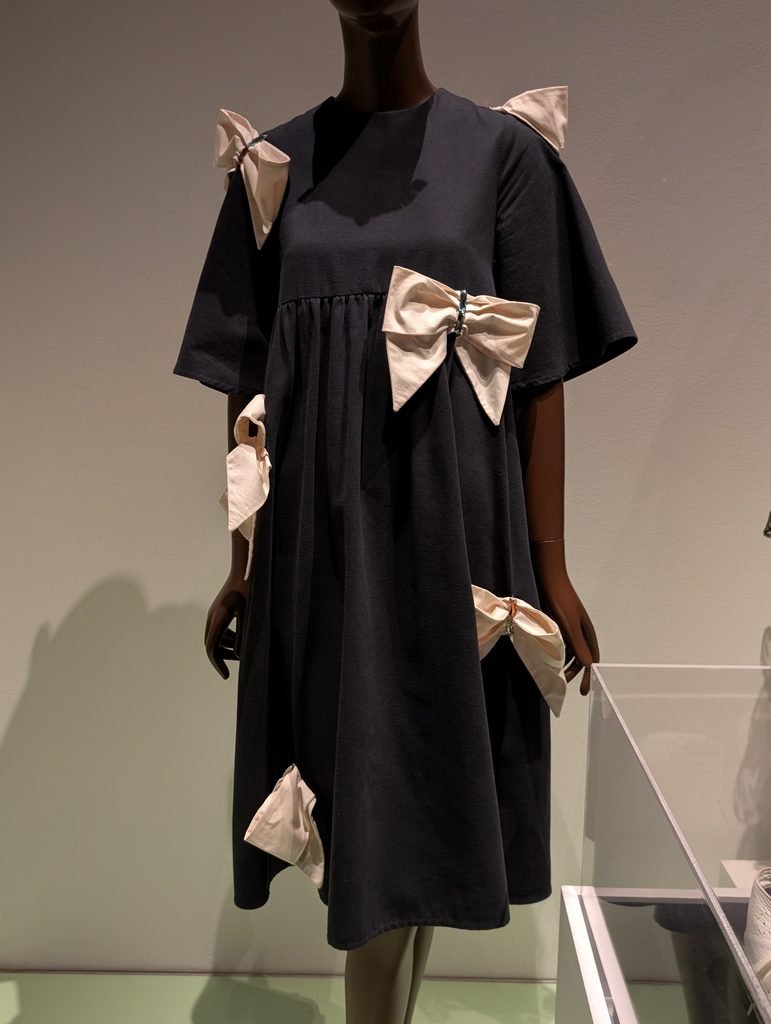
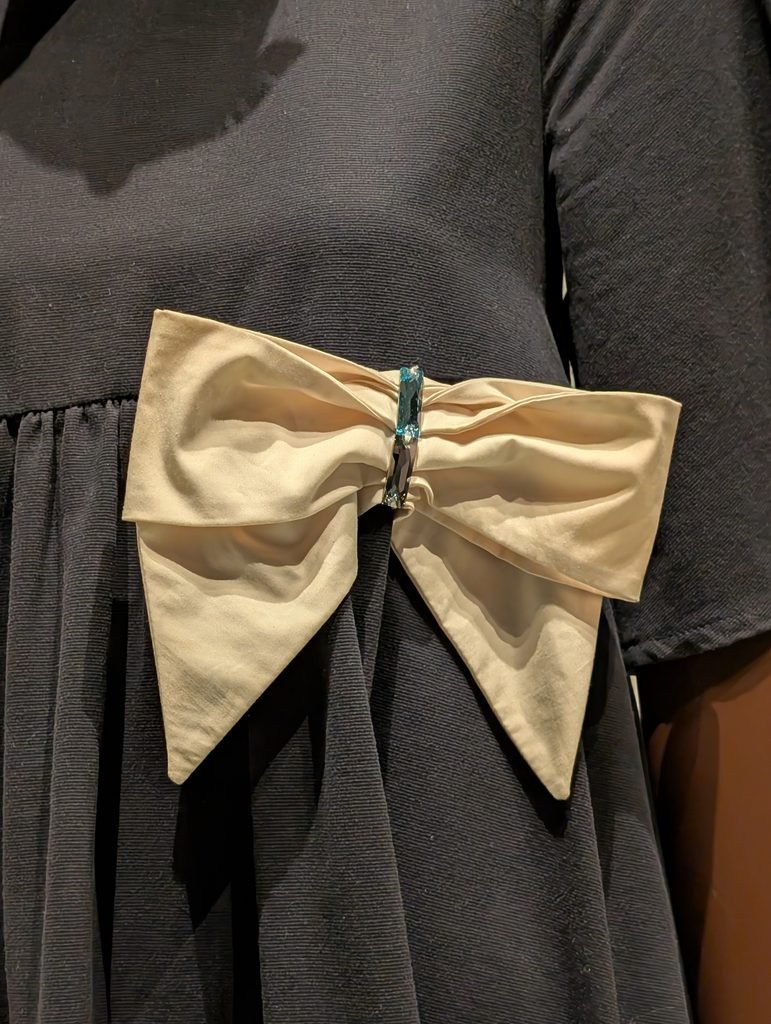
- Ukrainian Design Focus — Anna K: A highlight of this section is the inclusion of Ukrainian designer Anna K (Anna Karenina), who debuted her brand in 2012 at just sixteen years old. Her Fall 2015 baby doll dress combines navy cotton corduroy with ivory sateen and oversized bows. It captures youthful energy while maintaining a sophisticated, thoughtful aesthetic.
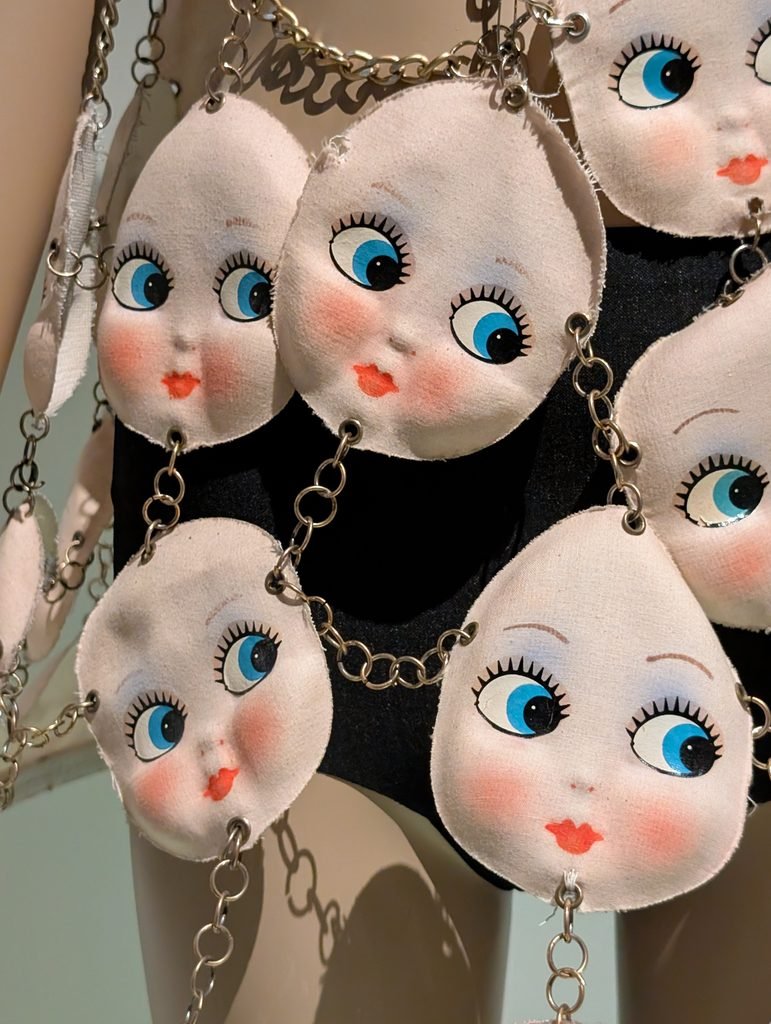
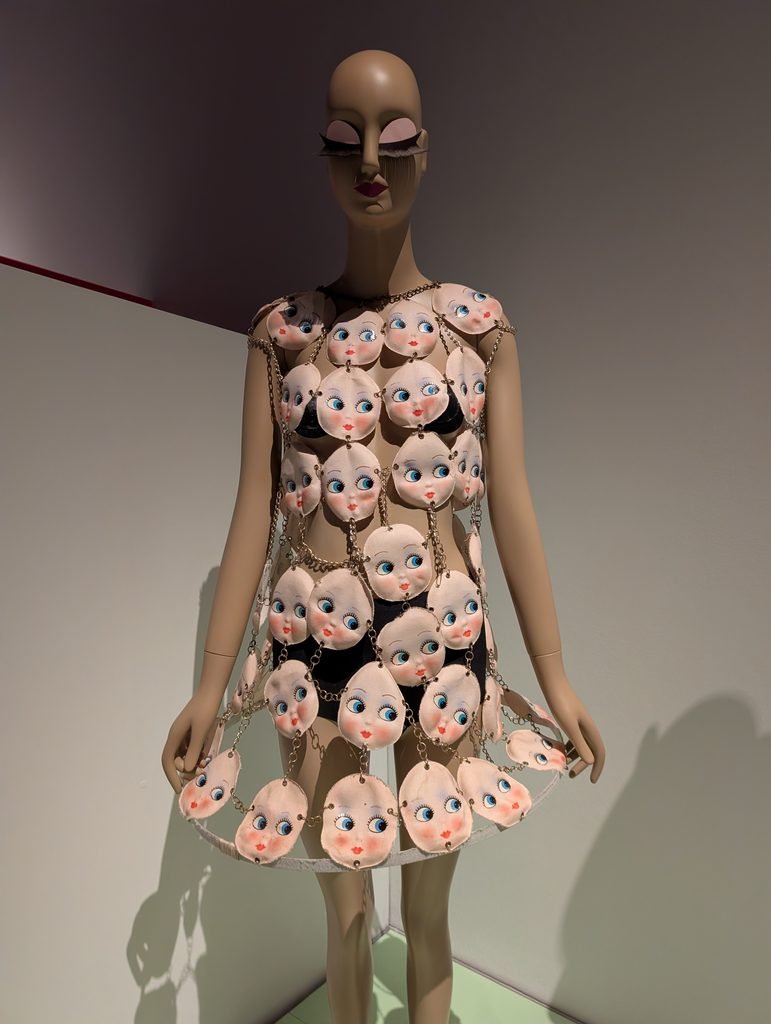
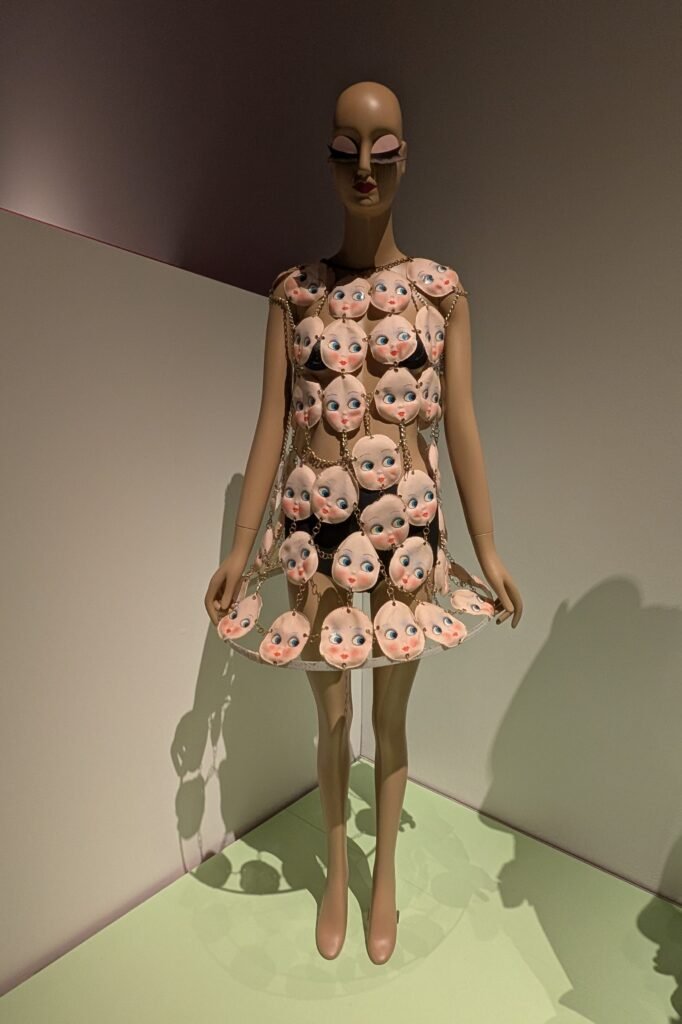
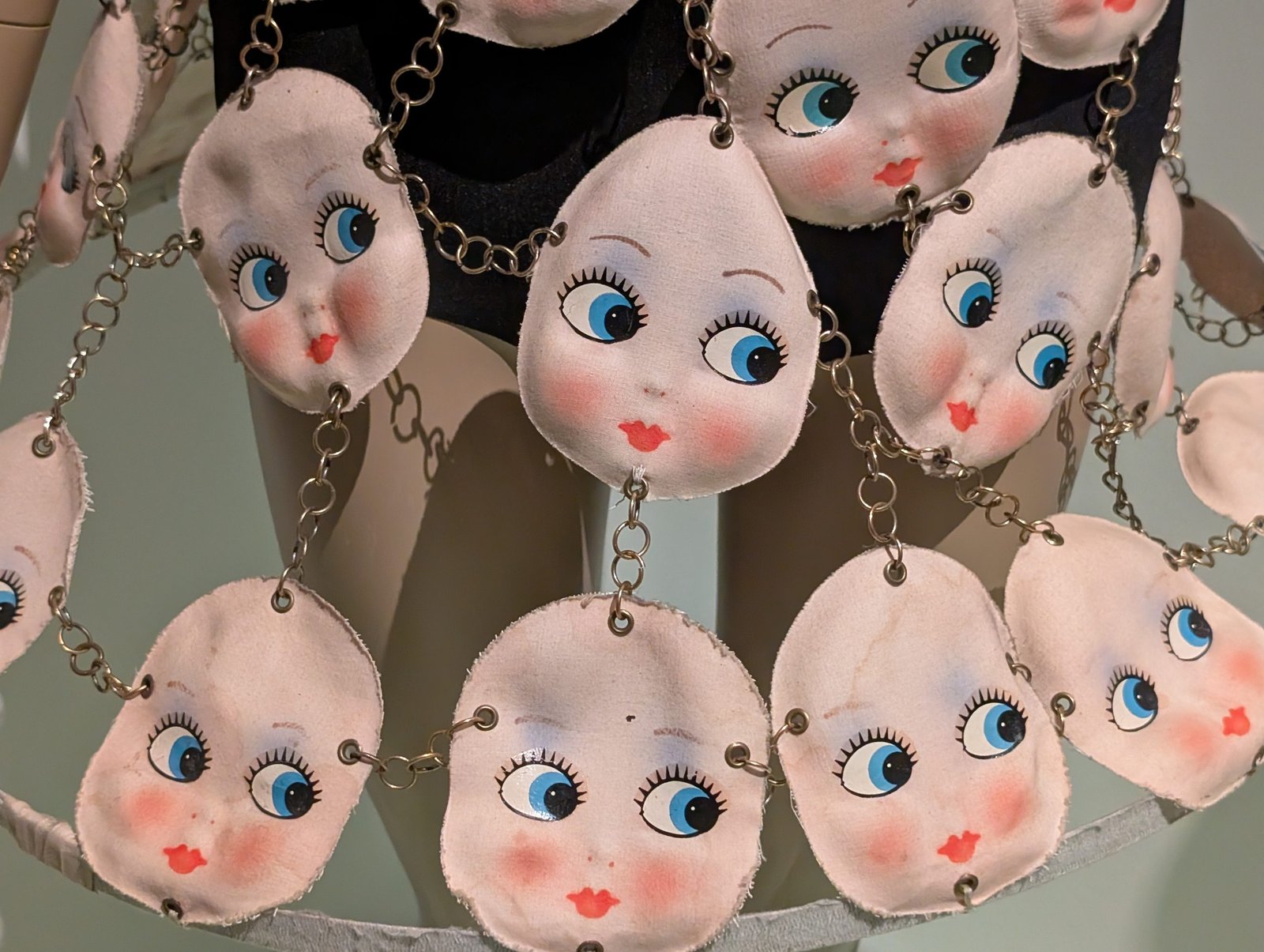
- Mr. Pearl’s Surrealism: The most literal interpretation is a 1980s dress crafted by famed corsetiere Mr. Pearl for nightlife icon Susanne Bartsch. Made entirely from cloth doll faces, the garment transforms the baby doll concept into an uncanny, theatrical masterpiece.