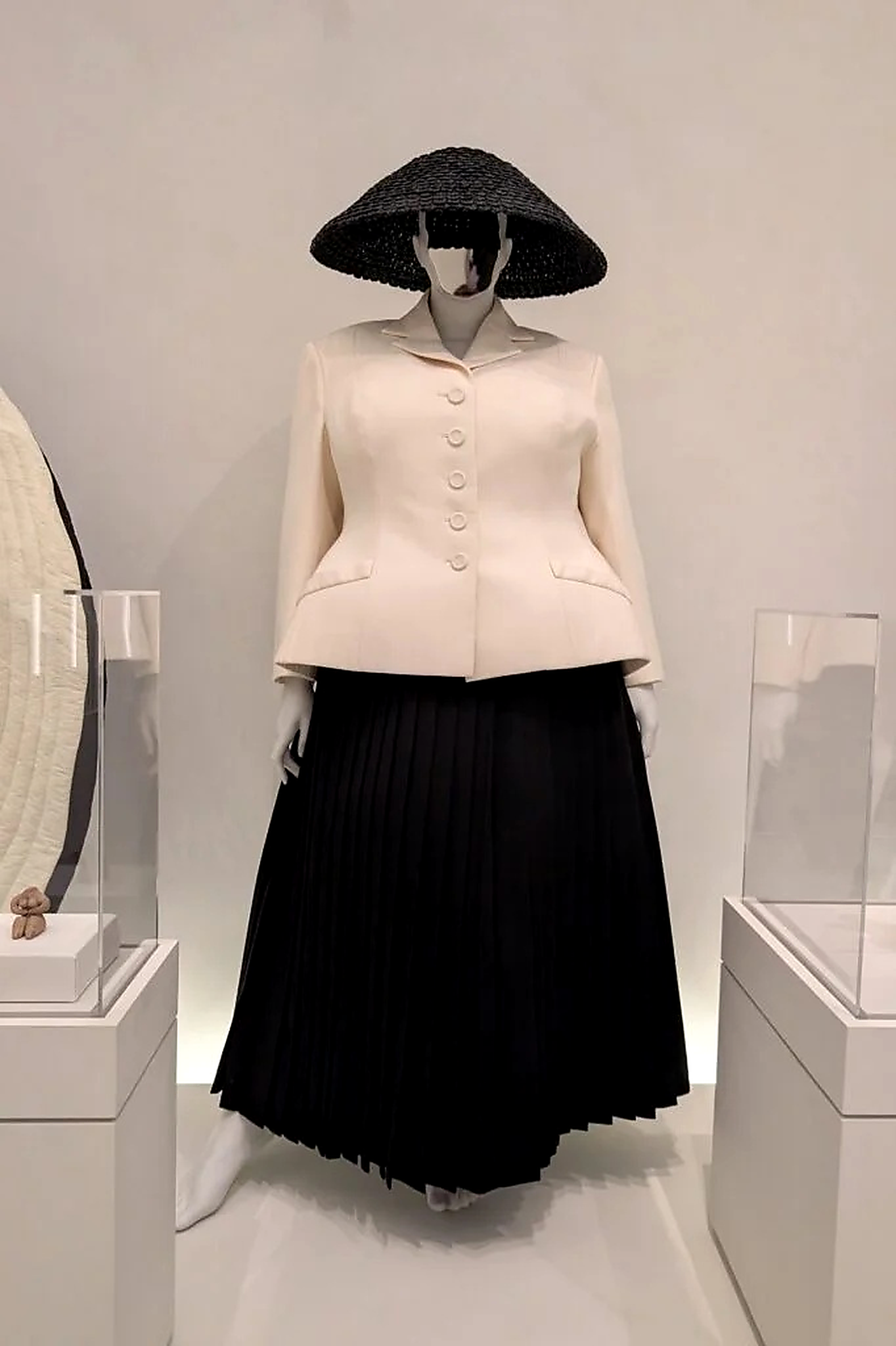

A light-colored jacket with a defined waist, a wide black pleated skirt, and a large straw hat: this ensemble is instantly recognizable even without a museum label. While it retains the key features of the famous Bar suit, the version created by Maria Grazia Chiuri for the French singer and model Yseult offers a fresh perspective on one of the most iconic shapes in the Dior wardrobe.
Yseult wore this custom-made suit to the Cannes Film Festival in 2024. In the museum exhibition, the ensemble is displayed on a mannequin modeled after her specific proportions. This is a crucial detail: what we see is not merely another iteration of a historic outfit, but a familiar silhouette tailored to a specific female figure.
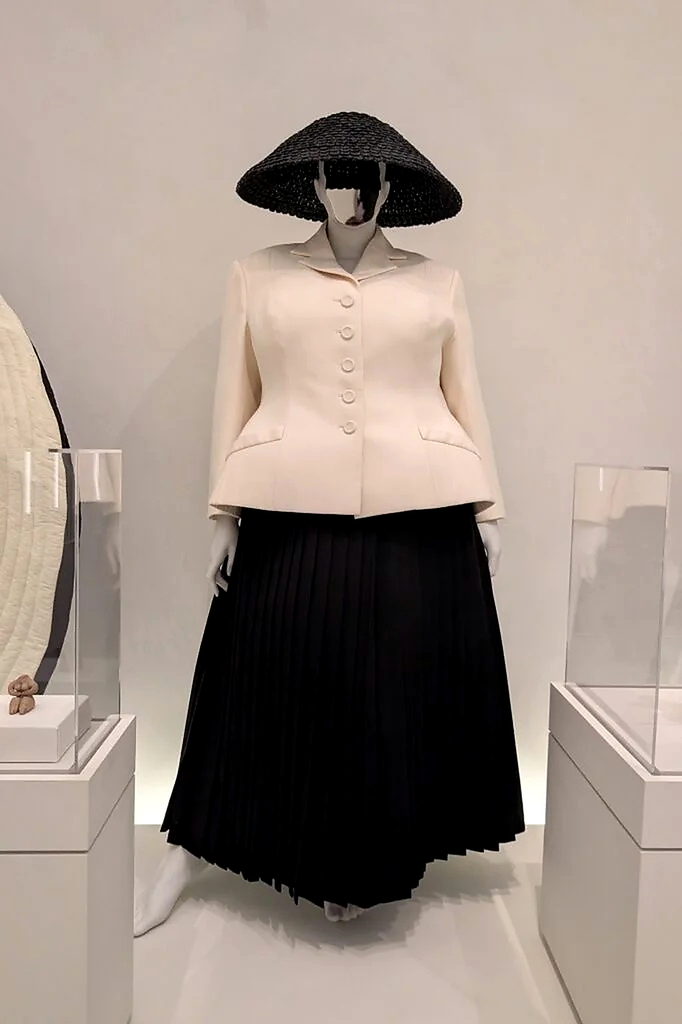
“Bar” suit, 2024 haute couture Worn on Yseult mannequin
From Historic Original to Bespoke Ensemble
Introduced in 1947, the Bar suit established a distinct aesthetic: rounded shoulders, a narrow waist, and accentuated, wide hips. This figure was not achieved solely through the jacket’s cut; it was also shaped by corsetry and specialized undergarments.
The museum highlights this silhouette as a symbol of post-war femininity, where clothing was designed to sculpt the body into rigid, ideal proportions. Isolde’s version keeps this iconic structure but flips the principle: instead of reshaping the figure to fit the garment, the suit is tailored to honor her unique lines. The historical spirit remains, but it is no longer bound to a single standard.
What the Cut Reveals
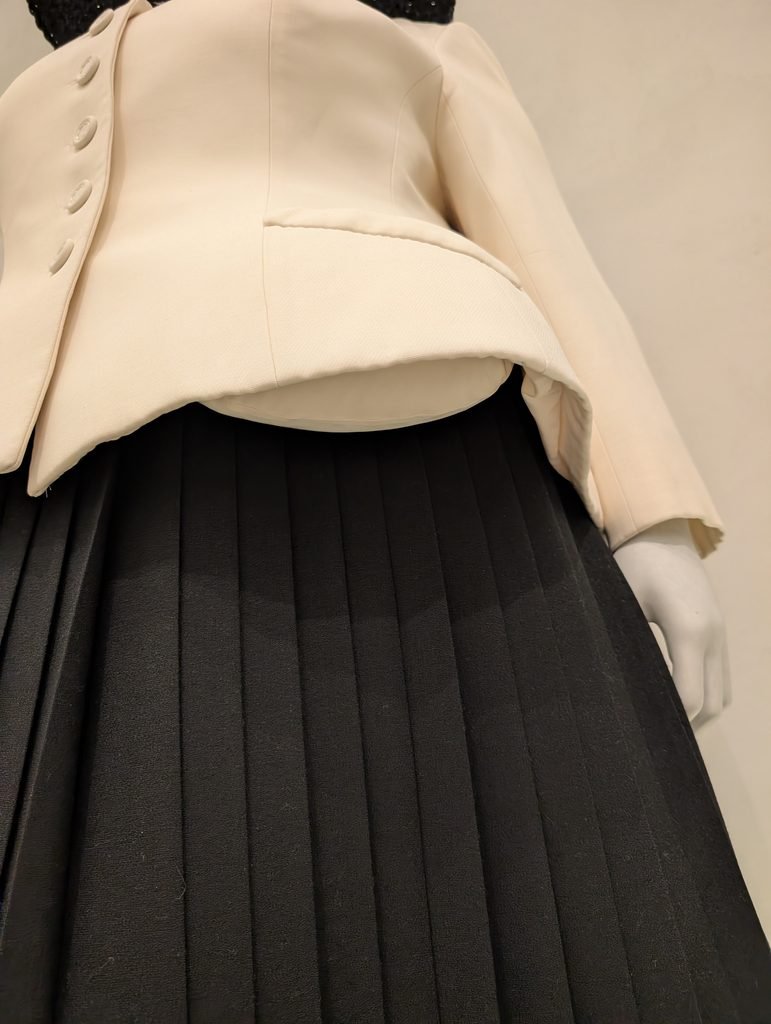
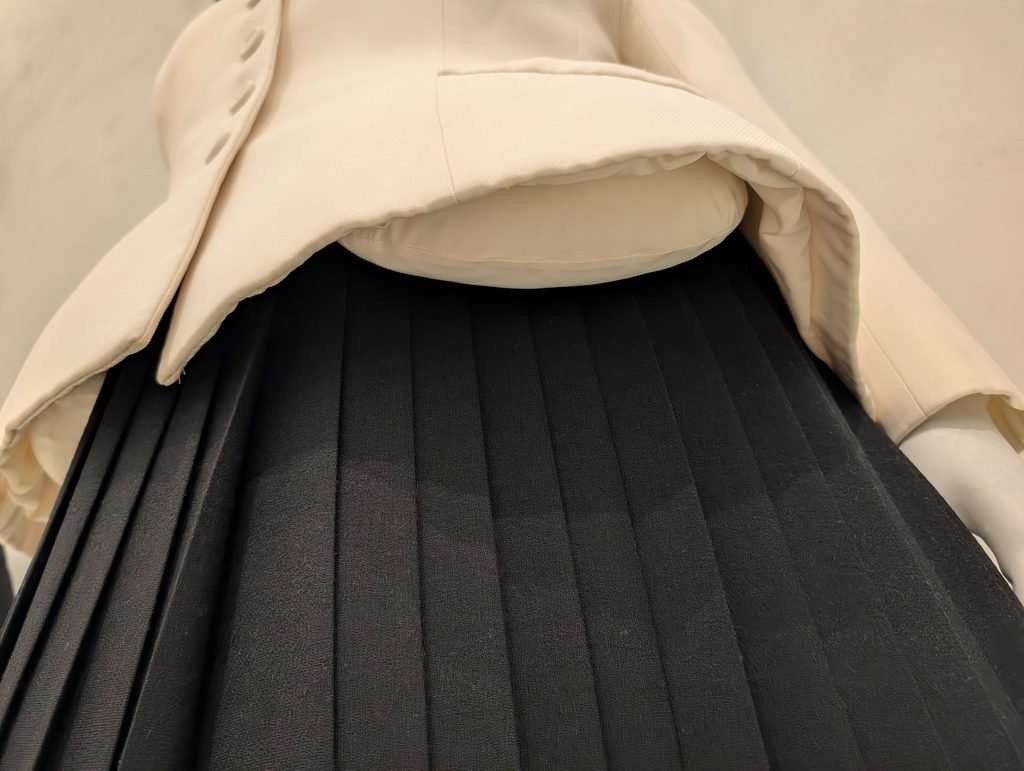
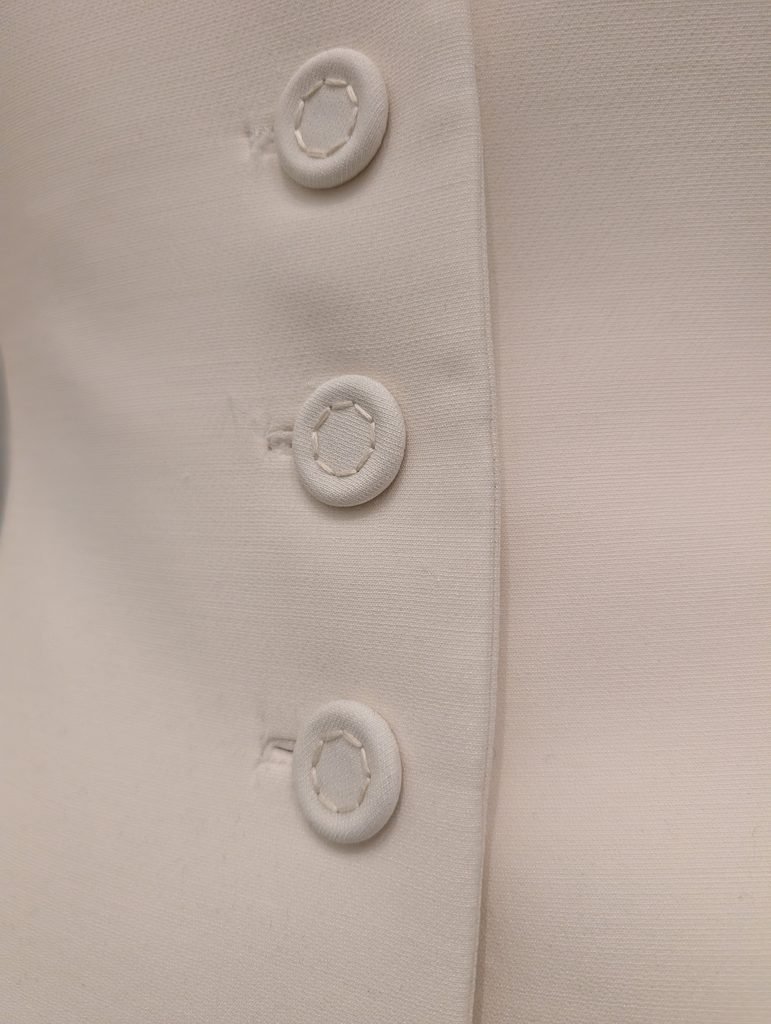
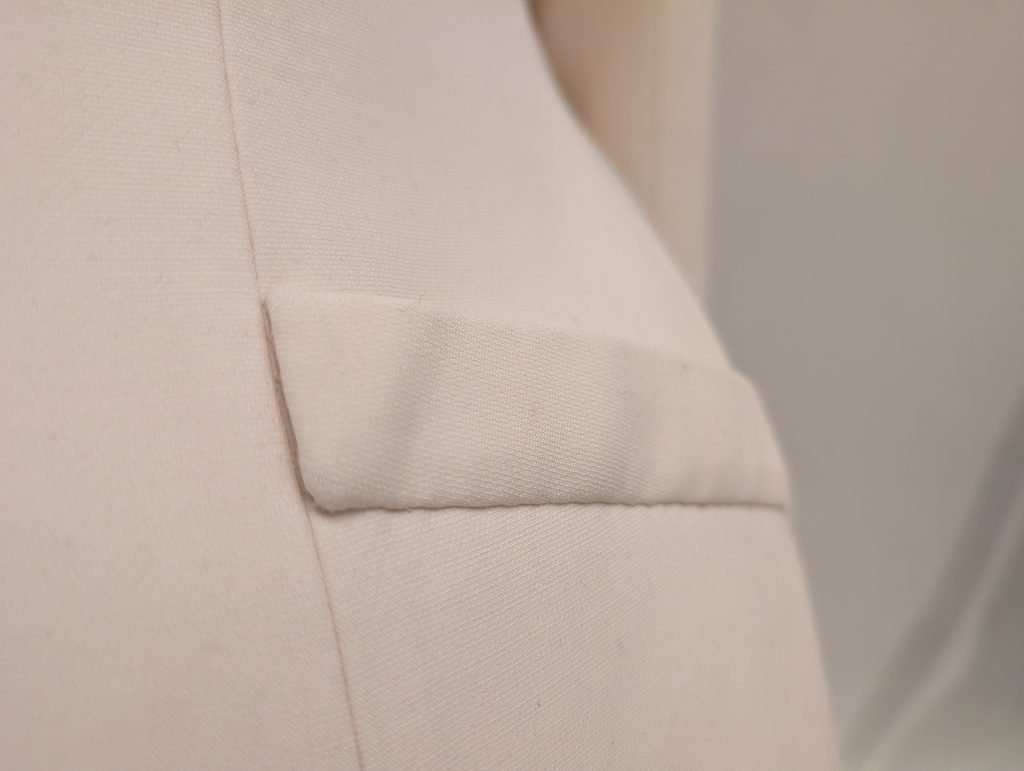
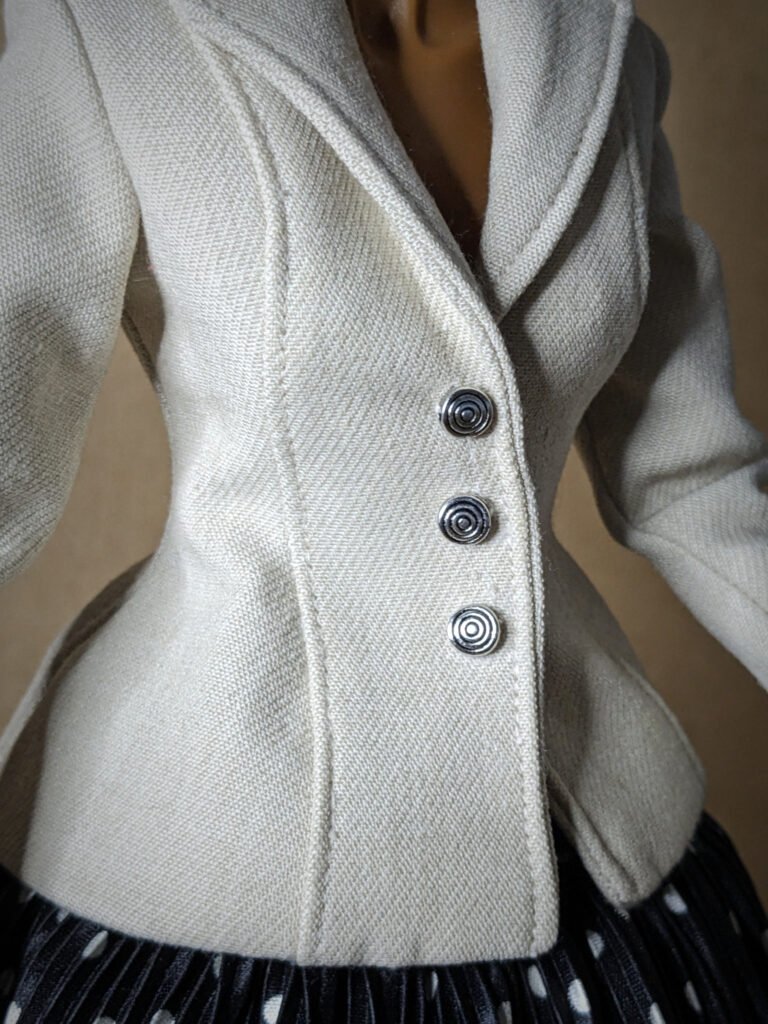
The photograph highlights the jacket’s structure: waist-shaping seams, flaring hips with accent pockets, a vertical row of light buttons, and a wide open collar.
The museum label details the materials: a white polyester-wool broken-twill jacket, a black wool-crepe skirt, a straw hat, and lambskin gloves.
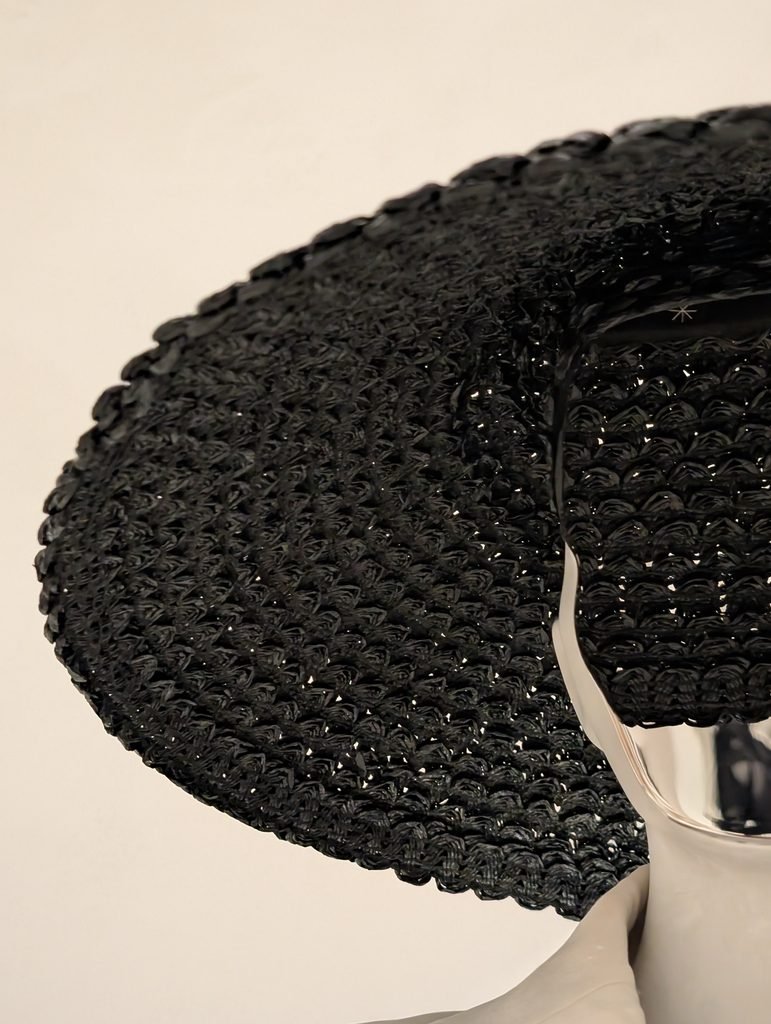
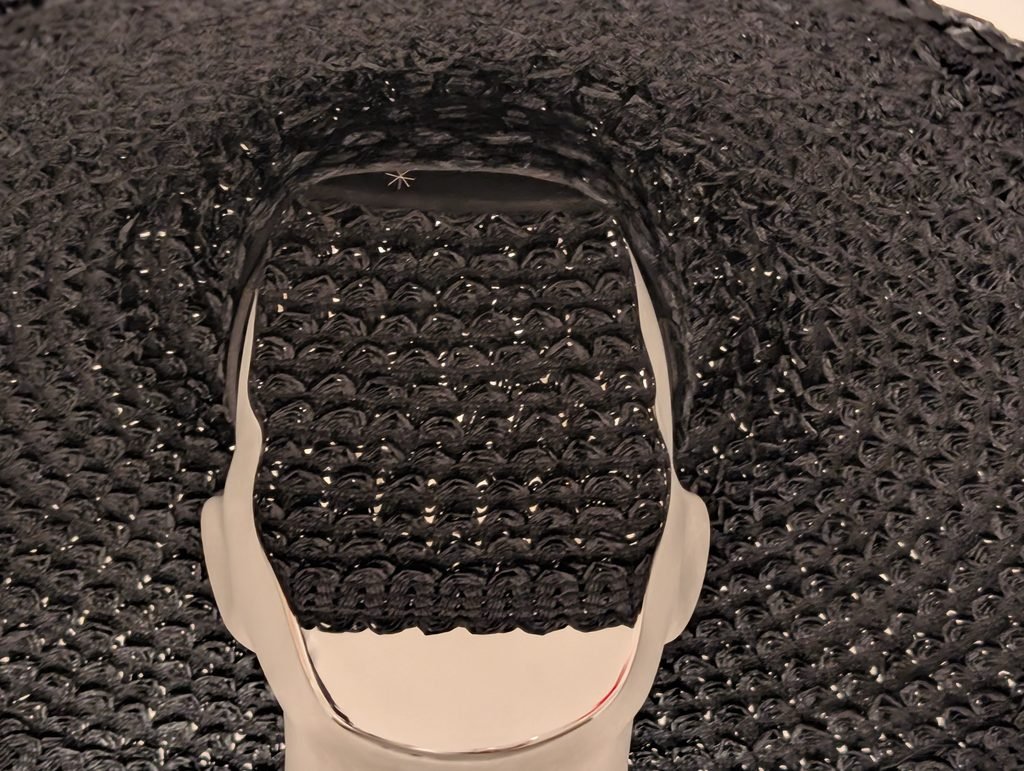
Beyond the monochrome contrast, it’s a study in texture: the smooth jacket, rhythmic skirt pleats, and woven hat create a tactile dialogue.
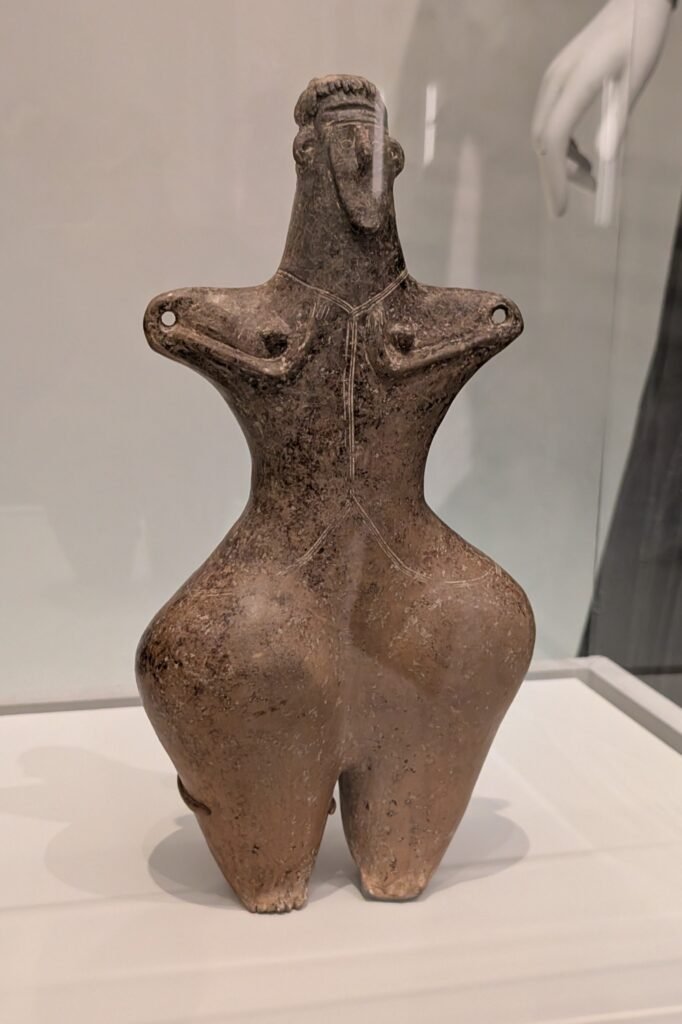
Iranian, ca. early 1st millennium BCE
Ceramic
Harris Brisbane Dick Fund, 1964 (64.130)
Why an ancient figurine stands nearby
To the right of the suit stands a ceramic female figurine from Iran, dating back to approximately the early first millennium BCE. It entered the museum’s collection in 1964, acquired through the Harris Brisbane Dick Fund. This juxtaposition does not imply that the ancient sculpture served as a source of inspiration for Dior. Instead, the exhibition places them side by side to address a different question: how do we perceive the voluminous female body, and why do we regard certain proportions as the norm while viewing others as requiring correction?
The statuette and the modern outfit belong to different eras and cultures. Yet, within this museum display, both images allow us to view fullness not as a deviation from a standard, but as an expressive, self-contained form.
My Take on the Bar Silhouette
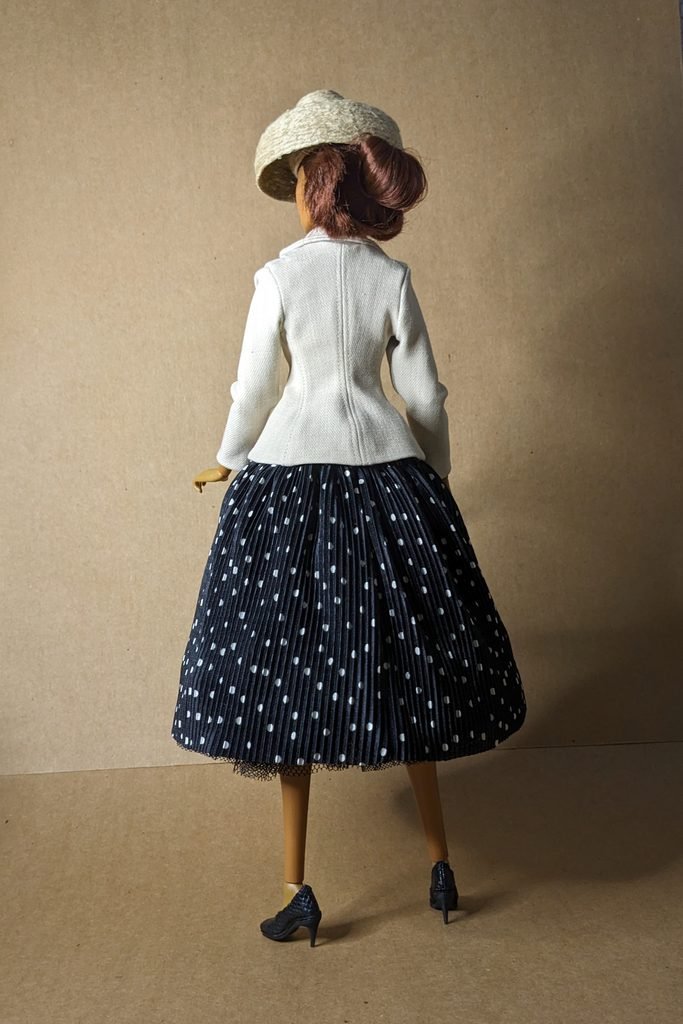
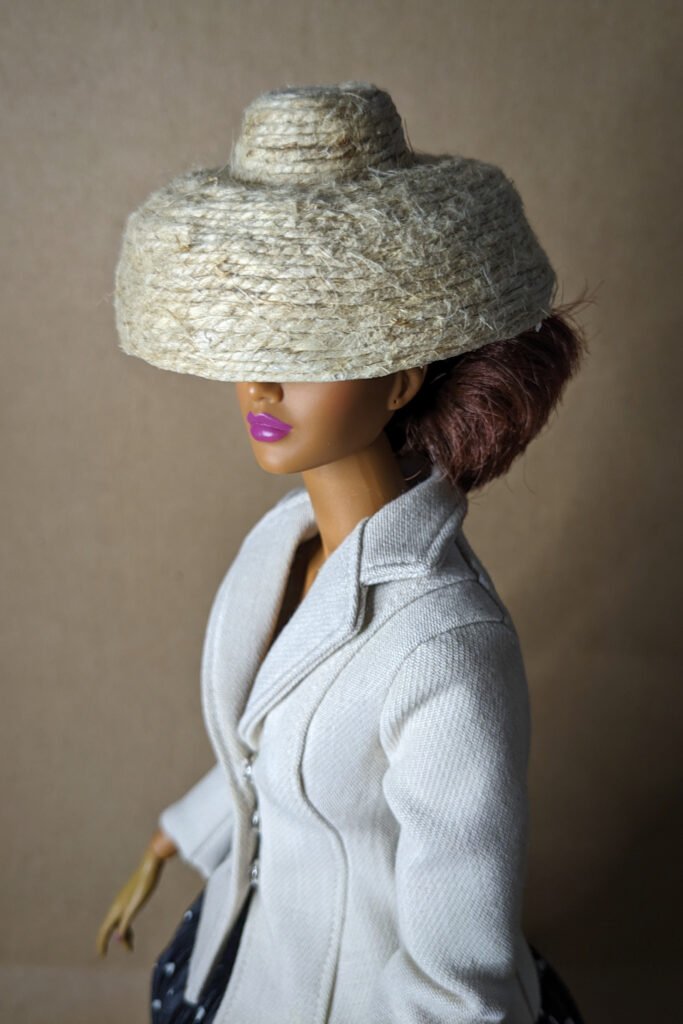
My workshop is home to my own miniature interpretation of this classic silhouette: a light tailored jacket, a dark pleated skirt, and a straw hat. Rather than an exact replica of the museum original, it is a personal reimagining of the iconic line. The polka-dot pattern and adjusted proportions bring a fresh mood while honoring the original vision.
Read more about this project in my article, “The Dior Bar Silhouette in Doll Scale: My Version.
A Classic That Doesn’t Stand Still
Even with altered proportions, the signature Bar silhouette remains undeniable. Recreating historical fashion, especially in miniature, requires understanding core design lines rather than blind replication.
Isolde’s adaptation transforms a rigid museum icon into a flexible form, giving classic proportions a new narrative.
*Based on museum exhibit materials. Costume provided by the House of Dior.
Sources & Further Reading
- Exhibition Material: Labels and commentary from the Costume Art exhibition at The Metropolitan Museum of Art (The Met).
- Ensemble: Costume provided by the House of Dior.
- Related Reading: “The Dior Bar Silhouette in Doll Scale: My Version” (Dolls Stories Atelier).