
In the Costume Art exhibition at The Metropolitan Museum of Art in New York, clothing is displayed alongside artworks, a setup designed to highlight the living connection between a garment, the body, and its representation in art. This dialogue forms the core concept of the exhibition.
One of the most compelling pairings in the show features a walking dress from circa 1883 alongside Georges Seurat’s study for his iconic painting A Sunday on La Grande Jatte. On the canvas, we see people relaxing by the water, shade from trees, colorful parasols, and elegant figures in urban attire. Displayed beside it is an authentic costume from the very same era, allowing us to examine up close what the artist captured in quick brushstrokes: a narrow waist, a long skirt, and a dramatically sculpted volume at the back.
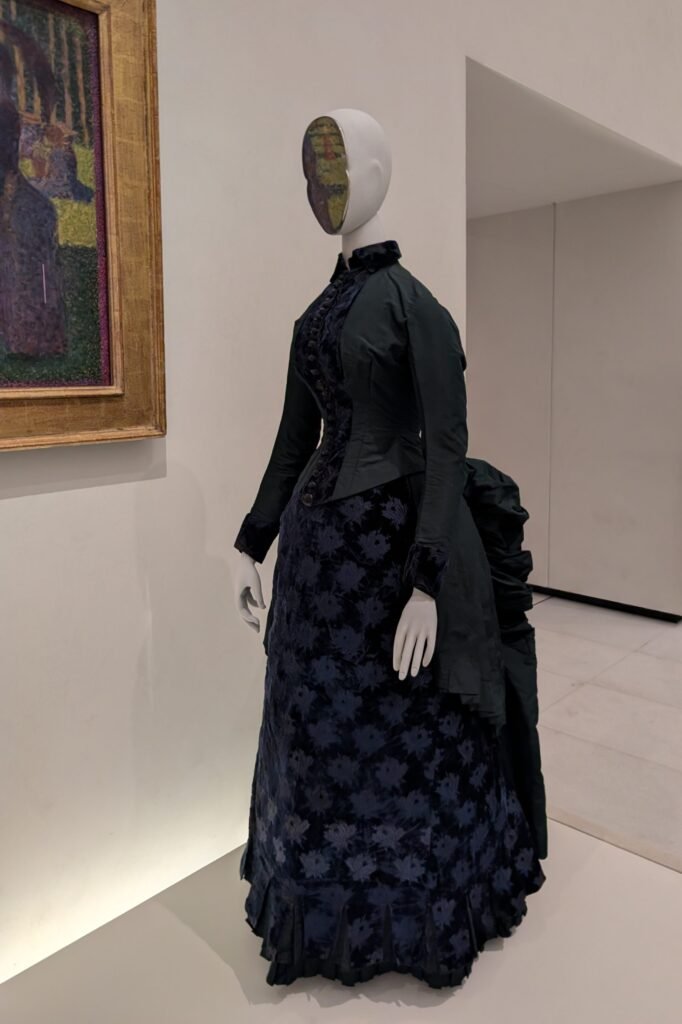
American or European, ca. 1883
Green silk faille and blue figured silk velvet
Gift of University of Virginia Drama Department, 1977
According to the museum label, this dress, of American or European origin, is crafted from green silk faience/faille and blue patterned silk velvet. In 1977, the ensemble was gifted to the museum by the University of Virginia’s Department of Drama.
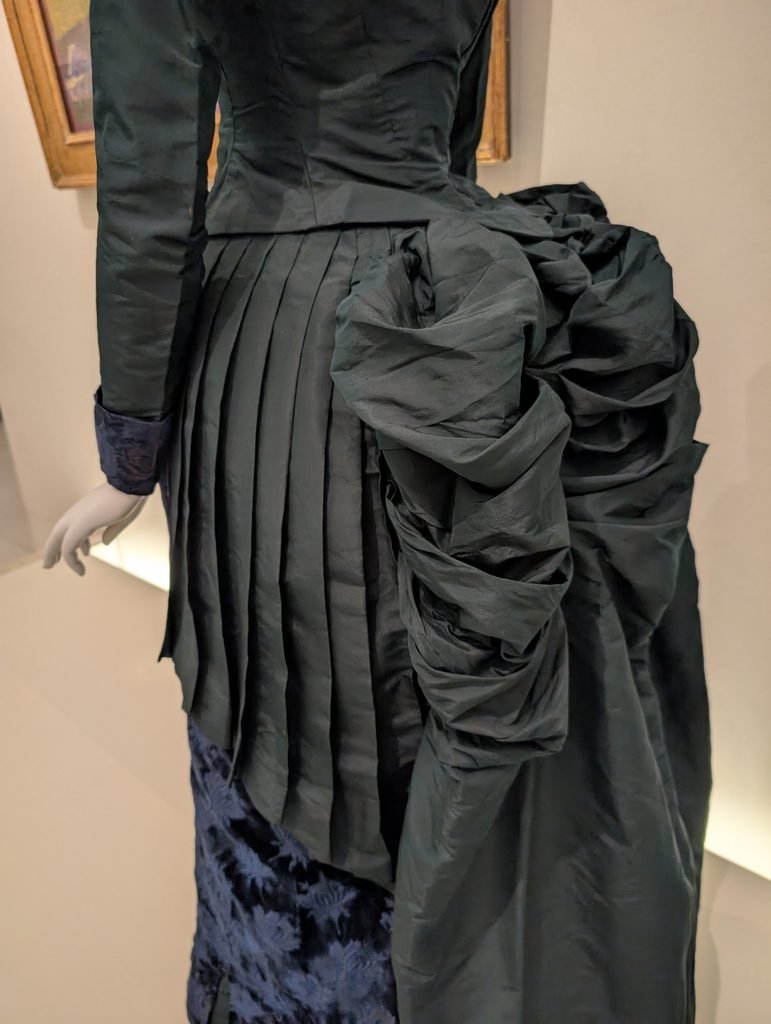
Two Fabrics, One Complex Silhouette
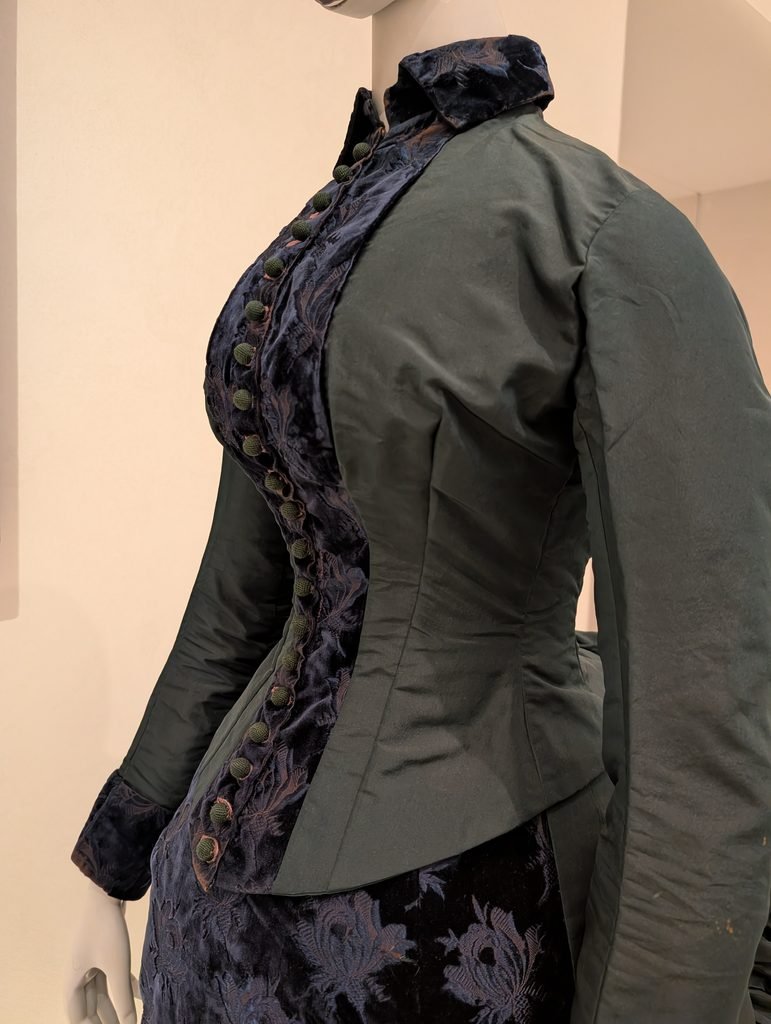
In photos, the colors look quite dark, the green silk appears almost black, with light softly revealing the blue velvet pattern. The contrast relies less on color and more on texture: smooth silk paired with a rich botanical velvet motif.
The fitted bodice, high collar, narrow sleeves, and neat row of buttons create a refined, almost austere silhouette. The patterned front insert links the bodice to the skirt, echoing on the collar and cuffs, while the green panels flare gently from the waist.
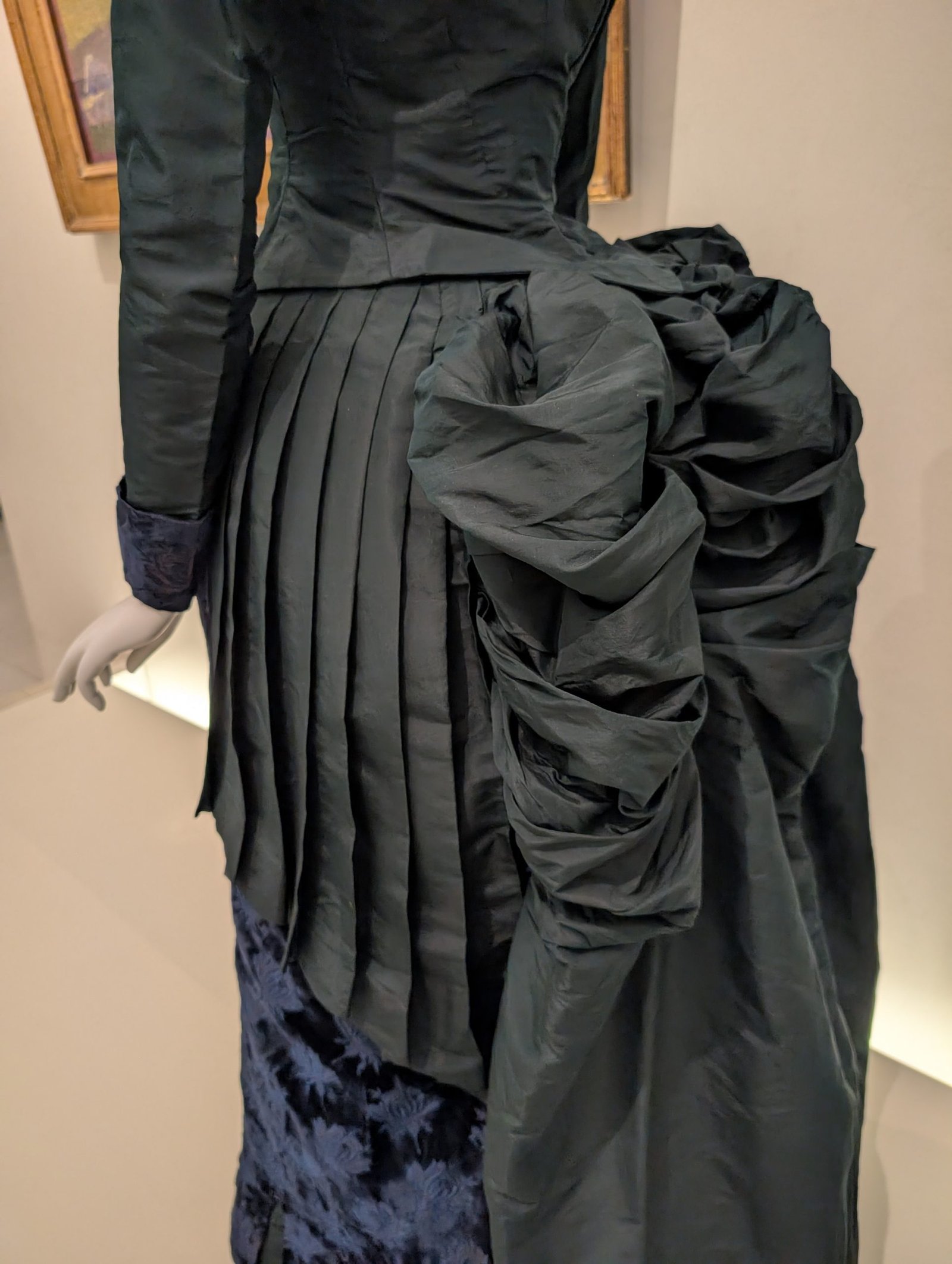
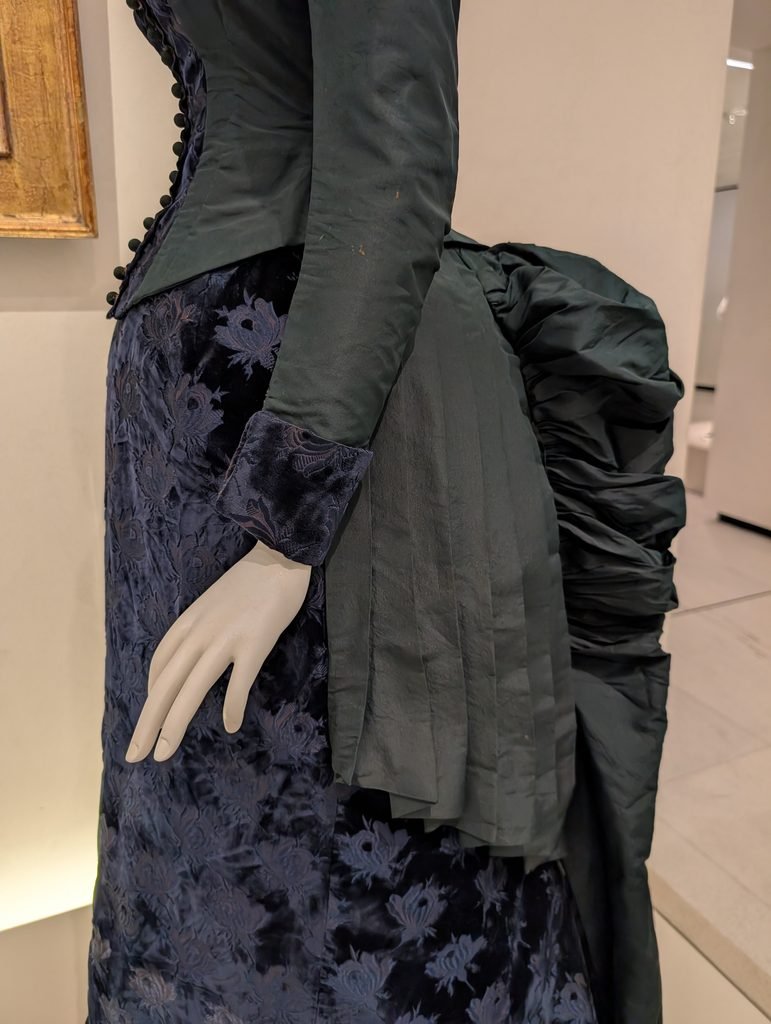
Yet the dress’s true character emerges in profile: right behind the narrow waist, a magnificent cascade of draped fabric defines the entire ensemble.
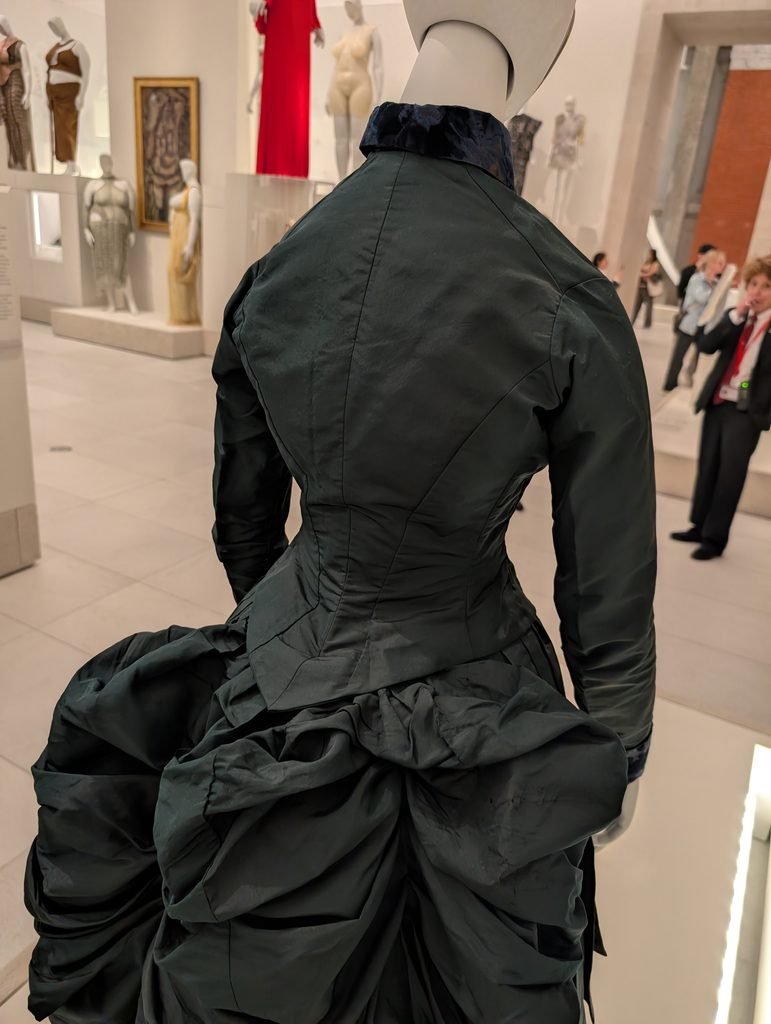
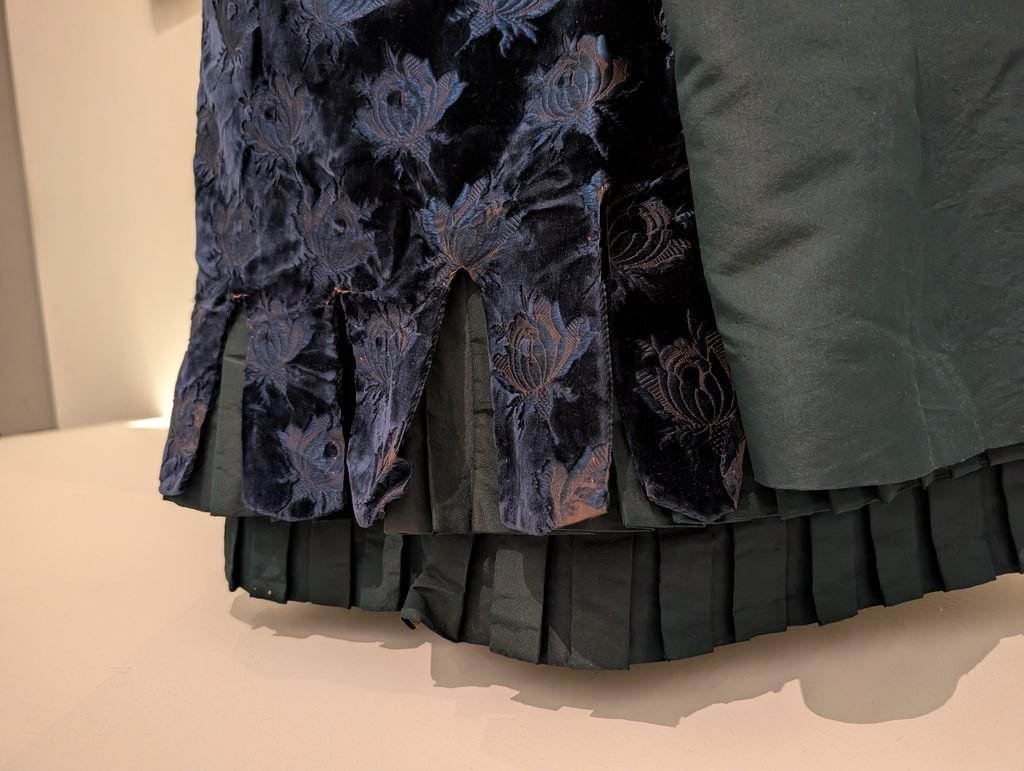
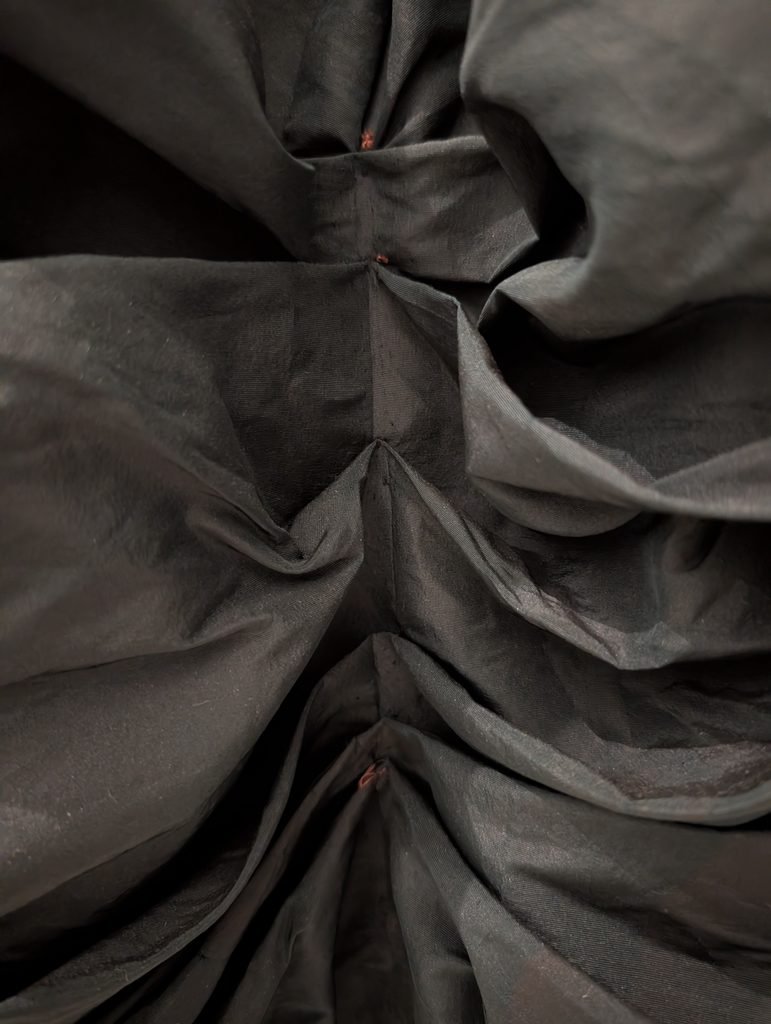
The Bustle: Volume Directed Backward
The bustle is the key to this era’s silhouette. In the 1870s and 1880s, fashion shifted its focus backward, peaking around 1885 when skirts projected almost perpendicular to the spine.
This 1883 dress captures that shift perfectly. Restrained from the front, it opens up in profile, where the draped fabric forms a complex architectural shape. The volume doesn’t encircle the body, it is emphatically thrown to the back.
The museum aptely compares these styles to the heavily upholstered interiors of the era, where substantial silk and rich velvet give the drapery a heavy, monumental feel.
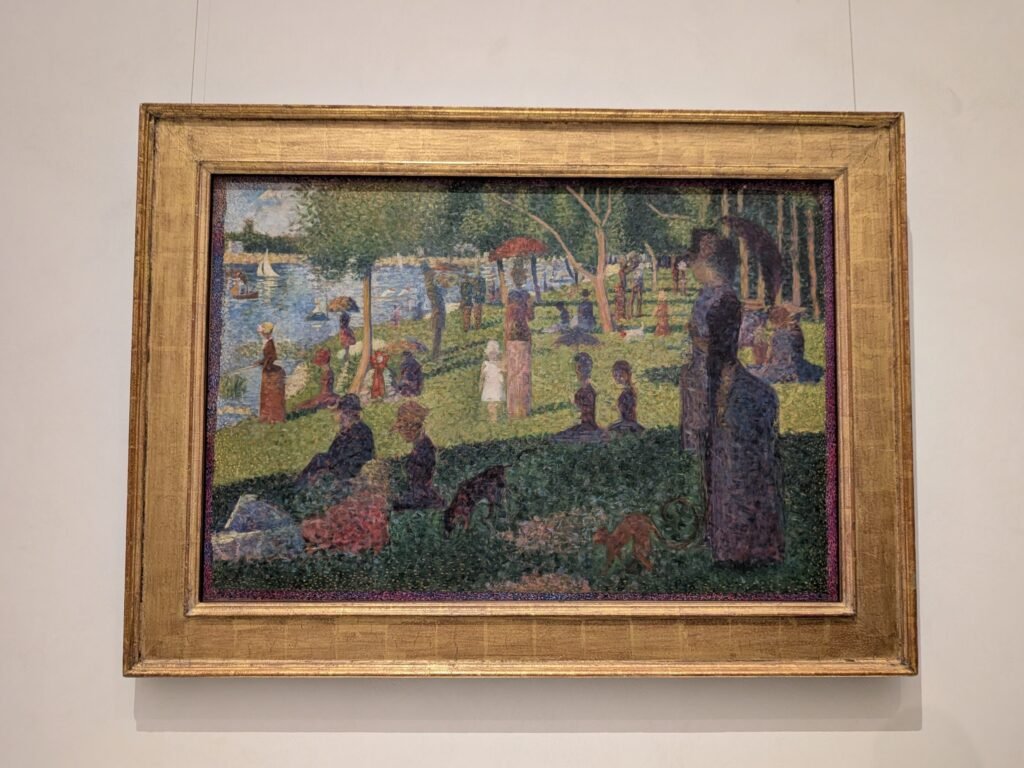
Study for “A Sunday on La Grande Jatte,” 1884
Oil on canvas
Bequest of Sam A. Lewisohn, 1951
The Dress in Seurat’s Painting
Displayed beside the dress is Georges Seurat’s 1884 study for A Sunday on La Grande Jatte. Female figures blend into the landscape’s rhythm, with the profile of the woman on the right clearly highlighting the bustle’s dramatic curve.
Curators note that while the dress’s outline is captured in dynamic brushstrokes in the study, Seurat made the bustle even more exaggerated in the final 1886 masterpiece (now at the Art Institute of Chicago).
This pairing traces fashion’s real-time evolution, showing how the artist observed shifting silhouettes and transformed contemporary trends into the geometry of his composition.
What I Look at as a Doll Clothes Maker
As a maker, I find the core beauty of this dress in its proportions and balance of volumes. The fitted top and calm front work seamlessly with the dramatic rear drapery: the essence of historical costume lies in its cut, not just its decoration.
When adapting this for a doll, the main goal is capturing the contrast between front and profile, not merely adding petticoats, but achieving the exact vector of volume, a sharp waistline, and the flow into the bustle. Repeating the accent fabric on the collar, cuffs, and panels ties the entire mini-ensemble together.
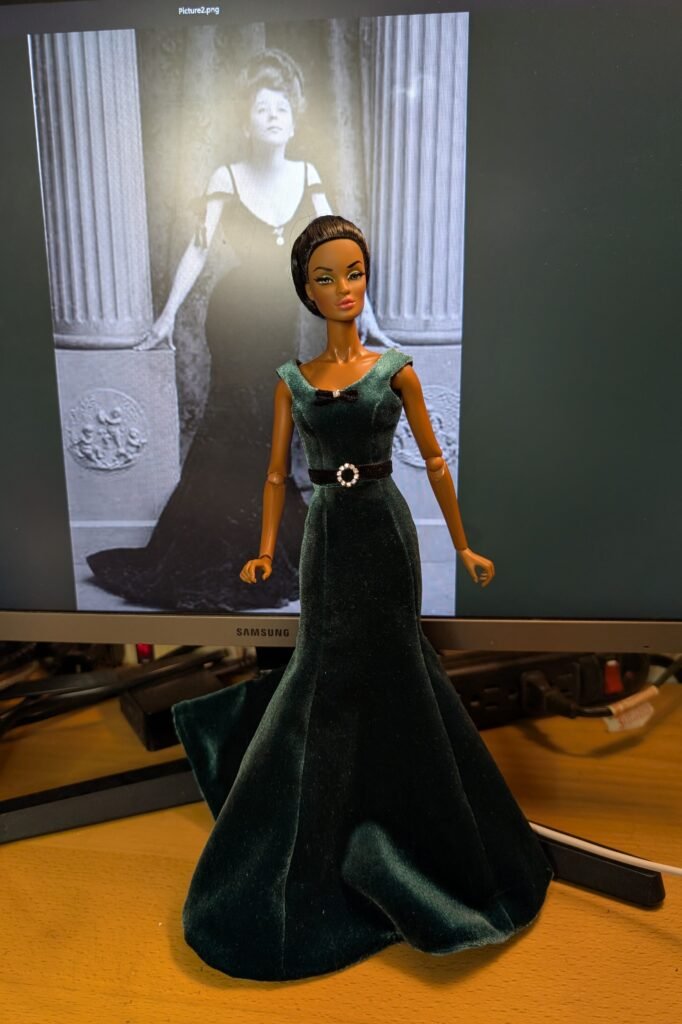
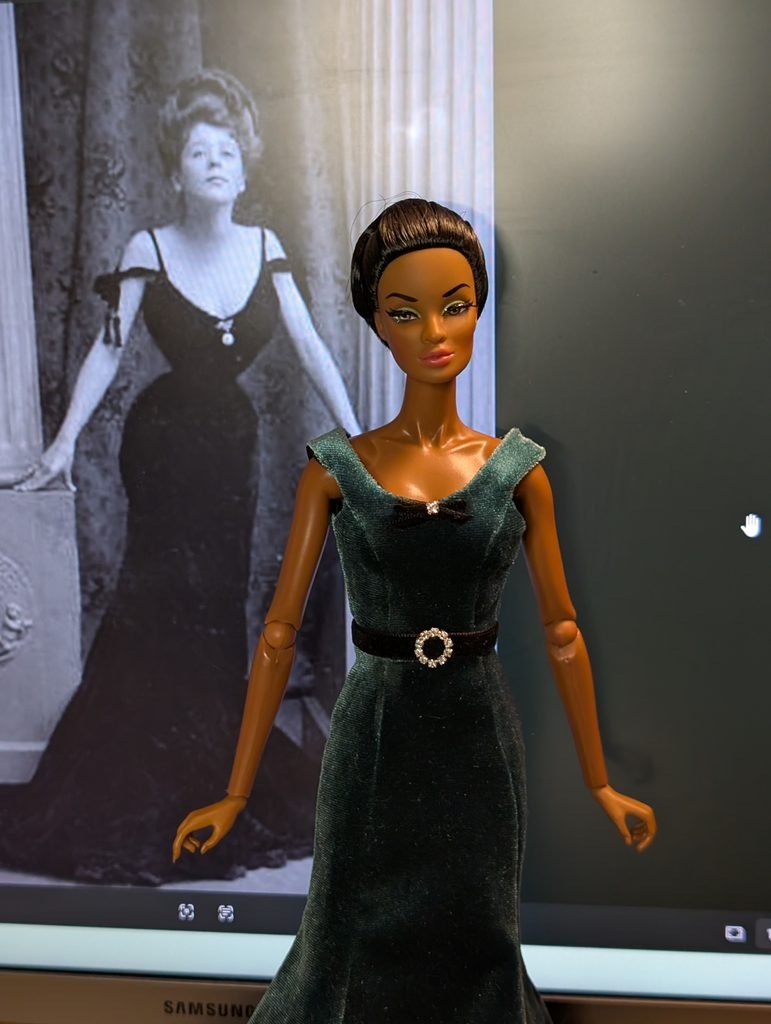
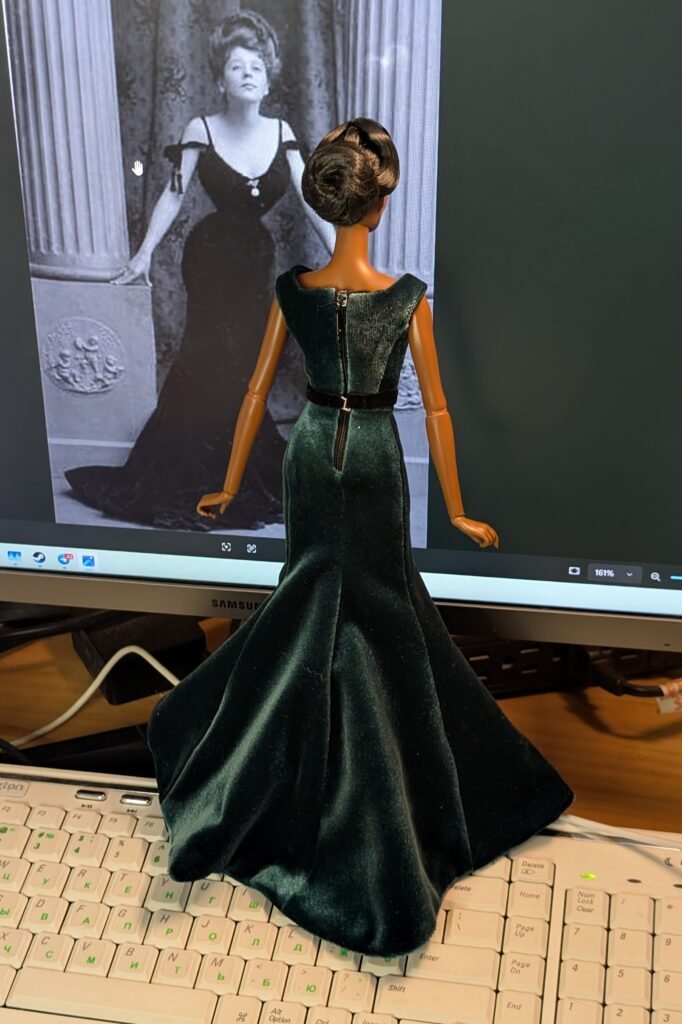
Pairing costume with art is deeply inspiring: the painting shows how the garment lived and moved, while the physical dress reveals the pure structural logic of its creators.
*Based on museum label text and exhibition materials from Costume Art at The Metropolitan Museum of Art, New York.
- Walking Dress: Accession Number 1977.304.2a, b.
- Georges Seurat Study: Accession Number 51.112.6.
Sources & Further Reading
- Walking Dress (c. 1883) — The Metropolitan Museum of Art, Accession Number: 1977.304.2a, b.
- Study for “A Sunday on La Grande Jatte” (1884) — Georges Seurat, The Metropolitan Museum of Art, Accession Number: 51.112.6.
- Costume Art — Exhibition texts and gallery materials, The Costume Institute, The Metropolitan Museum of Art, New York.
- A Sunday on La Grande Jatte — 1884 — Georges Seurat, The Art Institute of Chicago, Helen Birch Bartlett Memorial Collection, Reference Number: 1926.224.