
History of Fashion Dolls
The Early Ambassadors of Style
In an era before the internet, television, photography, or modern runway shows, fashion traveled across Europe in the form of dolls. They achieved their widest distribution in the 17th and 18th centuries, becoming an absolute cultural phenomenon throughout the 18th century.
The tradition of dressing dolls in fashionable attire had been known in Europe since the late Middle Ages. It was one of the most effective ways to display the cut and construction of garments, as well as fabrics, trimmings, headwear, and hairstyles.
Sixteenth-century documents associated with Italy and the Medici dynasty mention dolls and small figures dressed according to contemporary fashions. An inventory of Catherine de’ Medici’s possessions from 1589 lists fourteen such dolls. These records demonstrate that Europe had used similar models for displaying fashionable dress for at least five hundred years.
According to the Canadian McCord Stewart Museum, by the late sixteenth century, European royal courts were using fashion dolls were exchanged, collected, and used at European courts to present the latest styles from the French court.
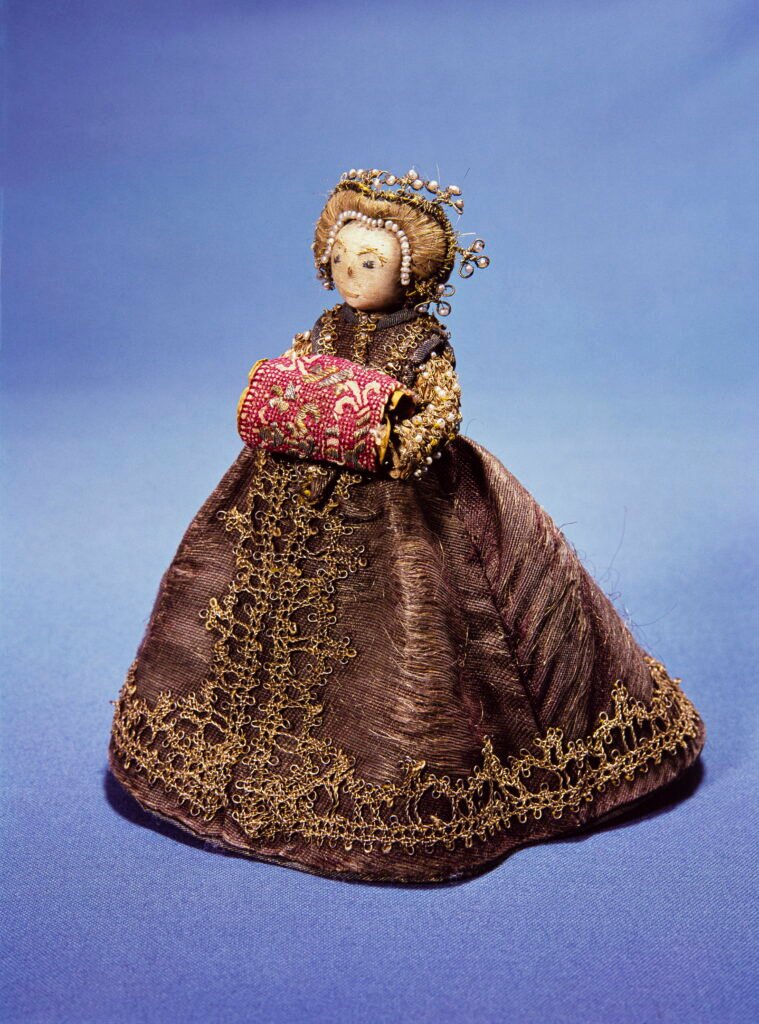
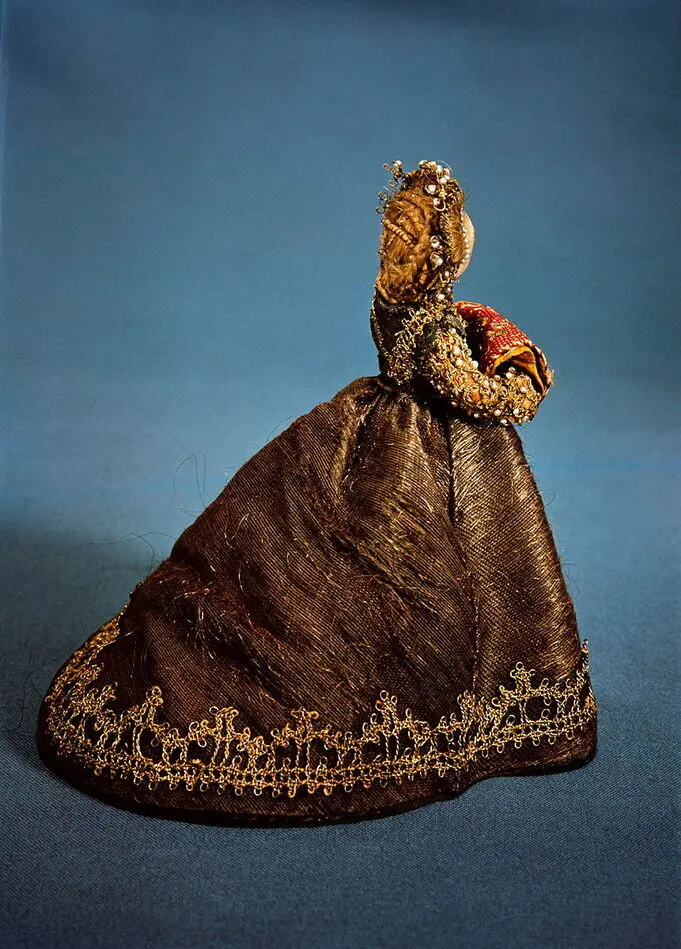
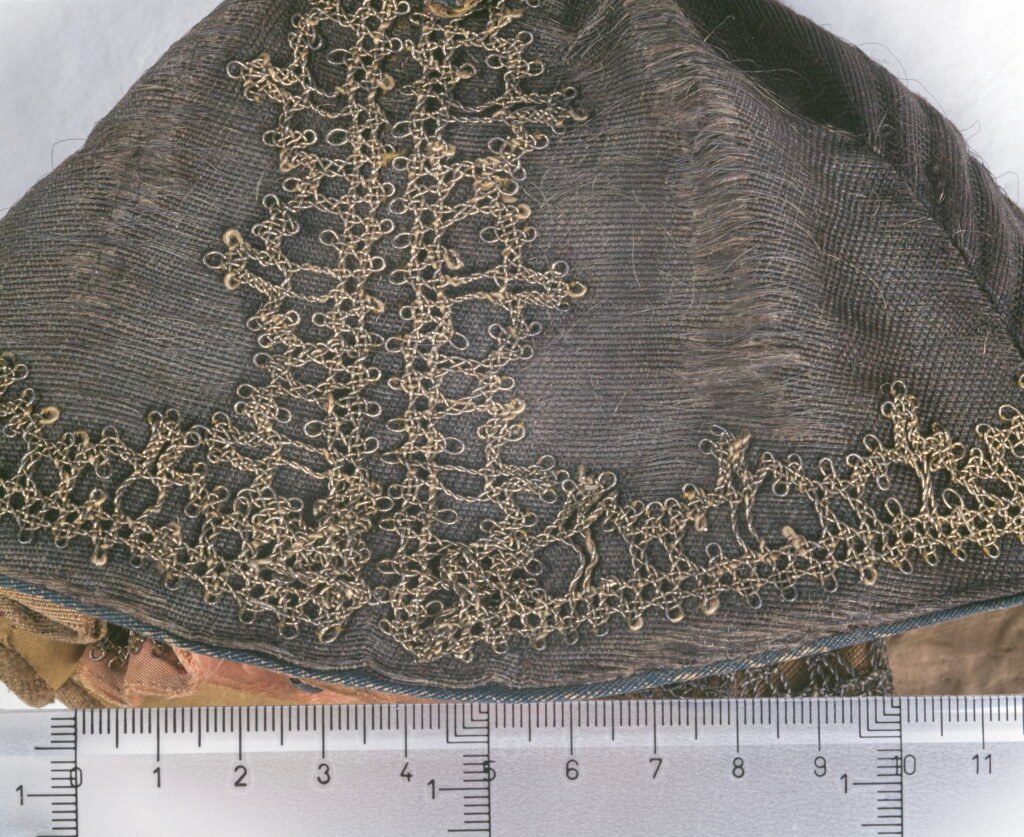
One of the rarest surviving early examples of this tradition is a 16-centimetre Swedish fashion doll from the collection of the Royal Armoury (Livrustkammaren) in Stockholm, dated to around 1590–1600. It features a wire armature, a silk-wrapped textile body, real hair, and embroidered facial features. Its silk costume, trimmed with gold braid, is exceptionally rare today, as such delicate organic materials were extremely vulnerable to damage and loss over time.
Related survivors: early English wooden dolls
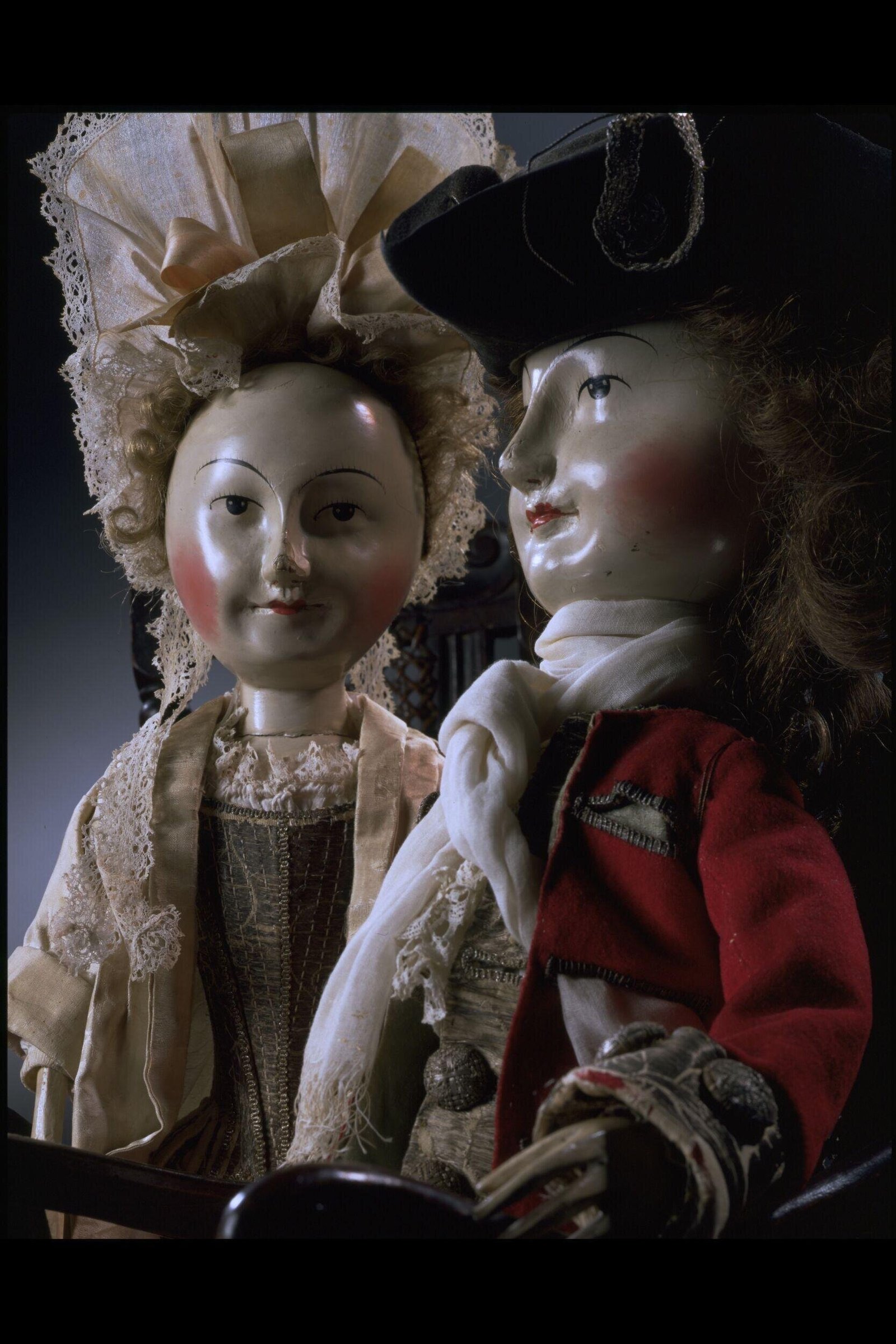
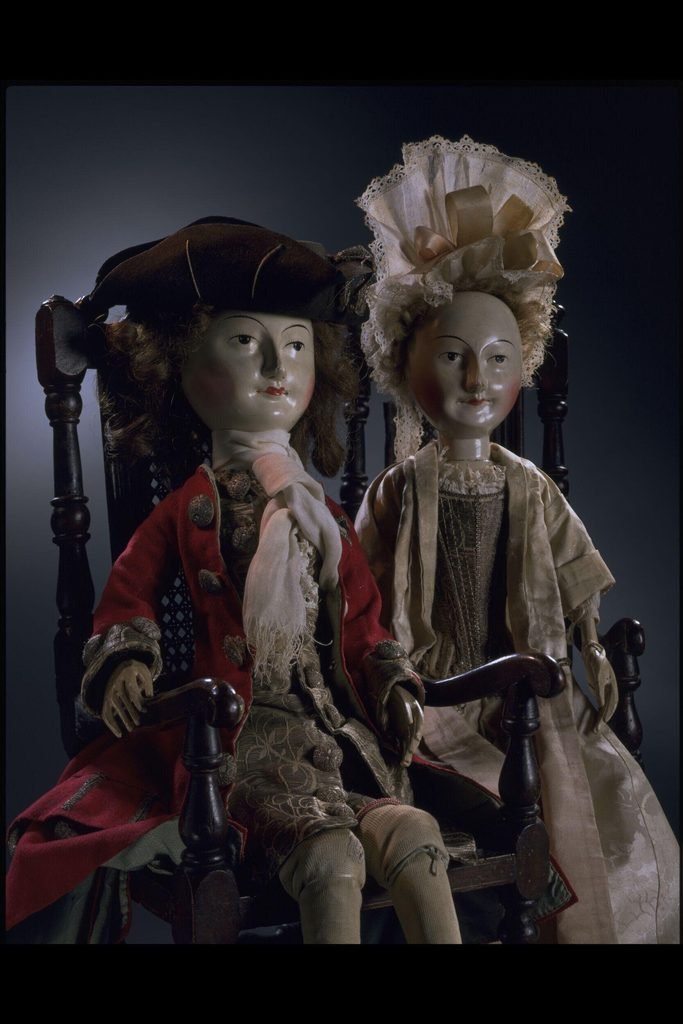
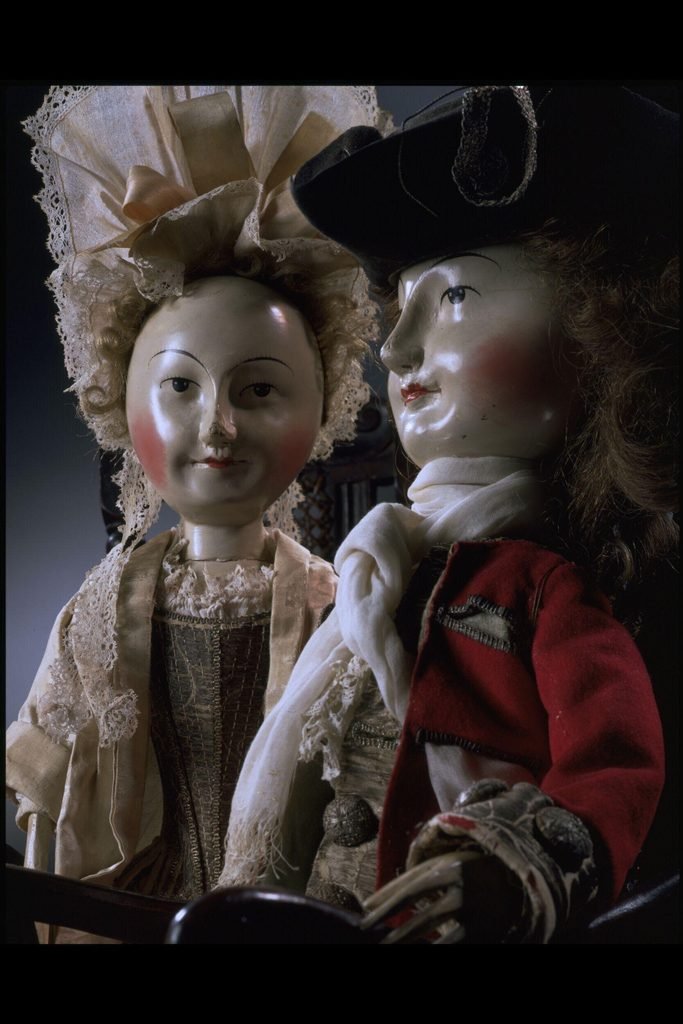
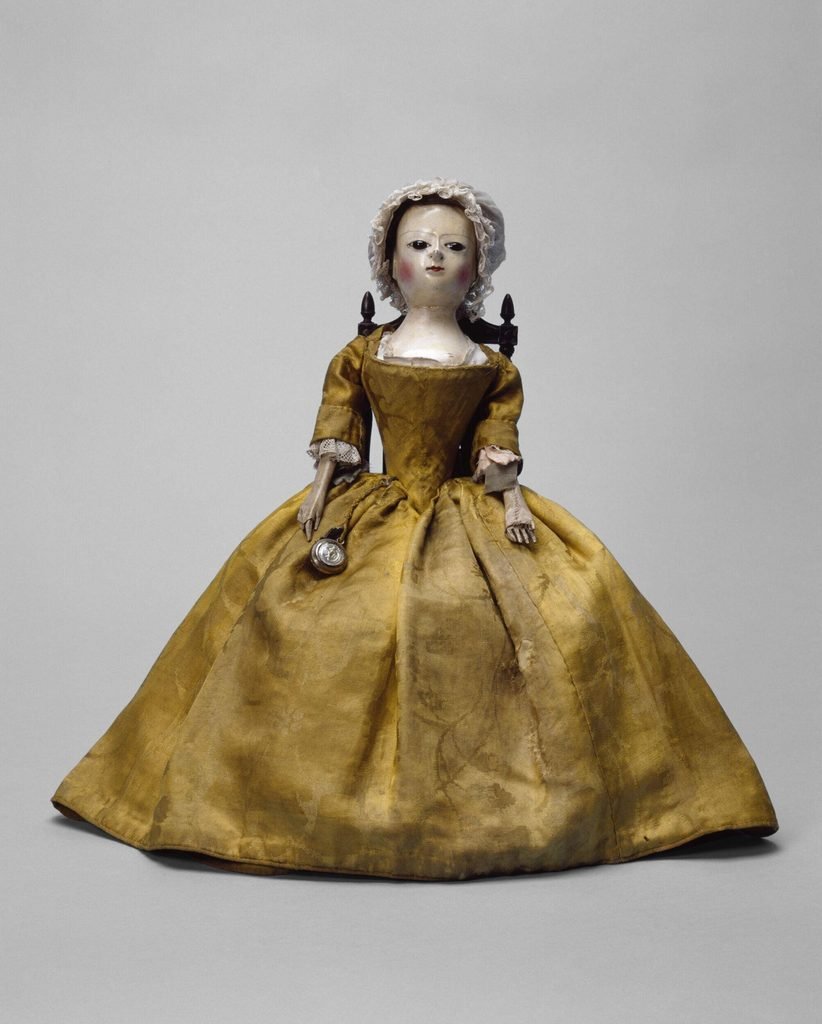
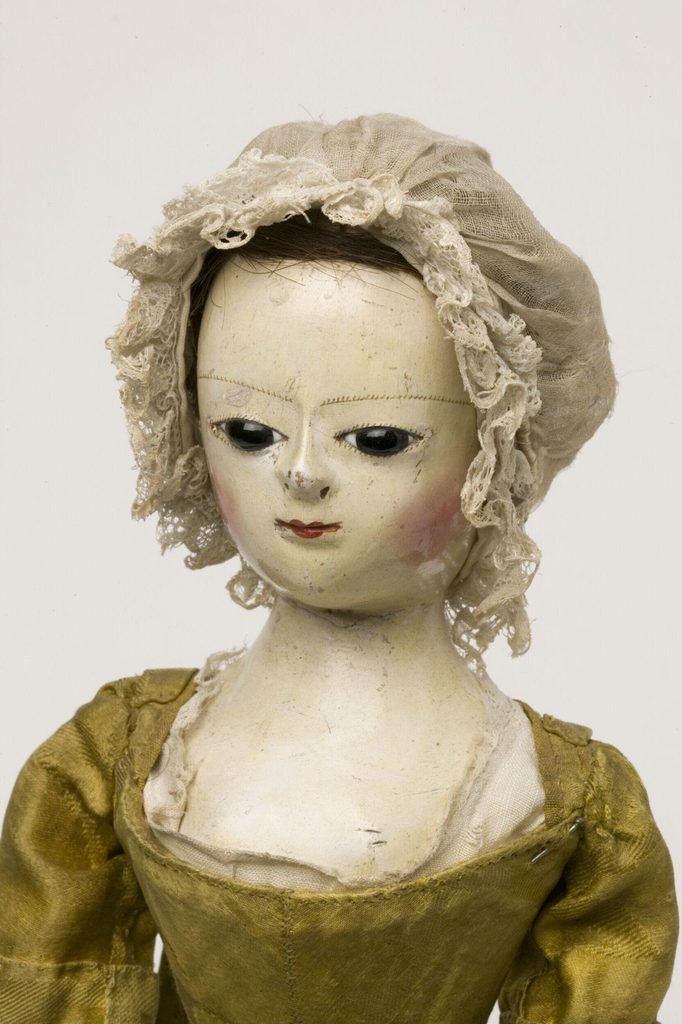
Often called “Queen Anne dolls,” these figures preserve the construction, materials, and layered wardrobes of late seventeenth- and eighteenth-century dress.
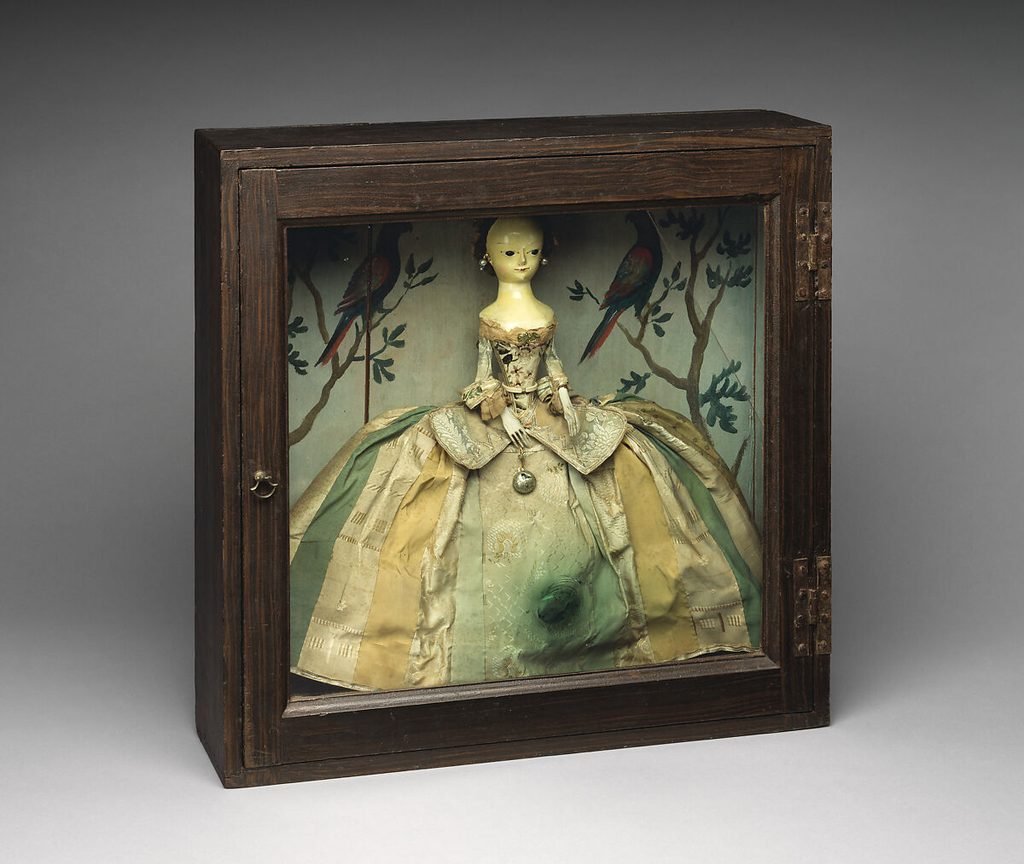
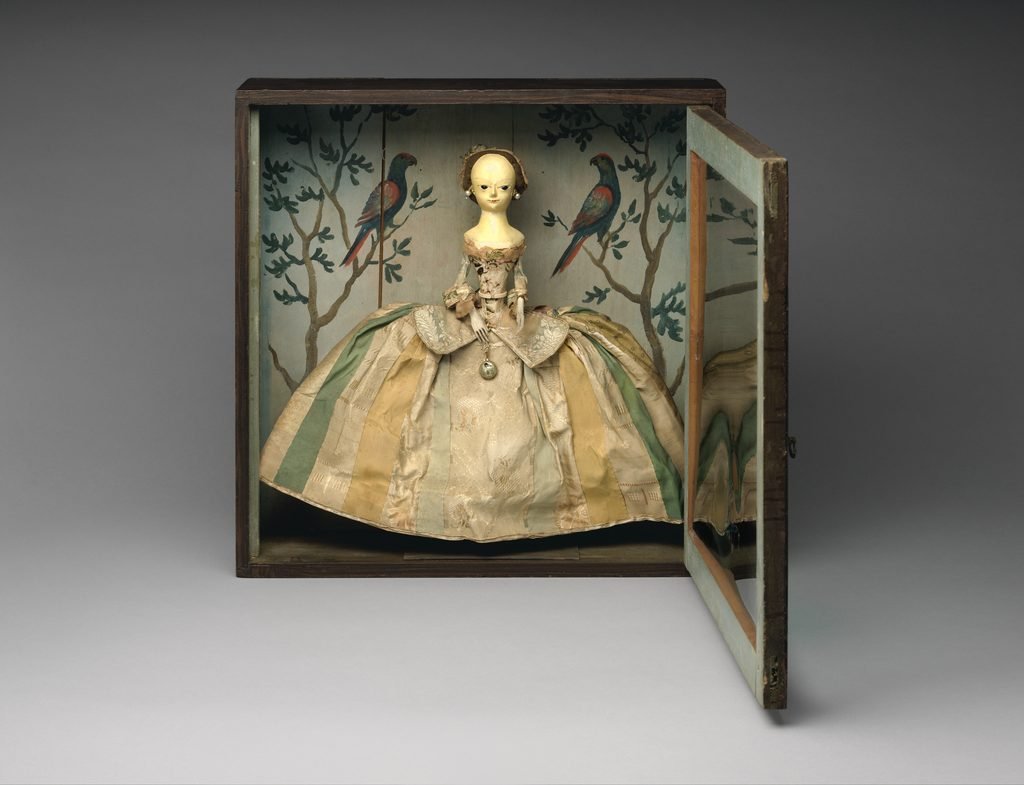
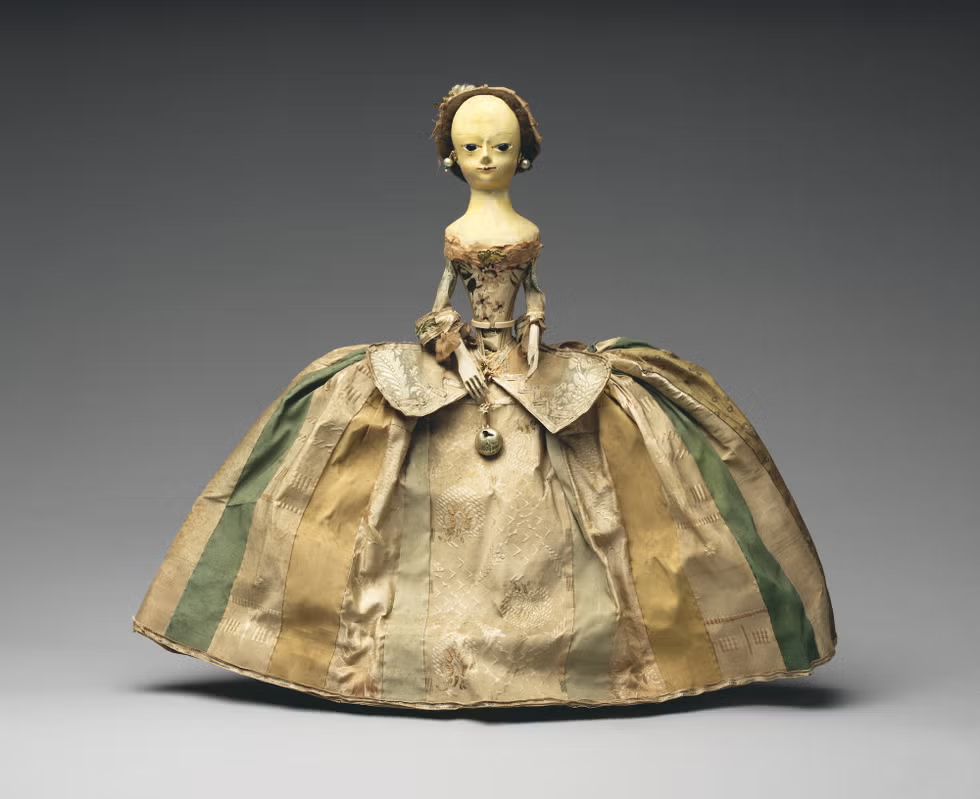
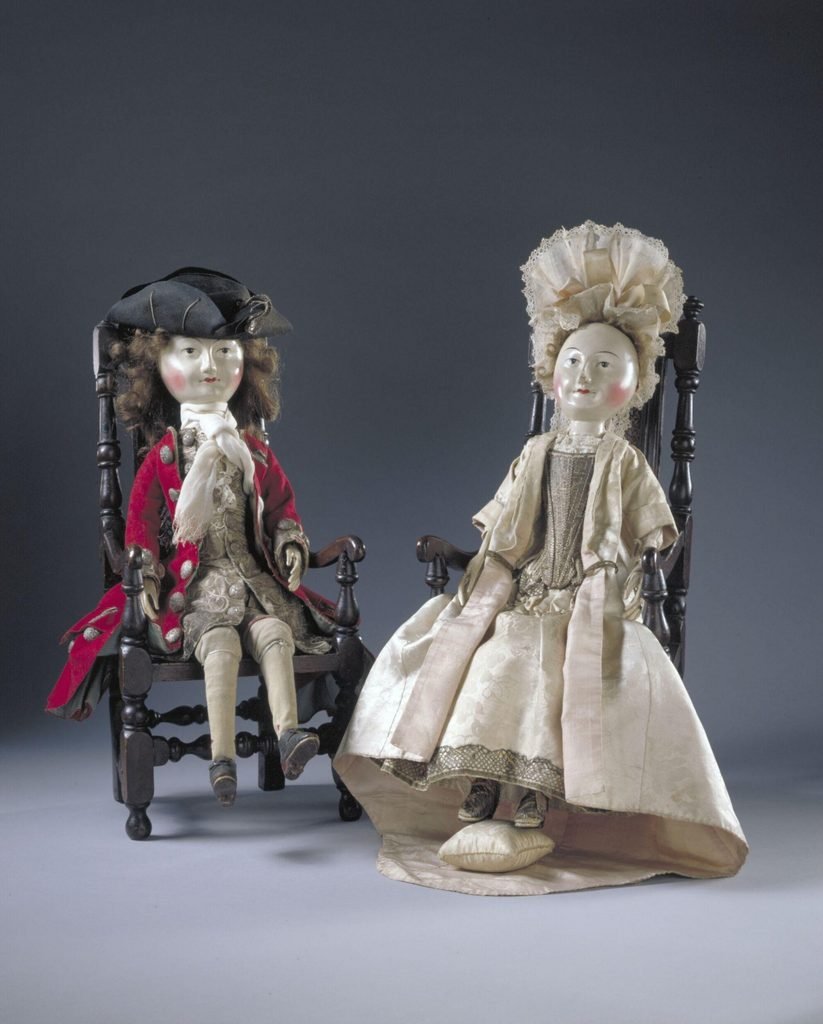
London also preserves some of the best-documented early examples. The Victoria and Albert Museum (V&A) holds two dolls known as “Lady Clapham” and “Lord Clapham,” made around 1690–1700. The museum notes that their wardrobe provides an exceptionally complete miniature record of late seventeenth-century London fashion in its style, cut, and materials. Although makers produced fashion dolls in large numbers during the seventeenth century, intensive use and fragile organic materials left few surviving examples.
Versailles, Lyon, and Rose Bertin: The Engines of French Hegemony
By the seventeenth and eighteenth centuries, Paris had established itself as Europe’s premier fashion capital. Consequently, dolls that transmitted news of emerging silhouettes and styles became strongly associated with French couture and the dissemination of Parisian dress across the continent.
These fashion-display figures varied significantly in both size and construction, ranging from compact, portable miniatures to life-sized models. Their dimensions depended on their intended purpose, the prestige of the commission, cost, and the degree of structural detail required to showcase a garment’s intricate tailorship.
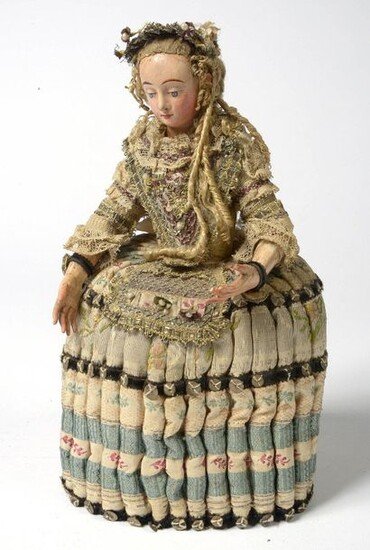
A greater number of wooden and textile costumed dolls have survived from the eighteenth century, though their roles were diverse. Some were made as children’s toys; others portrayed members of court or served as decorative display figures. A select few, however, carried the newest fashions from one place to another.
Royal Trendsetters & The French Fashion Network
In the 18th century, a new silhouette, hairstyle, or decorative detail could spread with extraordinary speed, particularly when introduced by an influential court figure. Marie Antoinette, the Austrian Archduchess of the House of Habsburg-Lorraine and Queen of France, became one of the most prominent trendsetters of her era. Her gowns, elaborate hairstyles, and accessories – shaped in close collaboration with the celebrated marchande de modes Rose Bertin – were eagerly copied at court and far beyond Versailles.
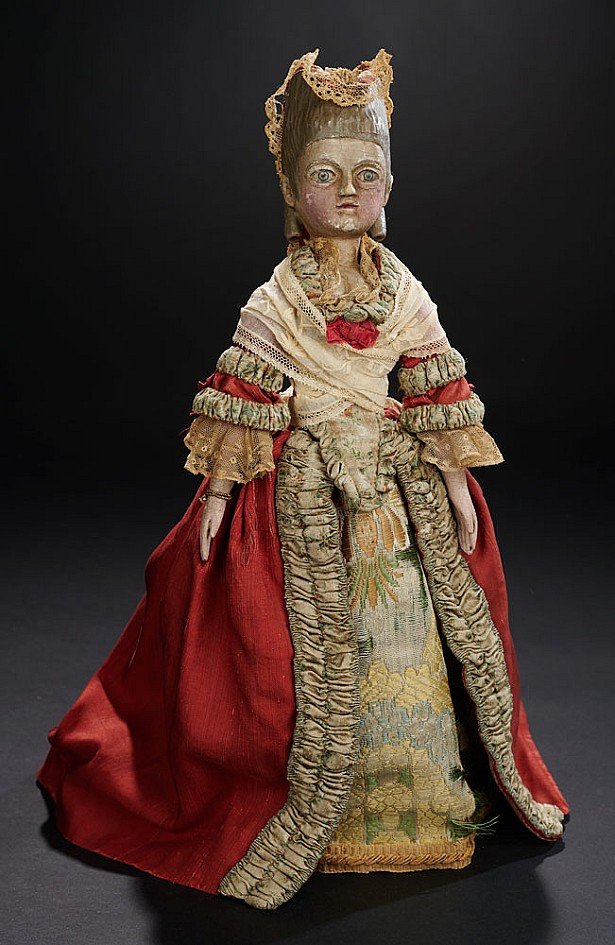
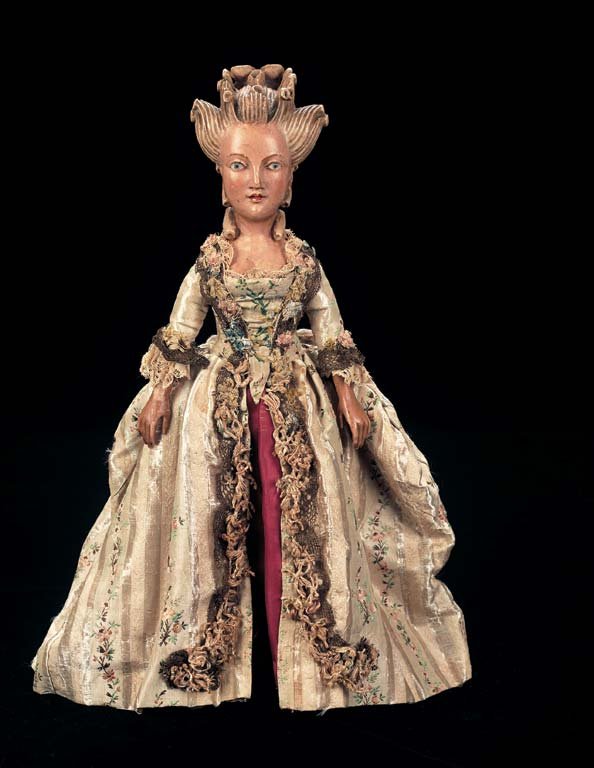
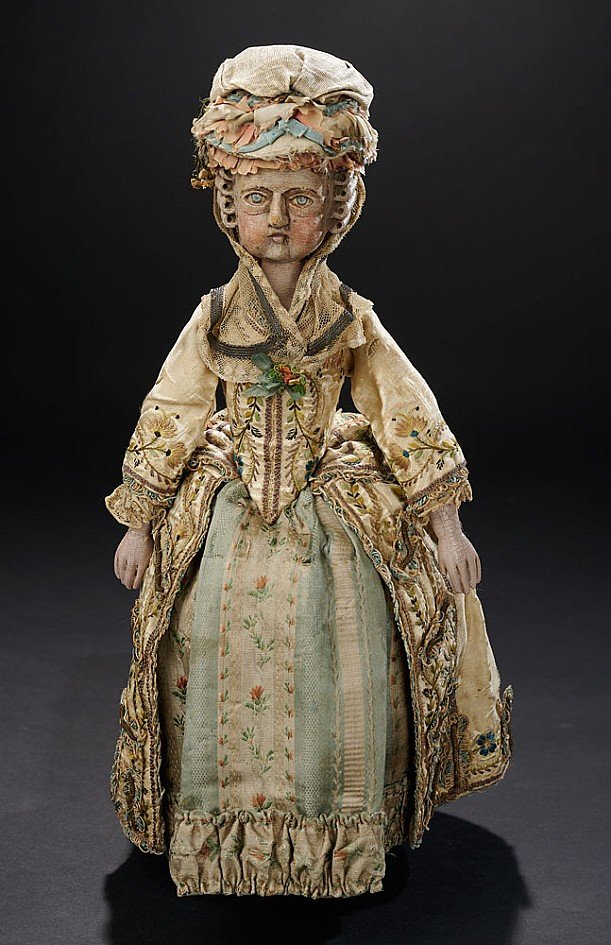
While Versailles served as the ultimate stage for prestige and court etiquette, it was not the sole origin of French style. Paris was the true operational hub of artisan workshops, fashion commerce, tailors, and dressmakers, while Lyon supplied luxurious silk fabrics. Rose Bertin was far more than a “queen’s designer” in the modern sense: as a marchande de modes, she curated and completed whole ensembles using hats, ribbons, artificial flowers, lace, fine jewelry, and intricate trimmings.
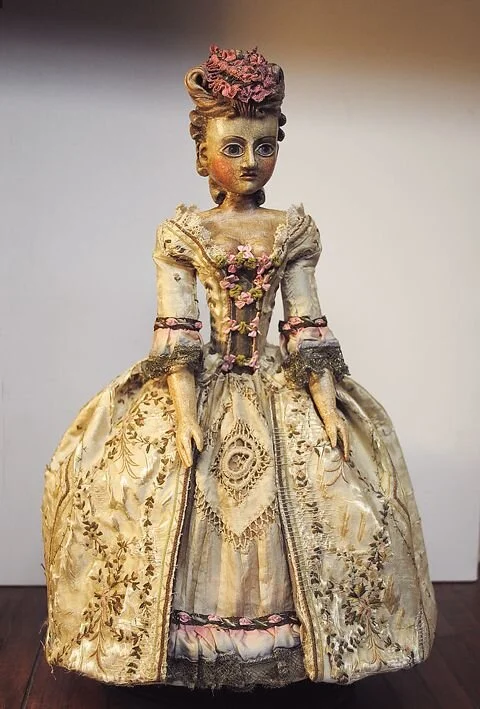
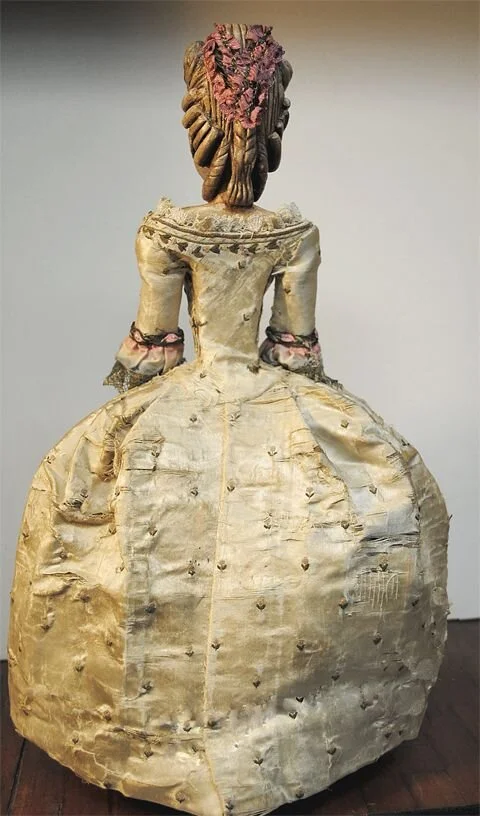
These fashion dolls were luxury items circulating primarily within courtly, aristocratic, and wealthy merchant circles. In addition, dressmakers and milliners used them in their workshops to study new cuts, proportions, and methods of garment construction. Wealthy clients and master craftspeople could inspect Pandora dolls in minute detail to evaluate every element of a garment – examining pieces from all angles, assessing the drape and weight of the fabric, inspecting closure methods, and studying the internal structural engineering.
Pandora as a Three-Dimensional Catalog
In a world lacking instant visual media, Pandora dolls functioned as live, three-dimensional carriers of fashion news. As a result, Parisian tailors, dressmakers, and merchants dispatched these dolls to major cities and foreign courts across Europe, where they displayed the latest silhouettes, textiles, stays, sleeve cuts, hairstyles, millinery, jewellery, and trimmings.
By established tradition, two distinct types of Pandoras existed:
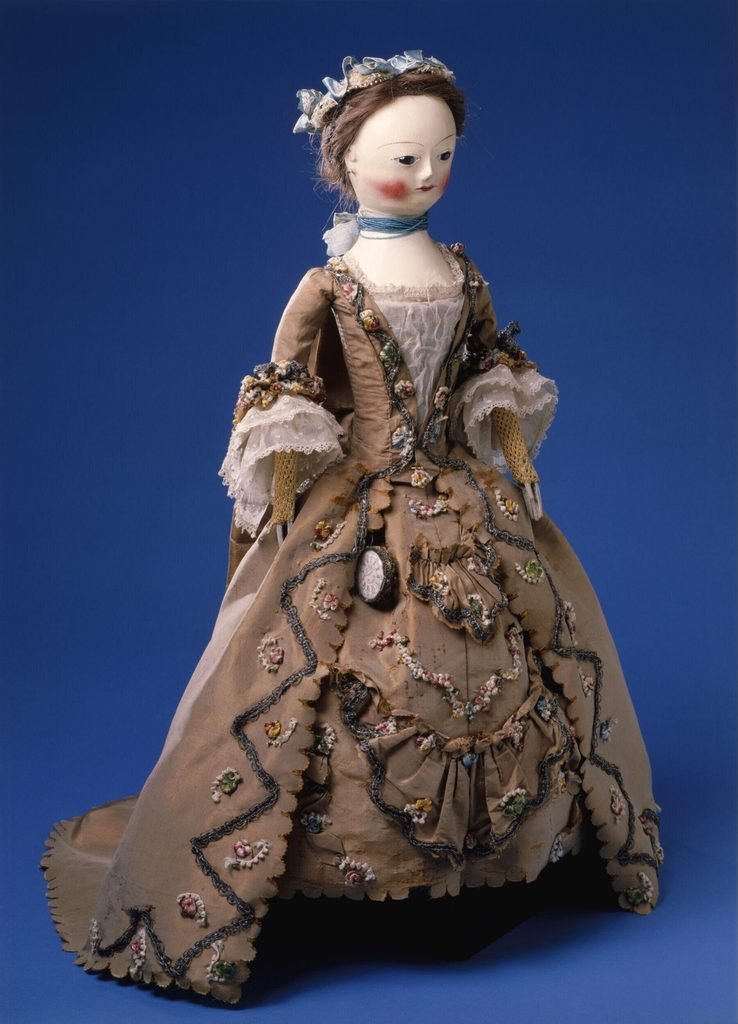
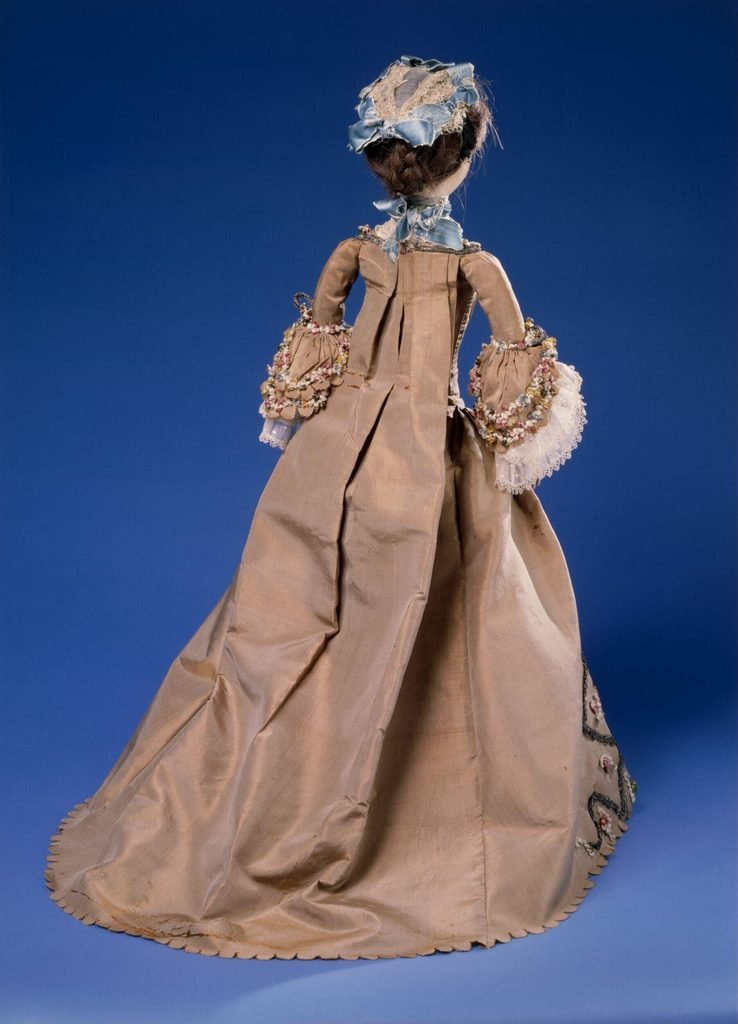
- La Grande Pandore: dressed in formal, full-dress court attire (grand habit de cour).
- La Petite Pandore: showcasing daytime, informal, or morning garments (déshabillé).
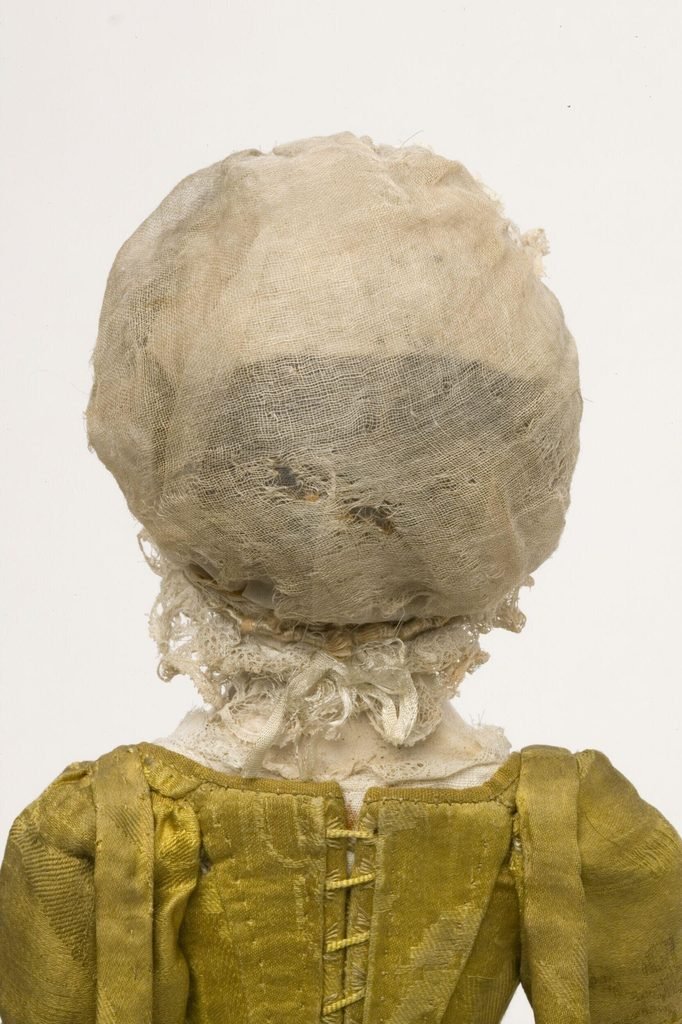
Legends & The Sunset of Travelling Messengers
One of the most enduring stories about Pandora dolls is set during the War of the Spanish Succession, around 1712. Later accounts claim that, even while France and Britain were at war, fashion dolls were allowed to cross the Channel when other French goods faced restrictions. Some versions go further, giving these tiny travellers a military escort. No firm archival evidence has yet emerged to confirm the story in all its details. French fashion was imagined as too desirable to be stopped at the border.
Another irresistible story comes from the Napoleonic era. Later retellings claim that Napoleon feared messages might be hidden inside a Pandora doll’s layered wardrobe, body, or travelling box, and moved to restrict their transport. Whether or not any such order existed, the story shows how much secrecy, commerce, and cultural power people once attached to these small travelling figures.
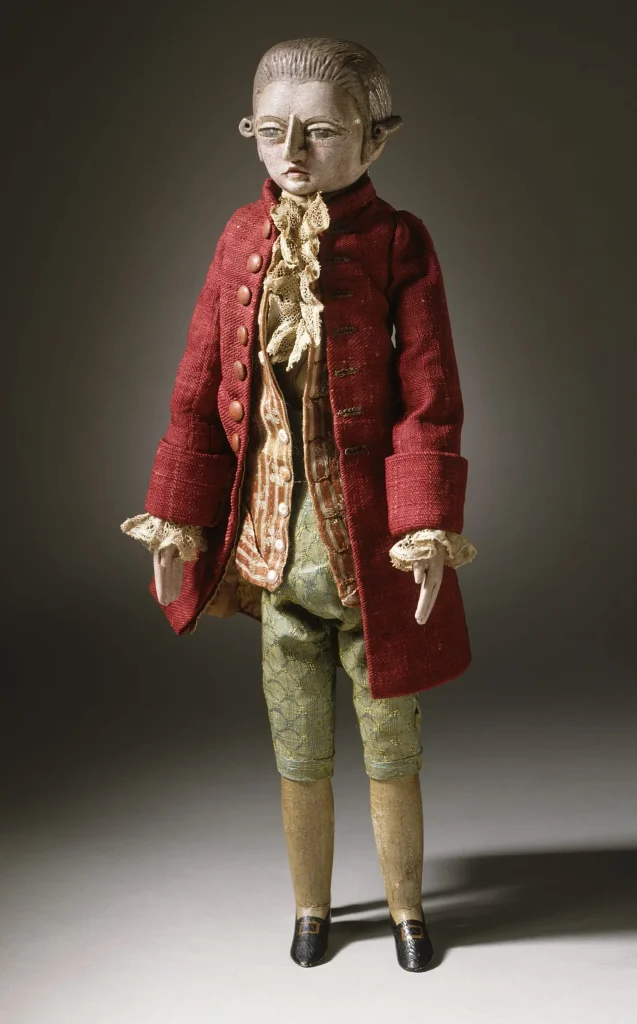
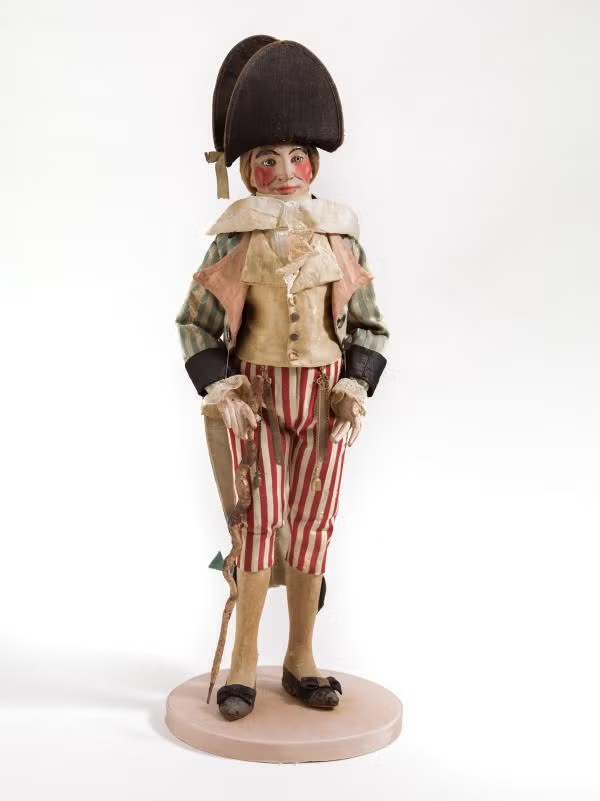
By the early nineteenth century, Pandora dolls were beginning to lose their place as fashion’s travelling messengers. New ways of seeing, recording, and sharing style were already emerging. Their story belongs to the next chapter.
Sources & Further Reading
- Fennetaux, Ariane. “Pandora in the Box: Travelling around the World in the Name of Fashion.” 2012.
- Fennetaux, Ariane. “Transitional Pandoras: Dolls in the Long Eighteenth Century.” In Childhood by Design: Toys and the Material Culture of Childhood, 1700–Present.
- Knuttsson, Anne. “Living Dolls: François Ier Dresses His Women.”
- Michahelles, Kerrie-Rue. “Catherine de Medici’s 1589 Inventory at the Hôtel de la Reine in Paris.” Furniture History, 2002.
- Victoria and Albert Museum, London: Lady Clapham, Lord Clapham, The Old Pretender Doll, and Doll in Mantua.
- The Metropolitan Museum of Art, New York: Doll in a Box, c. 1748.
- The Royal Armoury (Livrustkammaren), Stockholm: Swedish dressed doll, c. 1590–1600.