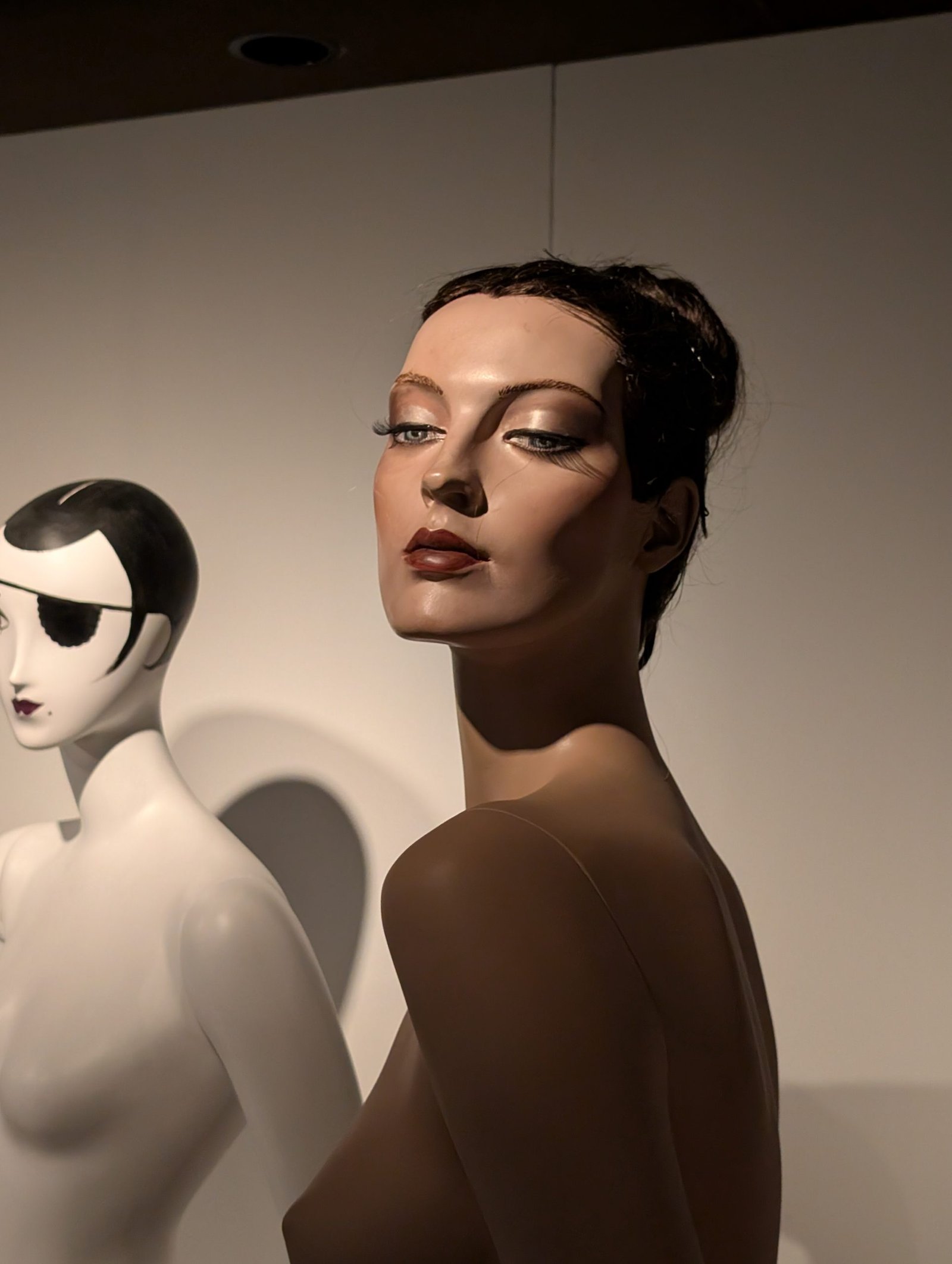

One of the most compelling sections of Doll Dressing is titled “We Can All Be Dolls.” It poses a fundamental question for contemporary culture: who actually gets to be a doll today?
We Love Dolls
Why We Love Dolls, and Why They Sometimes Make Us Uneasy
Millions of people love dolls. Some collect them, sew for them, restore them, photograph them, or simply keep one special doll from childhood. We know that a doll is not alive, yet it can still feel deeply personal. A doll may remind us of a simpler time, offer comfort, or become a small escape from the real world.
Dolls that move
Not all figures that look like dolls are actually dolls. Mechanical dolls, or automata, come to life when we wind a key. Marionettes move when someone pulls their strings. They may look quiet and harmless when standing still, but movement changes everything.
A doll that moves can feel magical, but also a little unsettling. We know that there is a mechanism inside, or a hand controlling the strings, yet for a moment it seems as if the figure has its own will. That small uncertainty is part of their fascination. The French word poupée, the German Puppe, and the English word puppet are all related to the Latin word pupa, meaning “girl.” Dolls, automata, and puppets have always been close relatives.
The exhibition also raises a sharper question. When a mechanical doll or puppet takes the form of a woman, it can make us think about control: who decides how the body moves, looks, dresses, and behaves? Fashion can be playful and liberating, but it can also tell us what is desirable, acceptable, or “correct.” A doll on strings is therefore not only a toy. It can become a metaphor.
The mannequin as a fashion doll
The exhibition reminds us that fashion dolls are everywhere. One of the most familiar examples is the mannequin.
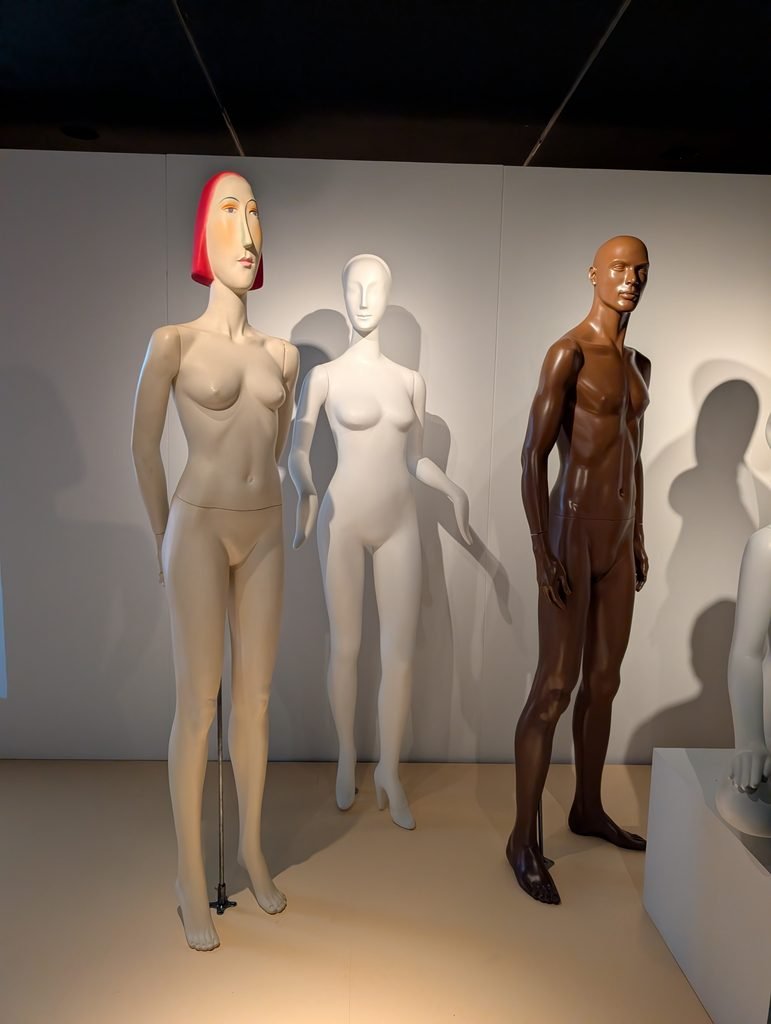
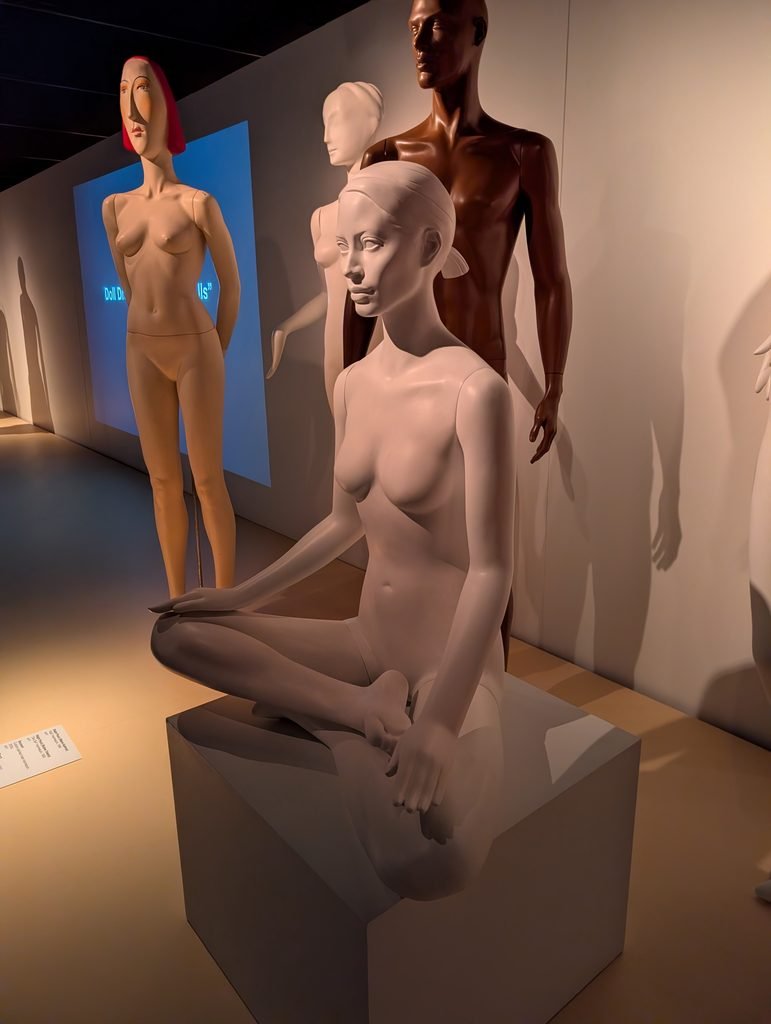
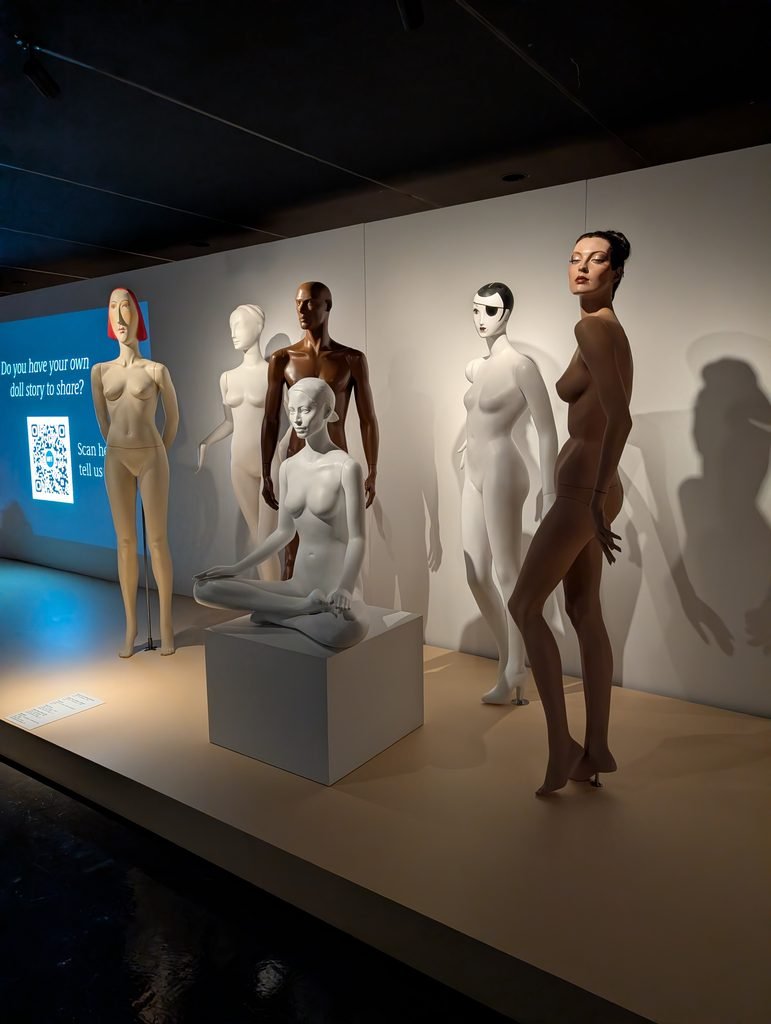
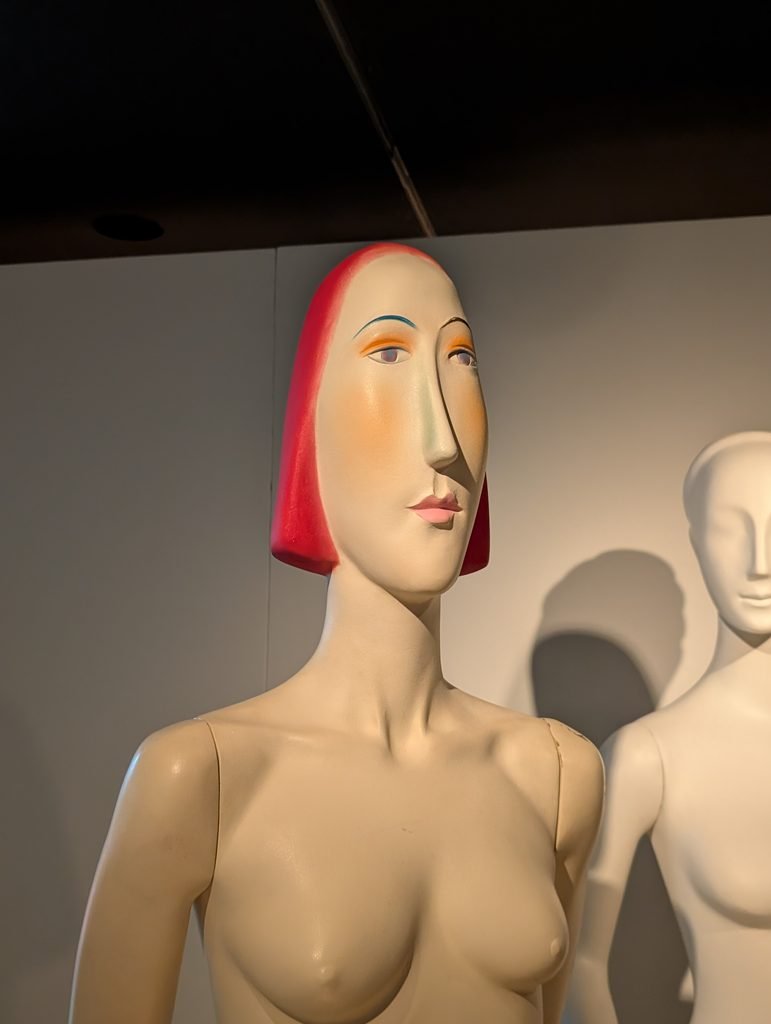
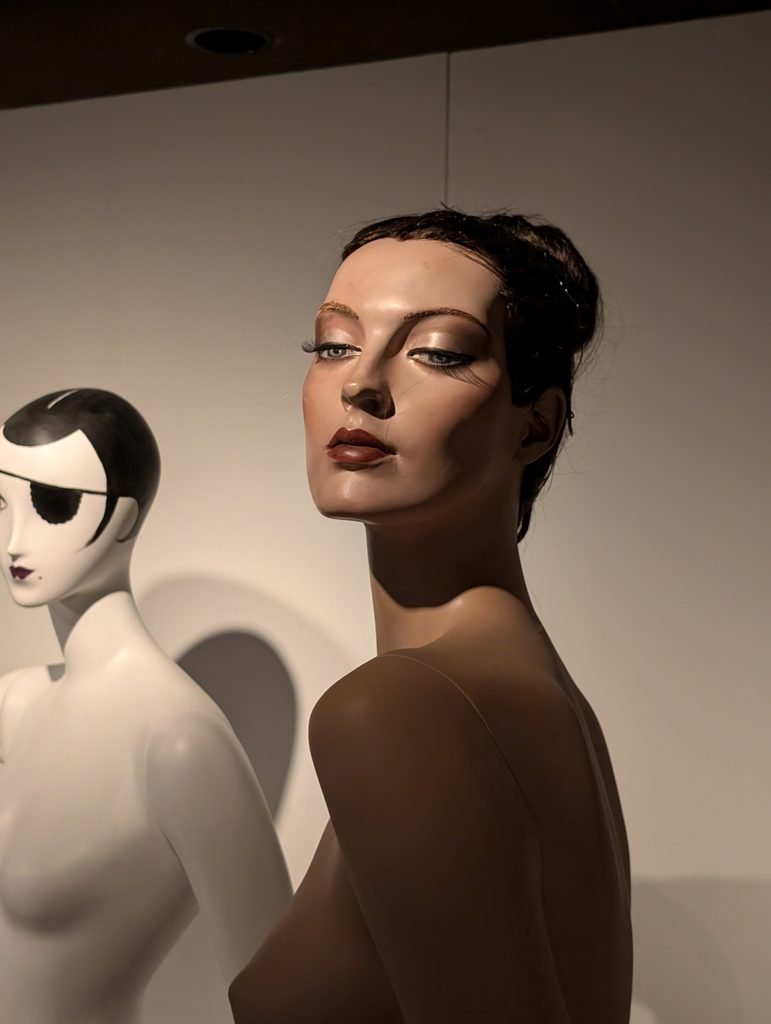
A mannequin is a doll-like figure made to wear clothing and encourage us to imagine ourselves in it. The outfit is not permanent; it can be removed, replaced, and styled again. In this sense, every shop window is a small stage for fashion dolls.
The word mannequin entered French in the late seventeenth century from the Dutch mannekin, meaning a small wooden figure with articulated limbs. By the nineteenth century, tailors and dressmakers were using mannequins much as they do today: to construct, fit, and display clothing. When women began modelling fashionable dress in France in the 1800s, they were called les mannequins vivants, living mannequins.
Like fashion itself, mannequins change with the times. Earlier display figures were often highly realistic, with painted faces, wigs, articulated limbs, and carefully formed features. Since the 1970s, abstract mannequins have become increasingly common. But whether realistic or simplified, they continue to do the same thing: they present the garment and invite us to imagine it on a body.
Dolls, puppets, automata, and mannequins may look very different. Yet all of them stand somewhere between object and person. Perhaps this is why we love them, and why they can sometimes make us feel slightly uneasy.
Sources & Further Reading
- Doll Dressing. Exhibition at The Museum at FIT, New York, September 16, 2026–January 3, 2027. Curated by Colleen Hill.
- The Museum at FIT. “Doll Dressing” exhibition text and object labels, photographed by the author during her visit, September 2026.
- Hill, Colleen, ed. Doll Dressing. New York: Rizzoli Electa, 2026.
- The Museum at FIT. Doll Dressing exhibition page.