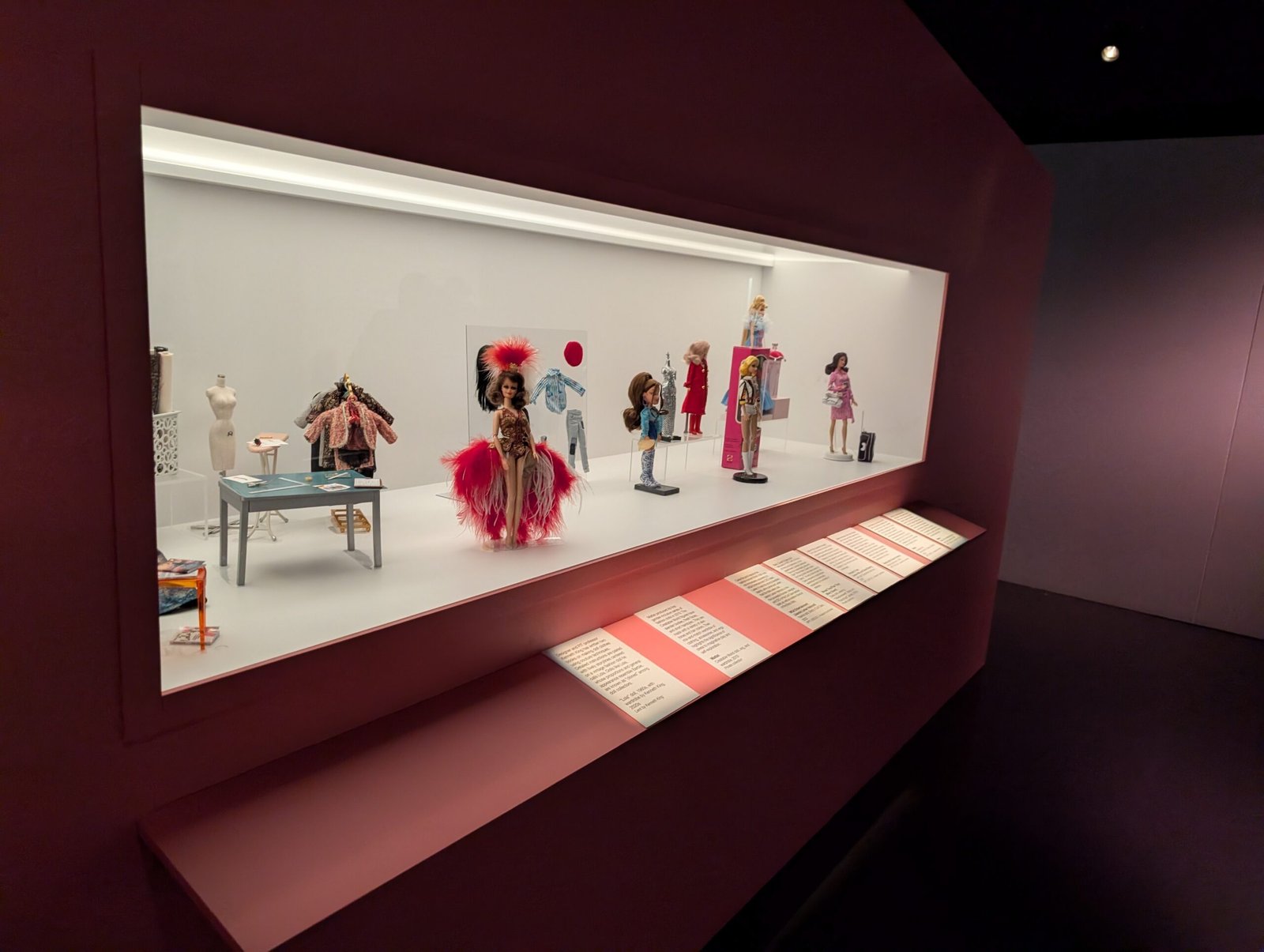

The next section of Doll Dressing at The Museum at FIT is titled Dolls Love Fashion. It begins with one important distinction: not every doll wearing a dress is a fashion doll.
Not every doll wearing a dress is automatically a fashion doll.
What Makes a Fashion Doll?
Dolls have accompanied human culture for thousands of years. The ancient Egyptian paddle dolls, dated approximately 2040–1750 BCE, stylized female figures. They made of wood, had cascades of beaded hair and painted representations of patterned textiles and jewelry. Yet, despite their fashionable appearance, they were not fashion dolls.
A true fashion doll is designed to be dressed, undressed, and styled anew. Her wardrobe isn’t a permanent fixture of her body, it is the very engine of play.
This difference explains why fashion dolls have a special place in fashion history. Their garments can be exchanged, collected, studied, and reimagined. For children, collectors, and designers, they become miniature spaces for experimenting with silhouette, fabric, colour, proportion, accessories, and personal style.
Rethinking the Fashion Doll
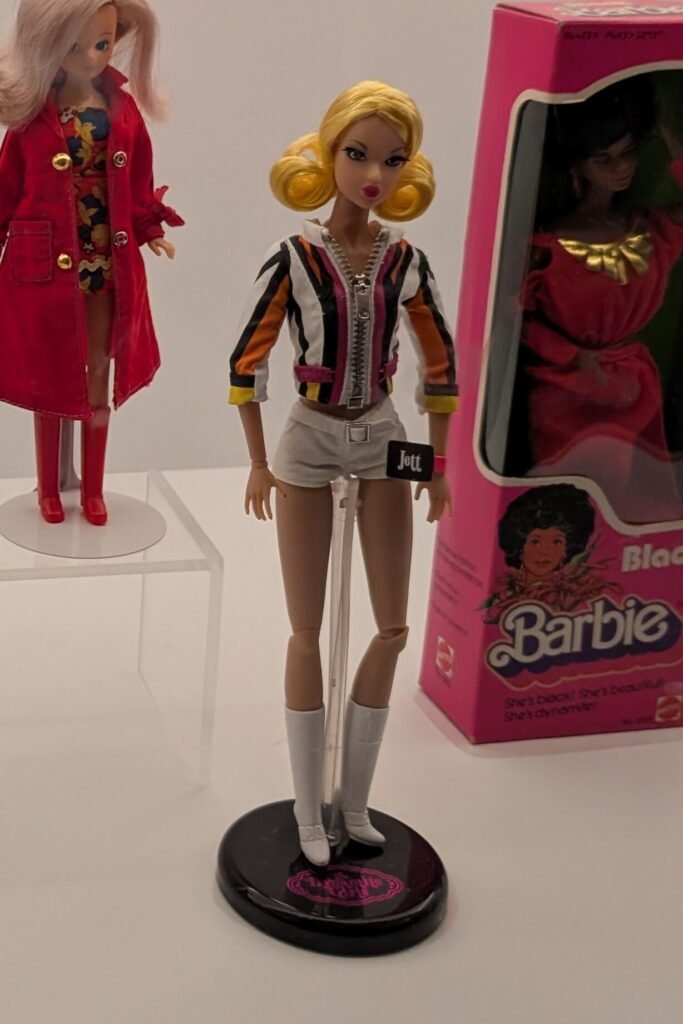
The exhibition shows that fashion dolls can be more than beautiful objects or childhood toys. Their familiar language: bows, lace, stylized proportions, carefully arranged hair, and artificial surfaces, can be used to question old ideas of beauty, gender, and representation.
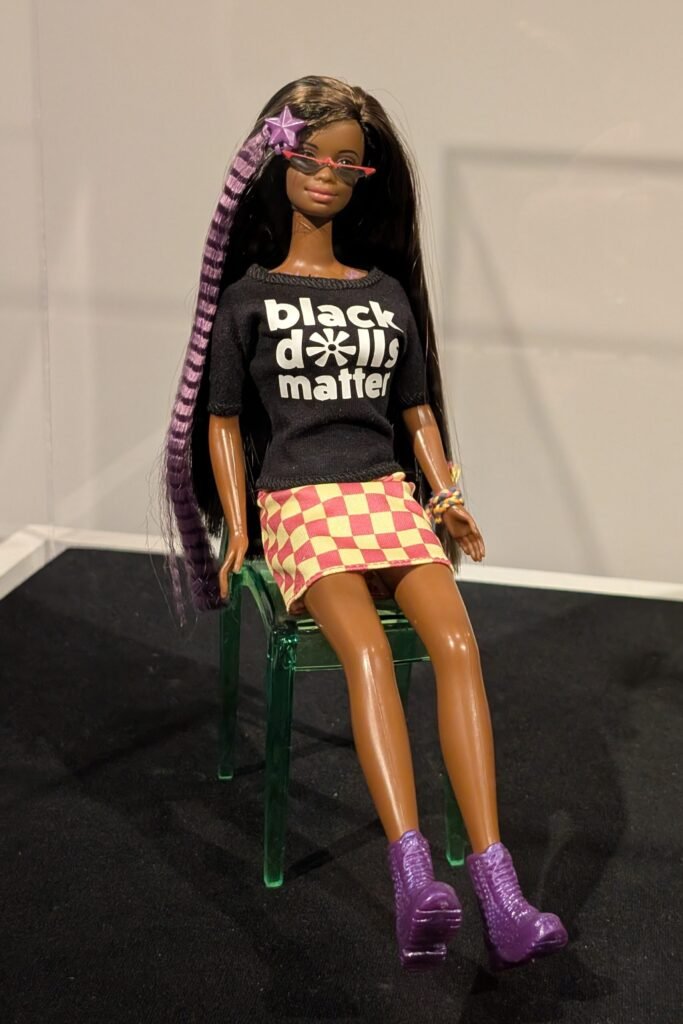
- Black Dolls Matter: The exhibit highlights the vital work of Black Dolls Matter, an initiative founded by doll designer Mark Ruffin. The organization creates and distributes Black and brown dolls to children of color, fostering positive self-image and cultural representation.
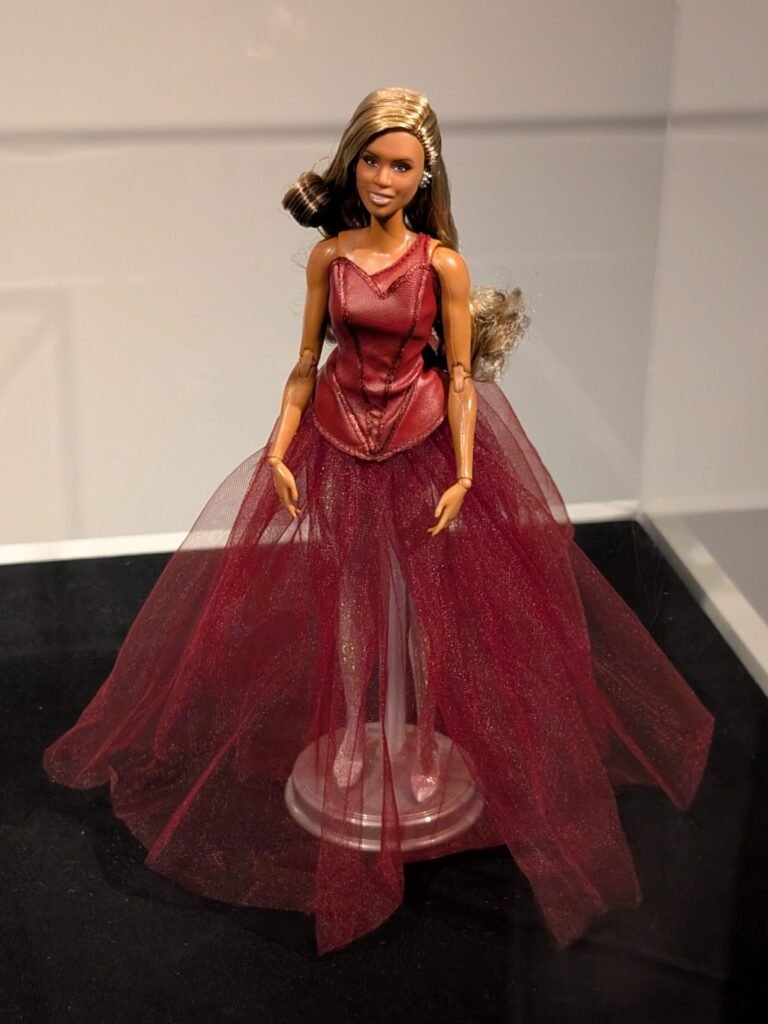
- Trans Visibility and Hope: Another pivotal inclusion is the Laverne Cox Barbie, released by Mattel in 2022 to honor the actress, producer, and trans-rights advocate. Her message resonates throughout the space. Every child deserves hope, chances to grow, and to see themselves reflected in a doll.
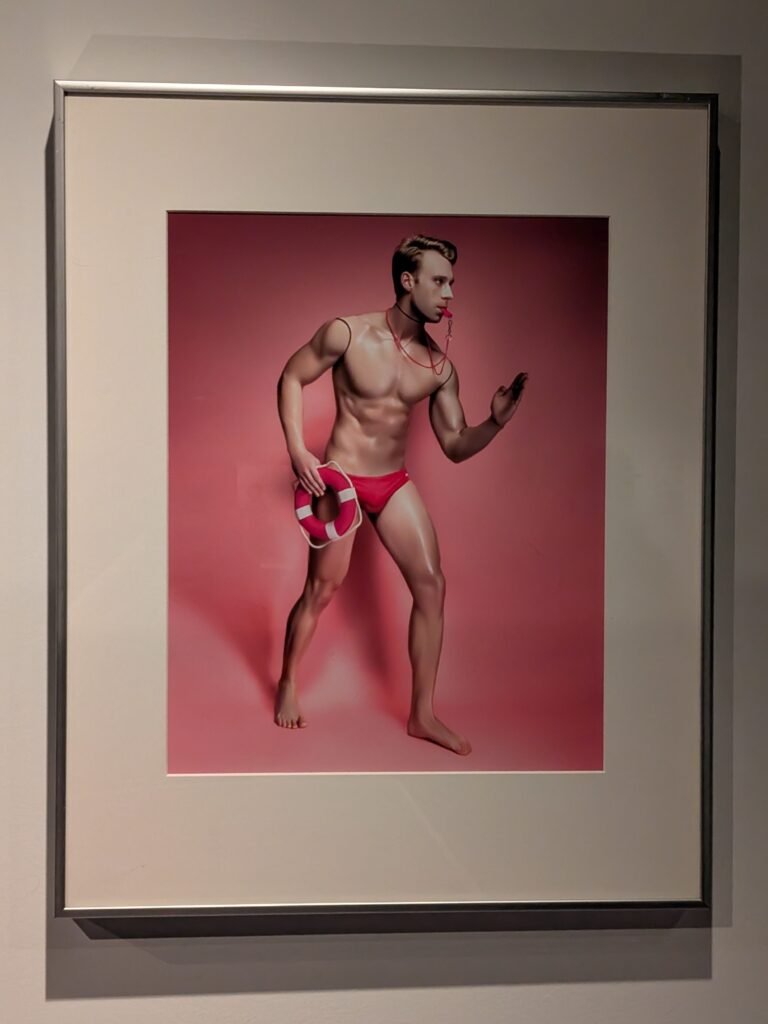
- Challenging Male Perfection: The section also features photographer Courtney Charles’s portraits of men transformed into Ken-like figures. His work engages with Barbie’s iconic plastic perfection while dismantling the idea of a singular, monolithic standard for male beauty.
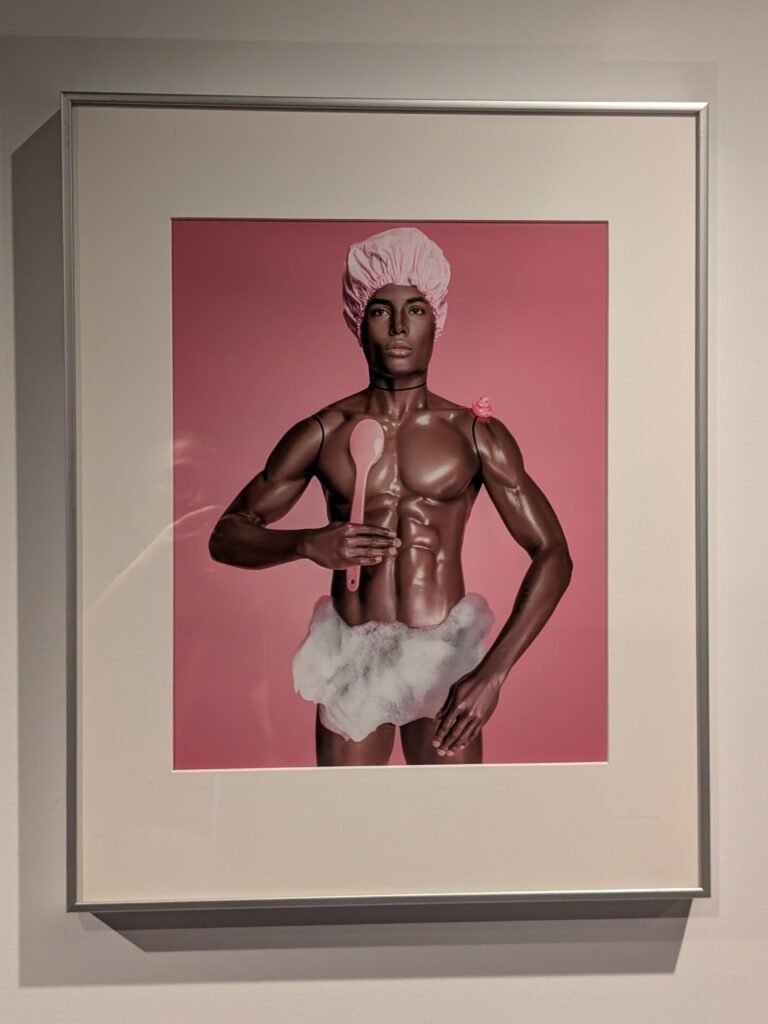
A fashion doll can therefore be a historical object, a glamorous icon, or a personal form of expression. It can repeat old ideals, but it can also challenge them.
From Play to Fashion
One of the most interesting threads in this part of the exhibition is the connection between childhood doll play and later creative careers.
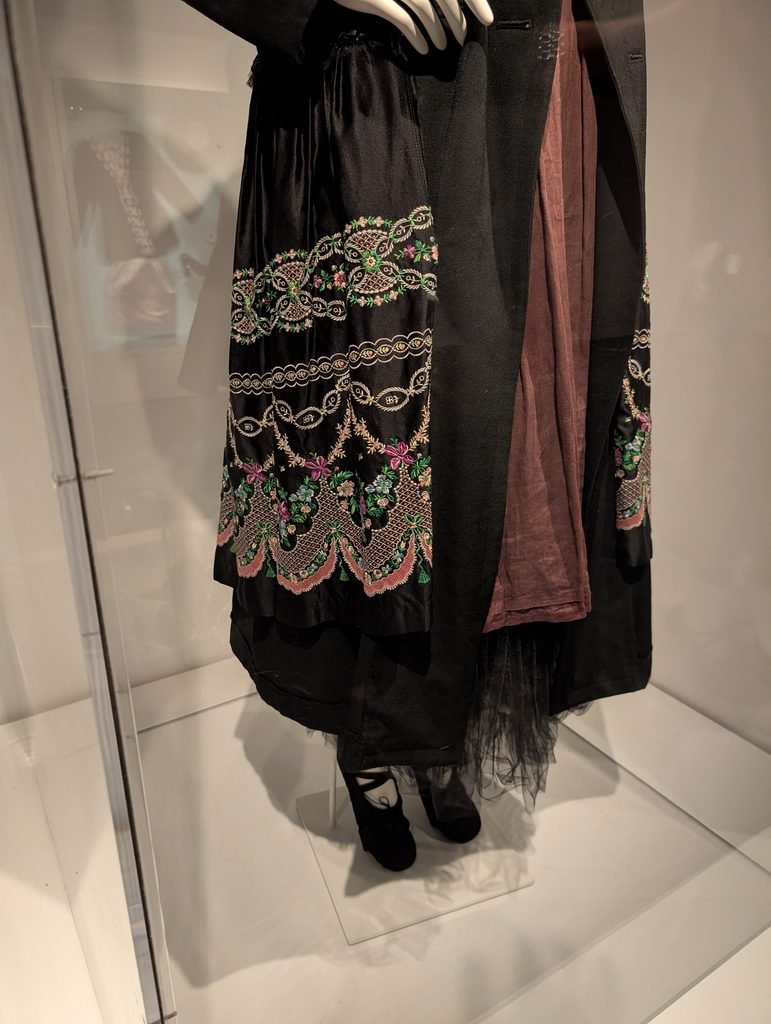
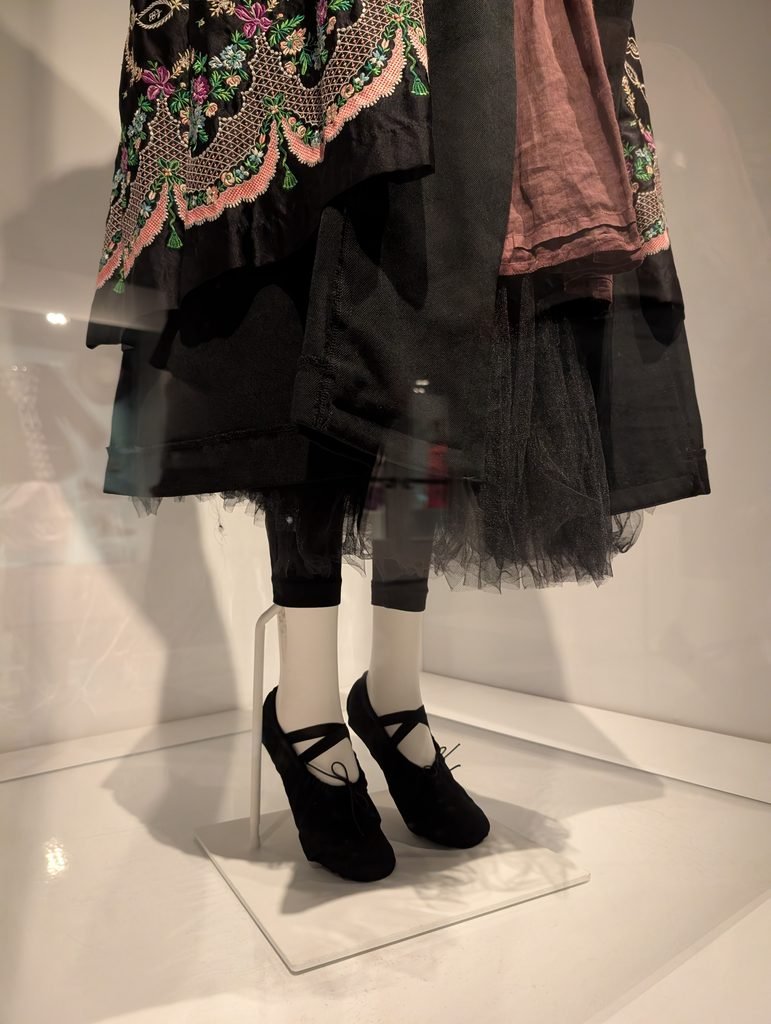
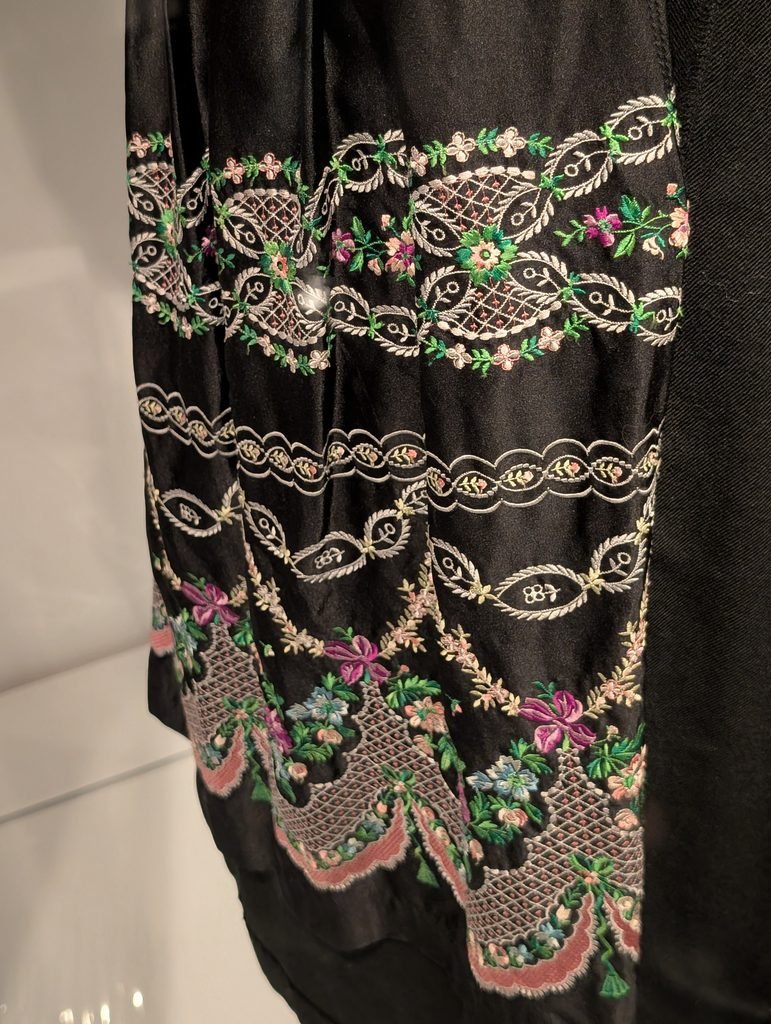
- Lynn Yaeger’s Living Canvas: Legendary fashion journalist and style icon Lynn Yaeger views dolls as a lifelong passion. Her signature appearance: the doll-like red bob, theatrical circles of rouge, and dark Cupid’s-bow lips: demonstrates how doll dressing can transcend childhood play to become a living personal brand. Her featured ensemble pairs a Comme des Garçons coat (Fall 2006) with a Marc le Bihan top and a Louiza Babouryan skirt.
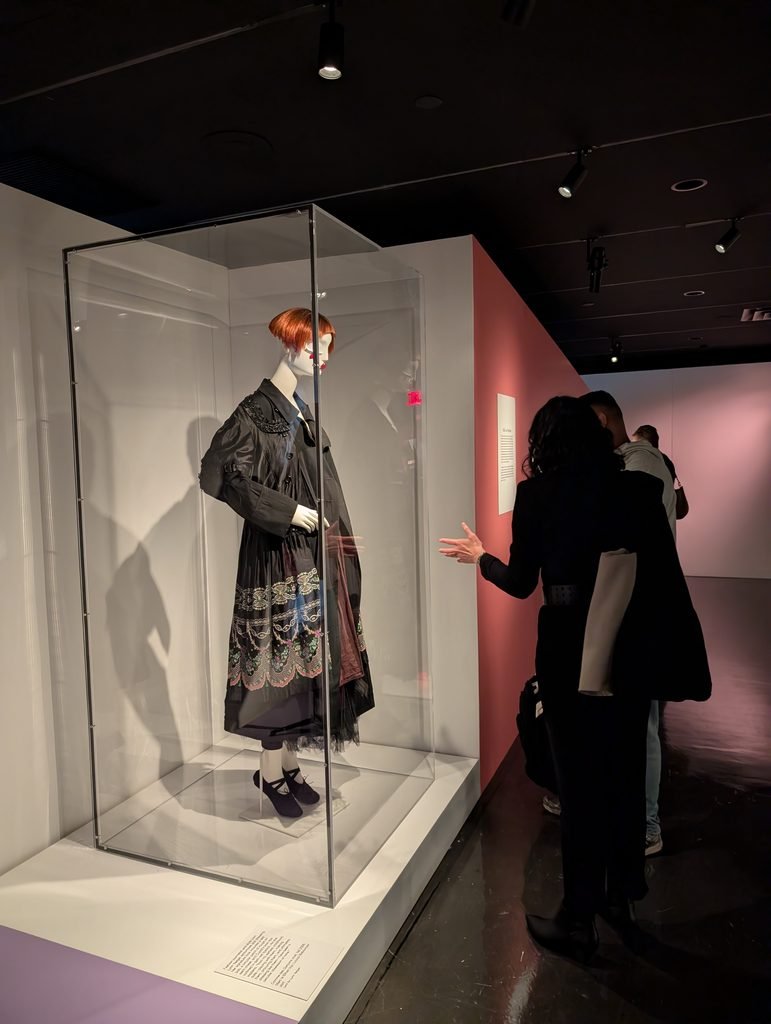
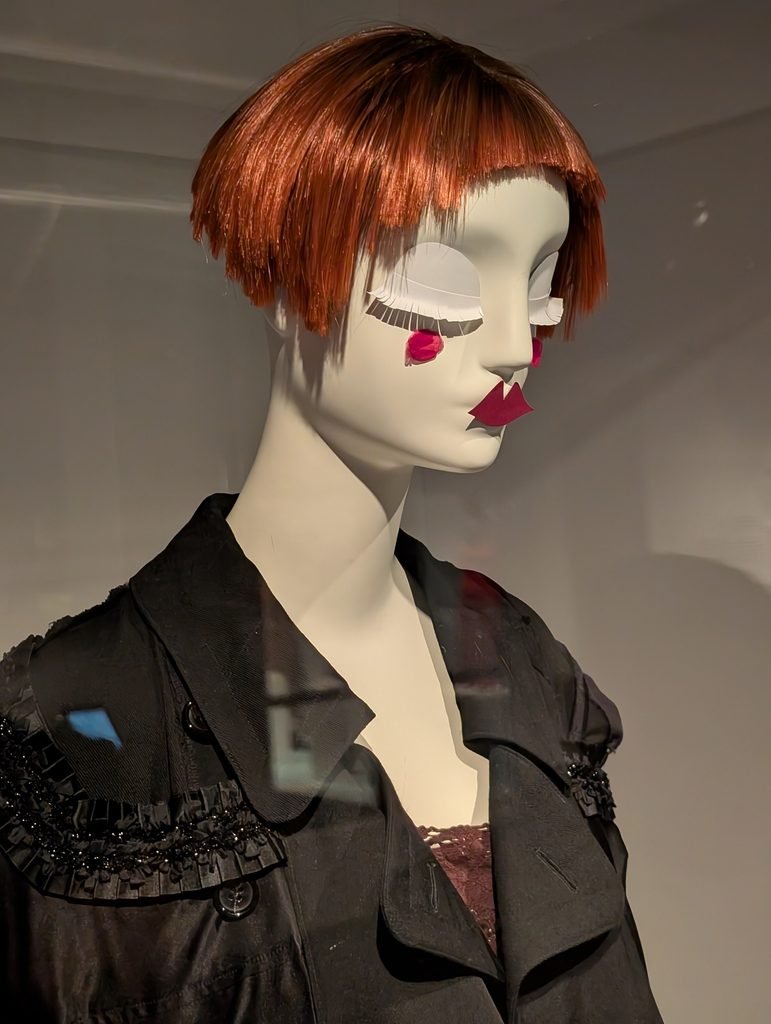
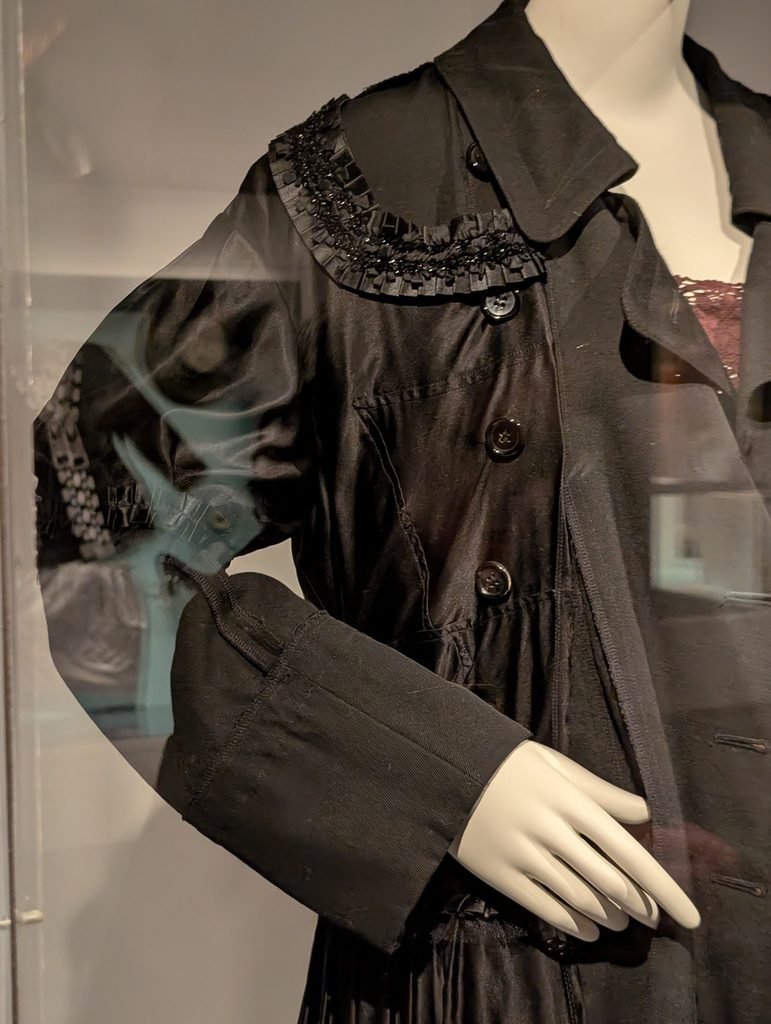
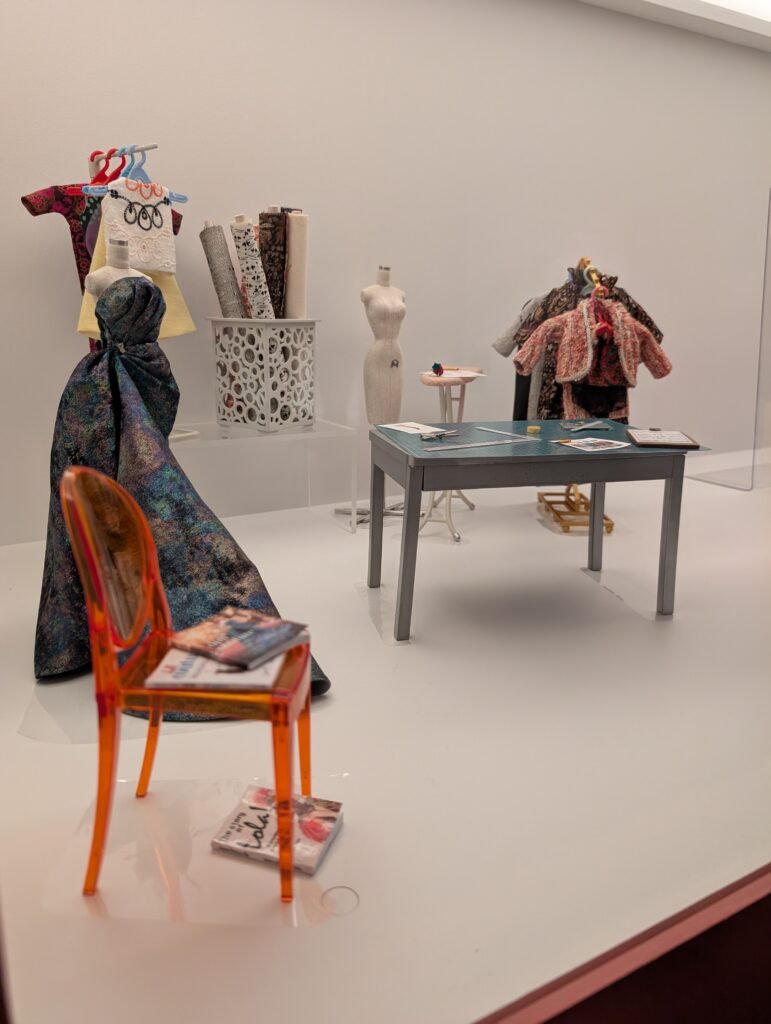
- Miniature Couture Precision: Designer and FIT professor Kenneth King, author of two books on constructing doll clothes using authentic couture techniques, demonstrates that doll dressing is anything but a simplified craft. In skilled hands, it is an exacting art form requiring meticulous drafting, scale control, and precision.
- Jason Wu’s Craft Origins: Designer Jason Wu also credits dolls with launching his fashion career. Encouraged as a child to restyle dolls’ hair and makeup, Wu learned pattern drafting by making miniature clothes, eventually designing for Integrity Toys while still a teenager.
Fashion Designers and Dolls
The relationship between fashion dolls and designers is not one-sided. Dolls borrow from contemporary fashion, but fashion designers also return to dolls for inspiration, collaboration, and a sense of play.
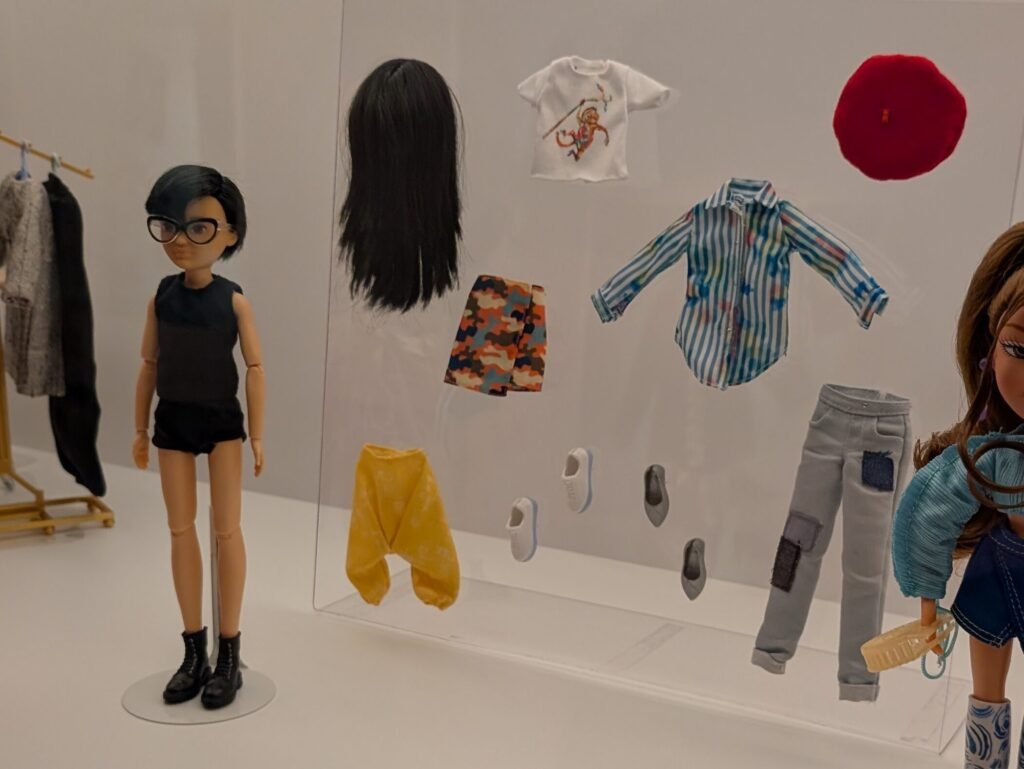
- Gender-Inclusive Expression: Mattel’s 2019 Creatable World line introduced customizable, gender-inclusive dolls. With a variety of skin tones, hairstyles, wigs, and versatile wardrobes, children can build their own characters without rigid gender rules, proving that clothing remains a powerful tool for self-discovery.
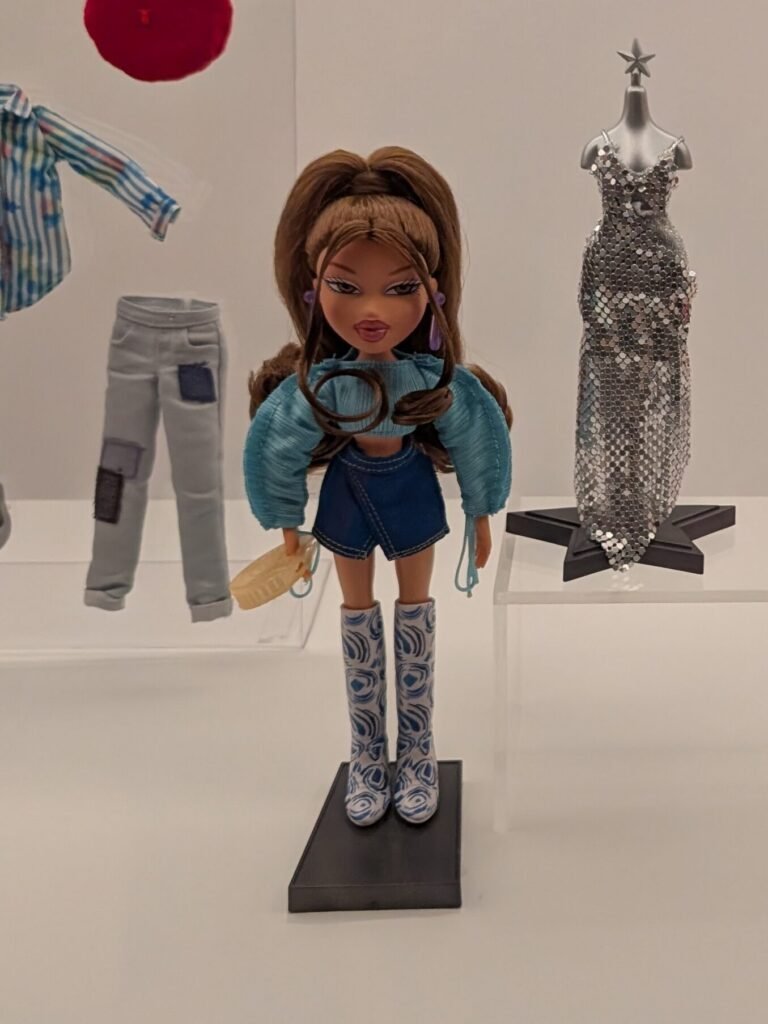
- The Bratz & Cult Gaia Legacy: The story of Bratz offers another compelling narrative. Carter Bryant’s edgy, fashion-forward dolls were initially met with skepticism by MGA Entertainment CEO Isaac Larian, until his daughter, Jasmin, convinced him of their potential. Today, Jasmin Larian Hekmat is the founder and creative director of Cult Gaia as well as the creative director of Bratz.
- Mary Quant’s 1970s Daisy: Mary Quant’s 1973 Daisy doll distilled the London Mod aesthetic into a nine-inch figure with an expansive wardrobe of hundreds of looks.
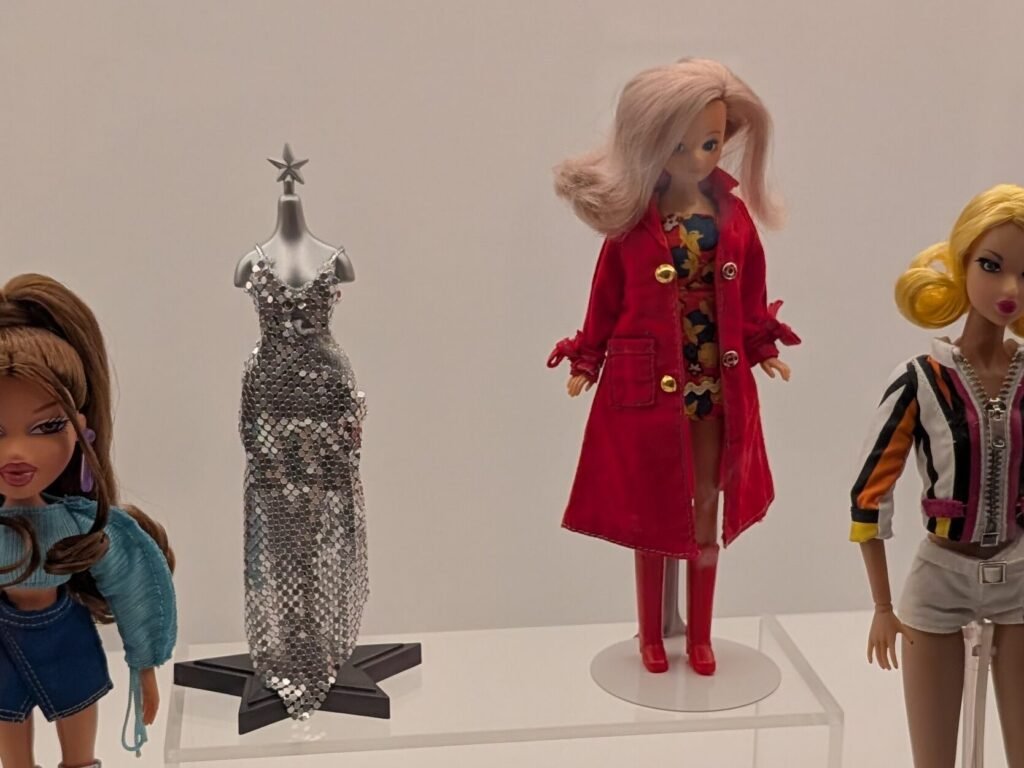
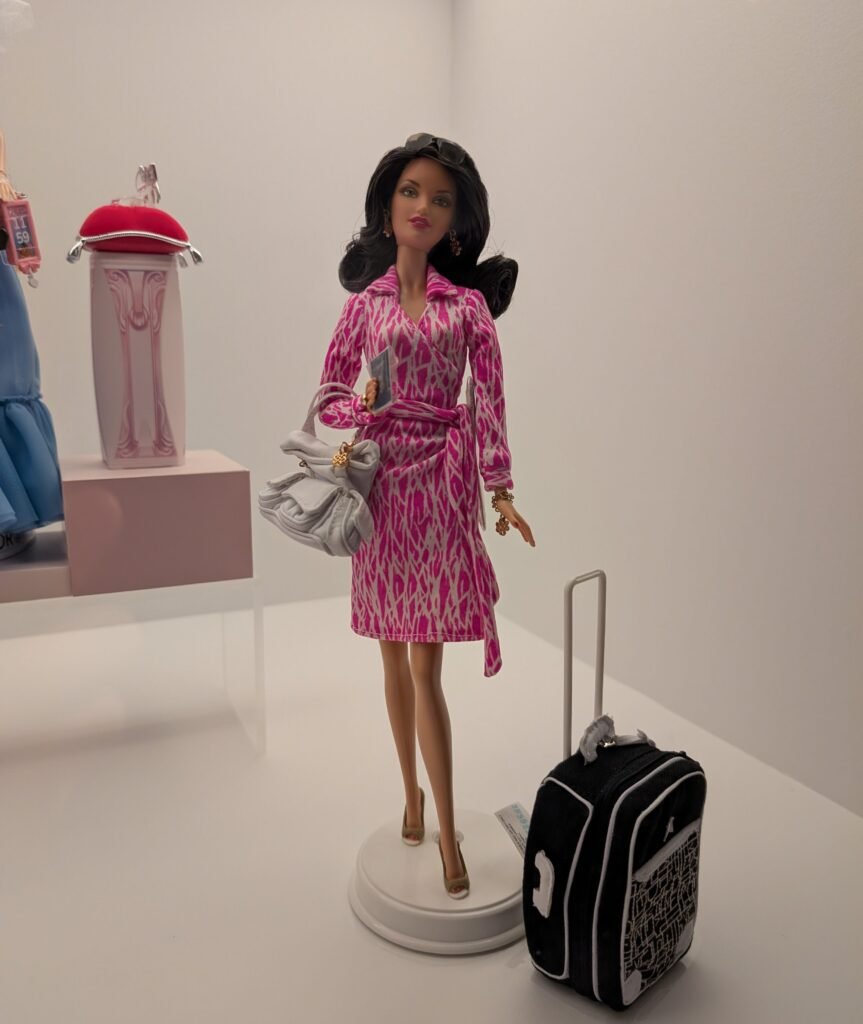
- The Designer Barbie Tradition: Barbie’s ongoing dialogue with luxury fashion began in 1985 with Oscar de la Renta, leading to over sixty high-fashion collaborations. Included here is the 2006 Diane von Furstenberg Barbie, dressed in her signature wrap dress.
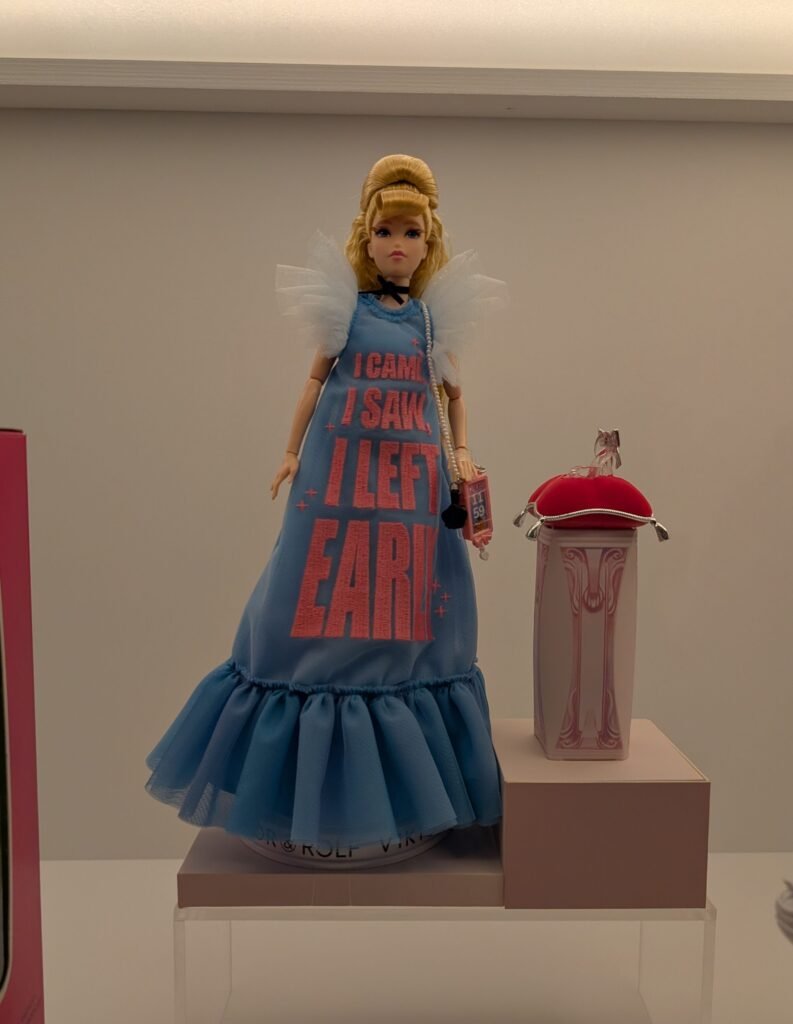
- Viktor & Rolf’s Witty Cinderella: High fashion meets satire in Viktor & Rolf’s 2026 collector doll. Cinderella wears a miniature rendition of their Spring 2019 Couture collection, complete with a dramatic tulle skirt bearing the slogan: “I’m Sorry I’m Late, I Didn’t Want to Come”, a cheeky, high-fashion twist on the traditional midnight curfew.
A Miniature World of Style
This section of Doll Dressing explains why fashion dolls remain so compelling. They teach us to notice the smallest things: the line of a lapel, the scale of a button, the fall of a skirt, the finish of a tiny shoe, or the colour of a miniature ribbon.
A fashion doll is not simply a toy wearing a pretty dress. She is a model, a miniature wardrobe, a historical record, a creative tool, and sometimes the first spark of a lifelong love of fashion.
Sources & Further Reading
- Hill, Colleen. Doll Dressing. New York: Rizzoli Electa, 2026. (Official exhibition catalogue published in conjunction with The Museum at FIT).
- King, Kenneth D. Cool Couture: Construction Secrets for High Fashion Clothing. Creative Publishing International, 2008. (Reference for couture construction and pattern drafting techniques applied to miniature and adult garments).
- Yaeger, Lynn. “My Life in Dolls.” Vogue, Archives & Personal Essays. (Reflections on personal style, vintage collecting, and doll aesthetics).
- Lord, M.G. Forever Barbie: The Unauthorized Biography of a Real Doll. Bloomsbury Publishing, 2004. (Historical overview of designer collaborations and cultural impacts of fashion dolls).
- The Museum at FIT. “Dolls Love Fashion” Exhibition Gallery Notes & Objects Registry, Fall 2026.