
A dress can capture attention through colour or embroidery. Yet its true form reveals itself only in relation to the body: fabric follows its contours, conceals them, or creates an entirely new silhouette. It is precisely this connection that lies at the heart of Costume Art, an exhibition by The Costume Institute at The Metropolitan Museum of Art in New York. Here, garments are displayed alongside works of fine art to show how the history of costume and the history of depicting the human form are deeply intertwined.
The museum pairs pieces from The Costume Institute’s collection with masterworks from other departments. Rather than a simple chronological retelling of changing fashion trends from antiquity to the present, the display is organized around concepts of the body that reemerge across different eras and cultures.
This side-by-side arrangement invites us to view costume as more than just a beautiful object or a display of craftsmanship. The connections between dress and art operate both through form and through meaning, personal, social, or symbolic. Some pairings are built on visual similarity, while others center on the idea behind the image.
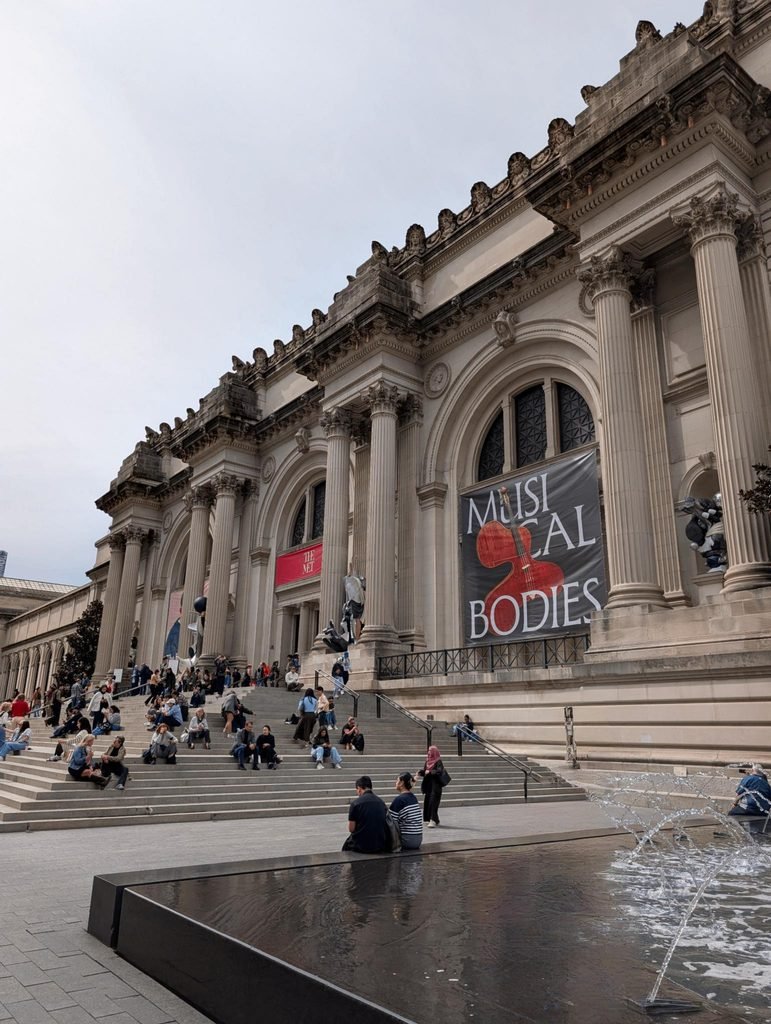
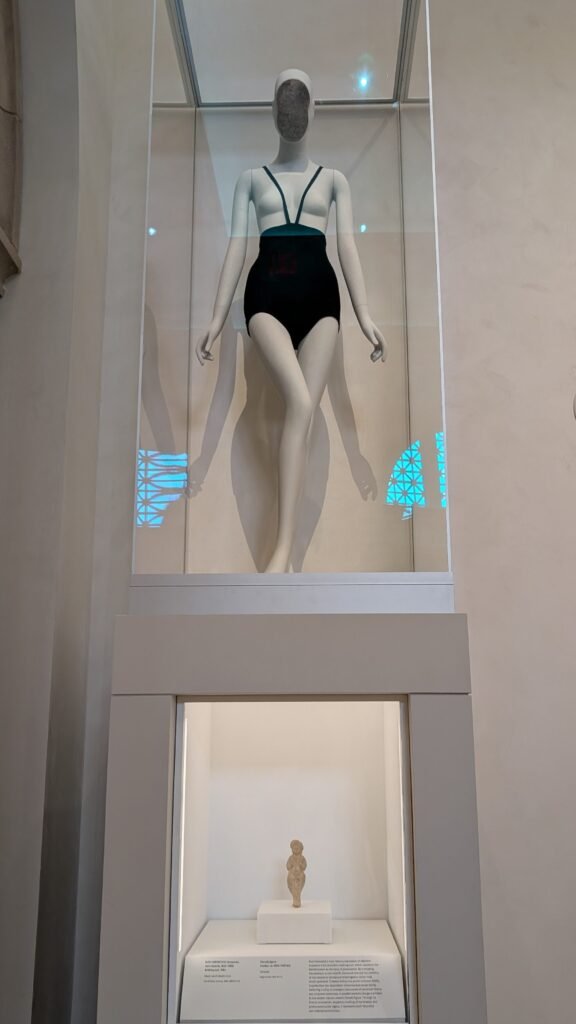
Access to the exhibition is included with general museum admission.
Silhouette as the Foundation of Form
For me, the most compelling direction for reflection here is silhouette. In doll costuming, even the subtlest adjustment in proportion alters everything: the waistline height, the volume of a skirt, or the slope of a shoulder. Yet achieving this form in miniature is a distinct challenge, as materials behave differently at a smaller scale. A fabric that drapes effortlessly on a human body can prove stiff in miniature, while out-of-scale trims, fasteners, or buttons instantly shatter the illusion of reality. The concept behind Costume Art feels intimately connected to our small world. It encourages us to begin analyzing a costume not with surface embellishment, but with a fundamental question: how do material, scale, and construction create the intended figure?
Maison Margiela (France, founded 1988). John Galliano (born in Gibraltar, 1960). Ensemble (detail), Haute Couture Fall/Winter 2020–21.
Dress of nude-colored silk tulle, overlaid with white silk gauze and embellished with red silk thread; veil of white silk gauze.
Courtesy Maison Margiela.© The Metropolitan Museum of Art
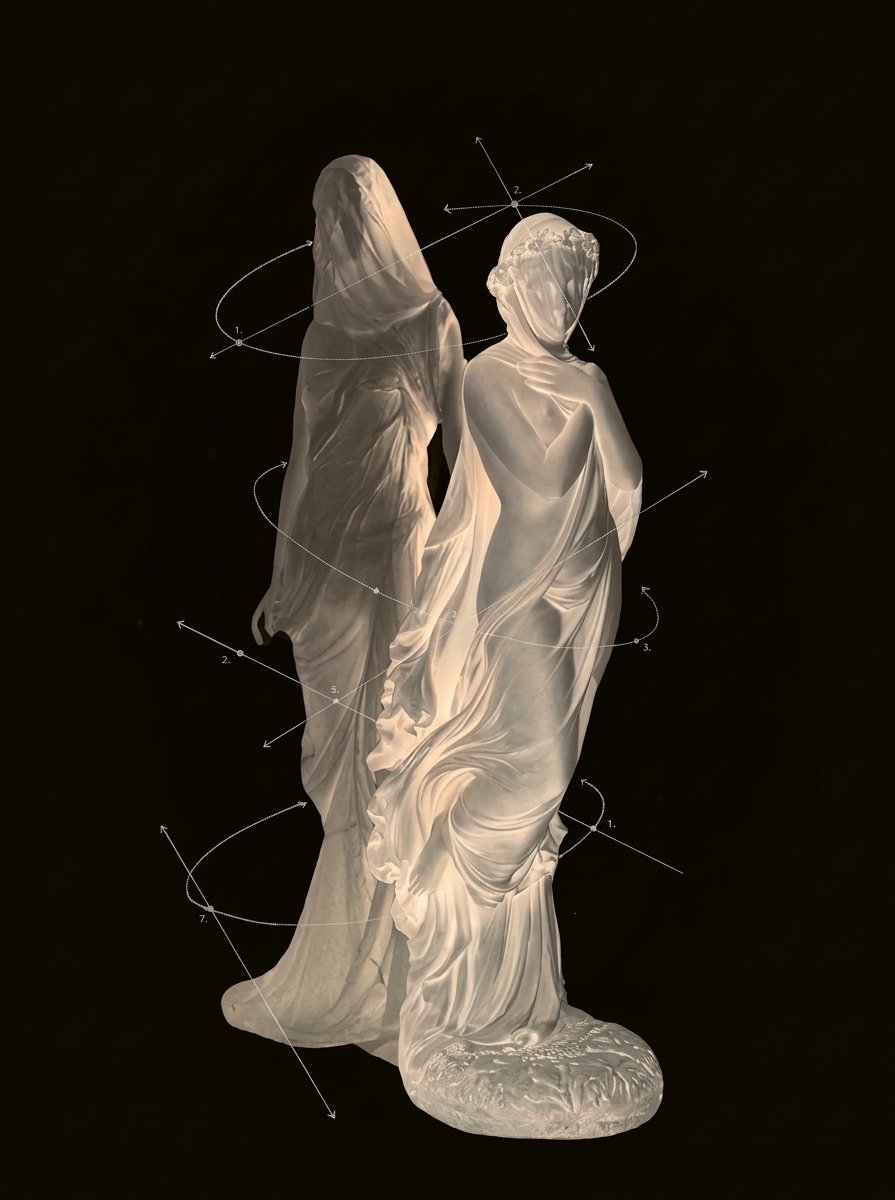
Serving as the visual prelude to the exhibition is the pairing of a John Galliano ensemble for Maison Margiela (Autumn/Winter 2020–2021 Haute Couture) with Raffaele Monti’s marble sculpture The Veiled Woman (1854). Artist Julie Wolfe united these works into an assemblage for the exhibition space. This pairing immediately sets the theme: fabric and sculptural form, the veiled face, the material, and the impression it creates.
A New Space and the Beginning of a Series
Costume Art also marks the inauguration of new galleries at The Met, spanning nearly 12,000 square feet. This venue will host The Costume Institute’s annual spring exhibitions as well as periodic projects dedicated to the intersection of fashion and art.
With this article, I am launching a new series on Dolls Stories Atelier. Moving from the overarching concept of the exhibition, we will gradually explore individual costumes, artworks, and details—those pieces that invite us to pause, examine their construction, trace historical parallels, and reflect on how form operates across different scales.
Sources & Further Reading
- The Metropolitan Museum of Art. “Costume Art.” Exhibition overview, press materials, and gallery guide. The Costume Institute, The Met Fifth Avenue (Gallery 099).
- Maison Margiela. Haute Couture Autumn/Winter 2020–2021 Collection (“Artisanal”). Designed by John Galliano.
- Monti, Raffaele. The Veiled Woman (Veiled Vestal), 1854. Marble sculpture. The Metropolitan Museum of Art Collection.
- Wolfe, Julie. Exhibition design assemblages for Costume Art, The Costume Institute, The Metropolitan Museum of Art.
- Koda, Harold, and Andrew Bolton. Breathing Statue: Dress, Form, and the Body in Art. Metropolitan Museum of Art Publications.