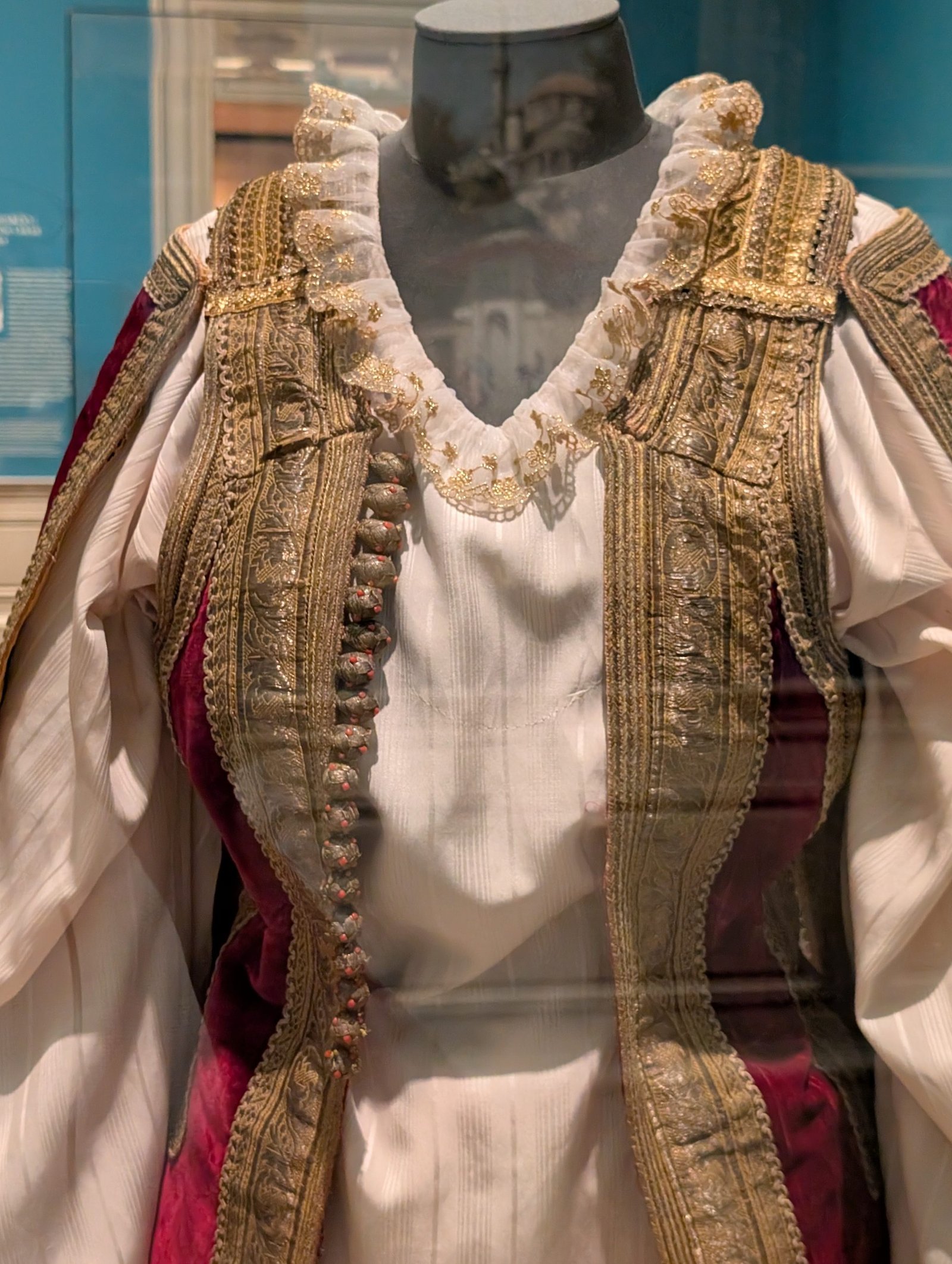

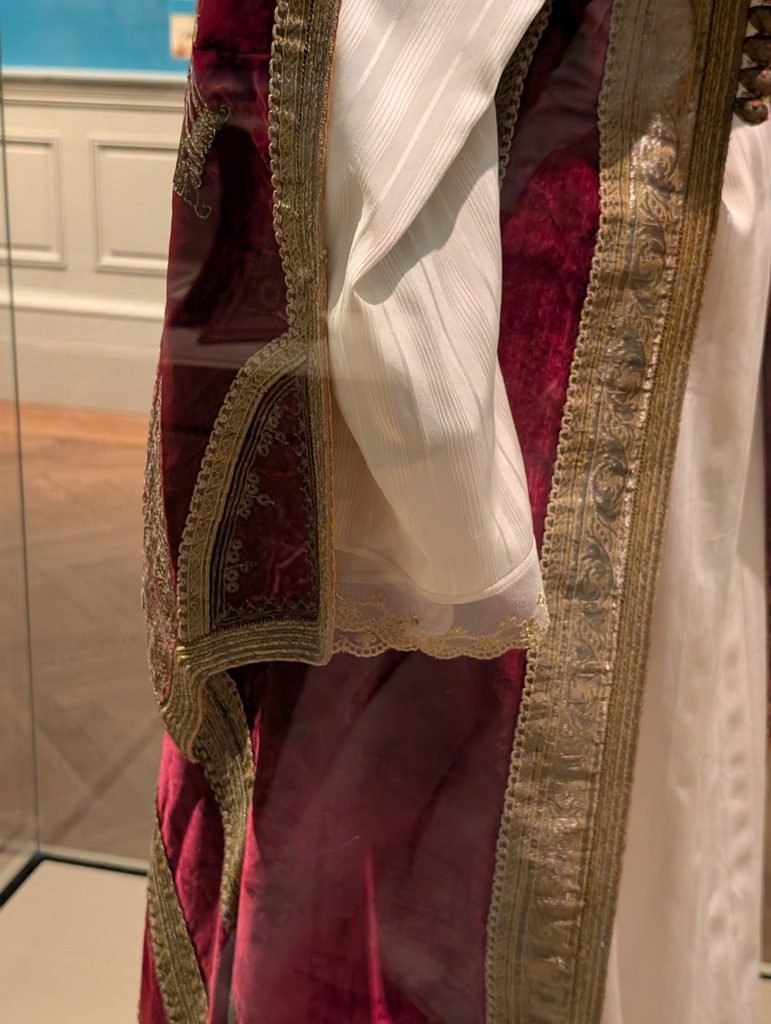
After lighter pastel gowns, this ensemble at The Metropolitan Museum of Art immediately commands attention with its rich, regal palette and bold textures. Deep red velvet, broad bands of gold passementerie trim, and a crisp white shirt beneath create an incredible visual contrast.
This Ottoman-period Balkan bridal ensemble from The Met collection is dated to the 19th–early 20th century.
Tailoring Architecture: Detachable Sleeves and Sculpted Pleats
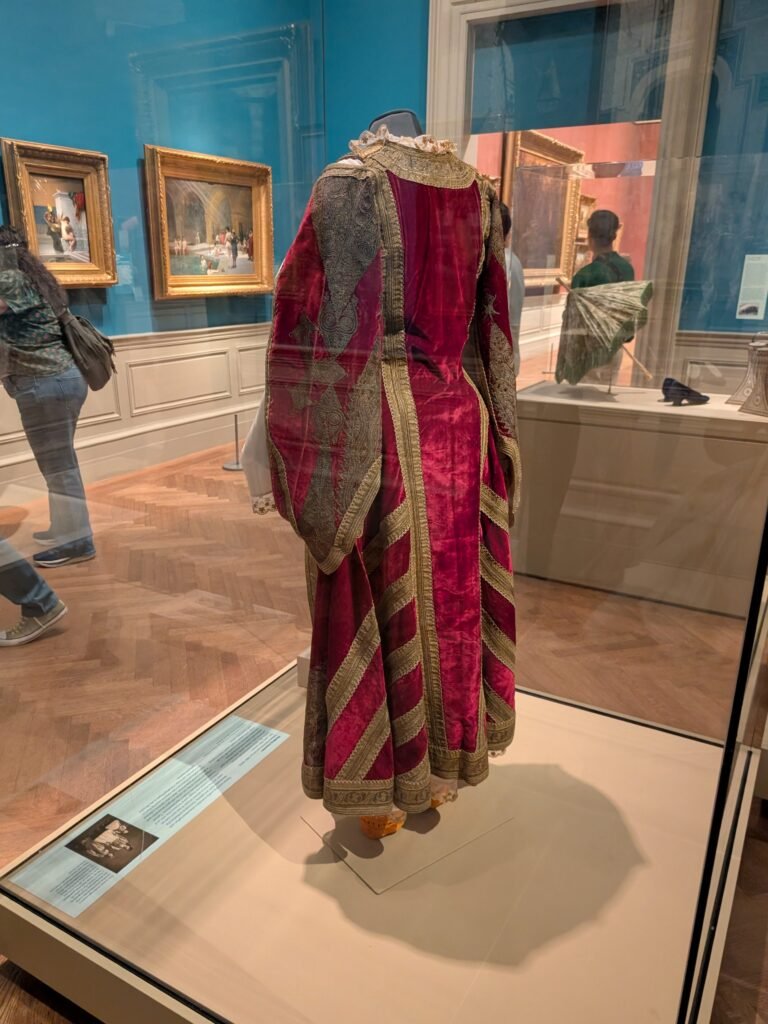
The most captivating feature of this garment is its clever layered construction. At its core is a sleeveless coat (kaftan) paired with separate, open-hanging sleeves. Draped over the white silk sleeves, long red velvet sleeve-tails bordered in gold fall freely rather than being stitched shut, creating a dynamic interplay of lines.
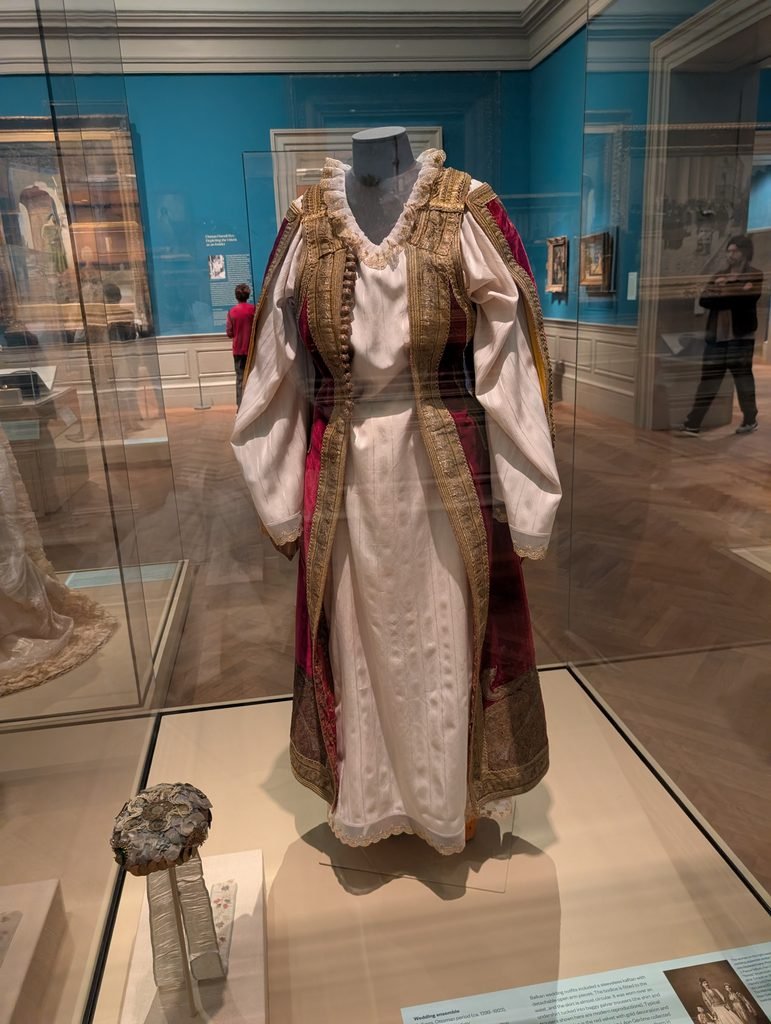
Balkans, Ottoman period (ca. 1299-1923), 19th-early 20th century
Kaftan: silk, metal-warped thread, cotton, passementerie, beads; velvet, embroidered, plain weave, satin weave, twill weave, printed; recreation chemise and trousers: silk; hat: silk, metal, coins, plastic, beads, paper, cotton batting: weft-faced plain weave
The Metropolitan Museum of Art, New York, Bequest of Clarissa Gwendoline Condon, 1968.
Fitted neatly at the waist, the coat flares into a sweeping, nearly circular skirt. On the mannequin, this generous volume is gathered into deep, sharp pleats, giving the front a streamlined silhouette that cleverly hides the true quantity of fabric.
Undergarments & Display Nuances
Traditionally, a shirt tucked into wide silk trousers (şalvar) was worn beneath the coat. Notably, the white shirt and trousers shown on the display are modern silk reproductions crafted to illustrate how the ensemble was worn.
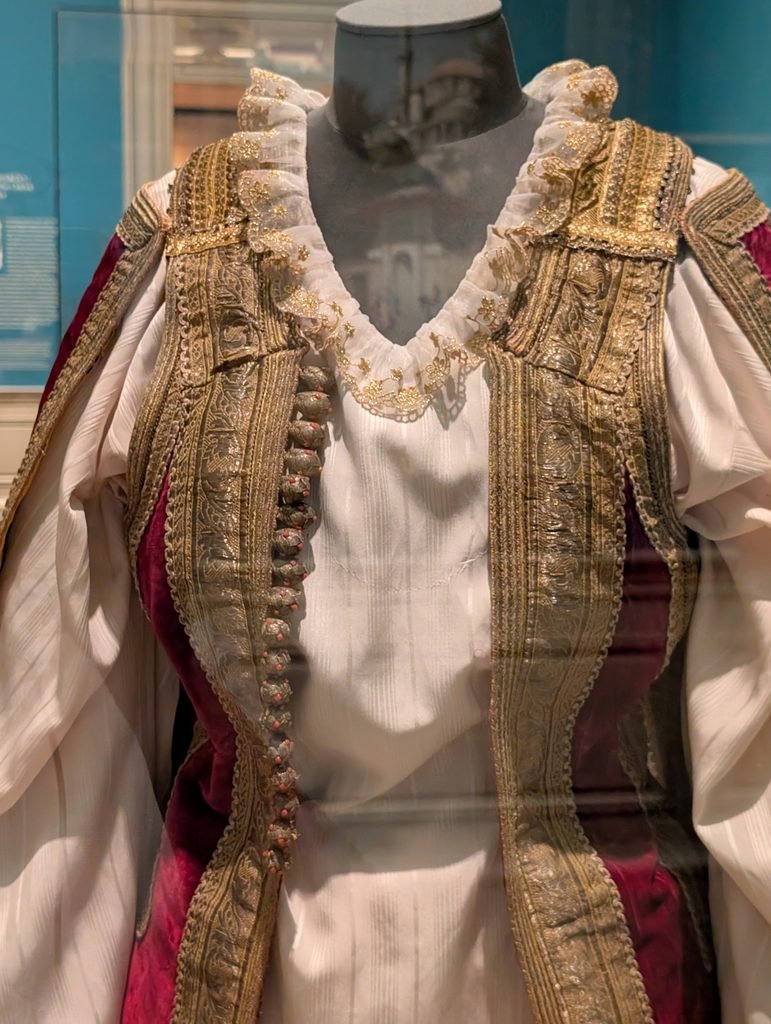
Balkans, Ottoman period (ca. 1299-1923), 19th-early 20th century
Kaftan: silk, metal-warped thread, cotton, passementerie, beads; velvet, embroidered, plain weave, satin weave, twill weave, printed; recreation chemise and trousers: silk; hat: silk, metal, coins, plastic, beads, paper, cotton batting: weft-faced plain weave
The Metropolitan Museum of Art, New York, Bequest of Clarissa Gwendoline Condon, 1968.
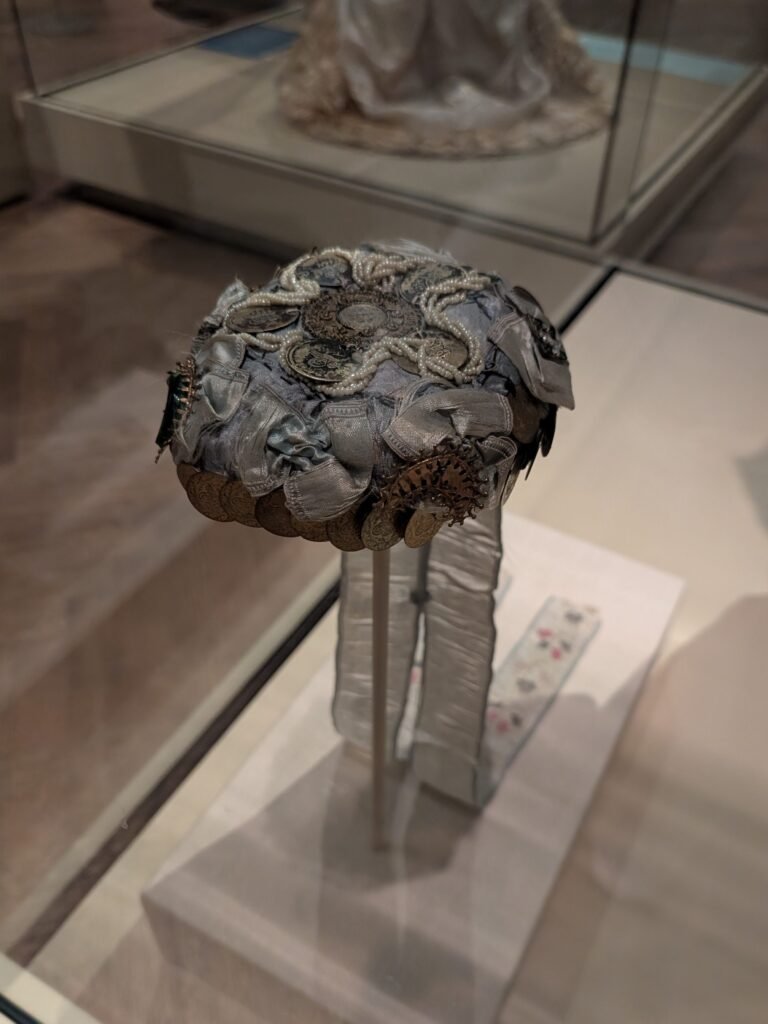
The coat itself is lavishly embellished with metallic threads (caniatille), beads, and braided trim. Displayed alongside is a small pillbox-style cap (fez) adorned with coins, beads, and even plastic elements, suggesting later everyday repairs or updates.
Interestingly, similar Balkan coats appeared not only in 1873 ethnographic photography but also in the studios of Orientalist painters like Jean-Léon Gérôme, where bridal attire was often repurposed as theatrical costume for entirely different subjects.
What I Look at as a Doll Clothes Maker
- Velvet Scale: Standard cotton or silk velvet produces overly bulky folds in doll scale (1:6 or 1:4). Micro-velvet or short-pile silk velvet is ideal for allowing the coat pleats to drape naturally.
- Metallic Trim: Heavy gold passementerie can be simulated using metallic soutache, fine couching, or thin embroidered trim.
- Detachable Sleeves: Open hanging sleeves are a dream feature for dolls, they allow full shoulder mobility while preserving historical drama.
Object Details
- Title: Bridal Ensemble
- Culture & Date: Balkans, Ottoman Period (19th–early 20th century)
- Medium: Velvet, silk, cotton, metallic thread, beads, coins
- Credit Line: Bequest of Clarissa Gwendolyn Condon, 1968 (In collection since 1970)
- Accession Number: 1970.84.9a, e
- Department: The Costume Institute, The Metropolitan Museum of Art, New York
Sources & Further Reading
- The Metropolitan Museum of Art. Wedding ensemble. Balkans, Ottoman period, nineteenth–early twentieth century. The Costume Institute, accession no. 1970.84.9a, e.
Museum object label and gallery text consulted at The Met Fifth Avenue. - The Metropolitan Museum of Art. Les costumes populaires de la Turquie en 1873. Osman Hamdi Bey and Victor Marie de Launay, Constantinople, 1873.
Photograph by J. Pascal Sébah, Part 3, plate 18, “Yanya.” Irene Lewisohn Costume Institute Library, The Metropolitan Museum of Art. - The Metropolitan Museum of Art. Prayer in the Mosque. Jean-Léon Gérôme.
Mentioned in the gallery text in connection with Gérôme’s collection and use of Balkan and Ottoman costumes in Orientalist painting. - The Metropolitan Museum of Art. The Costume Institute Collection.
For contextual research on historical dress, textile construction, and the museum’s costume holdings.